


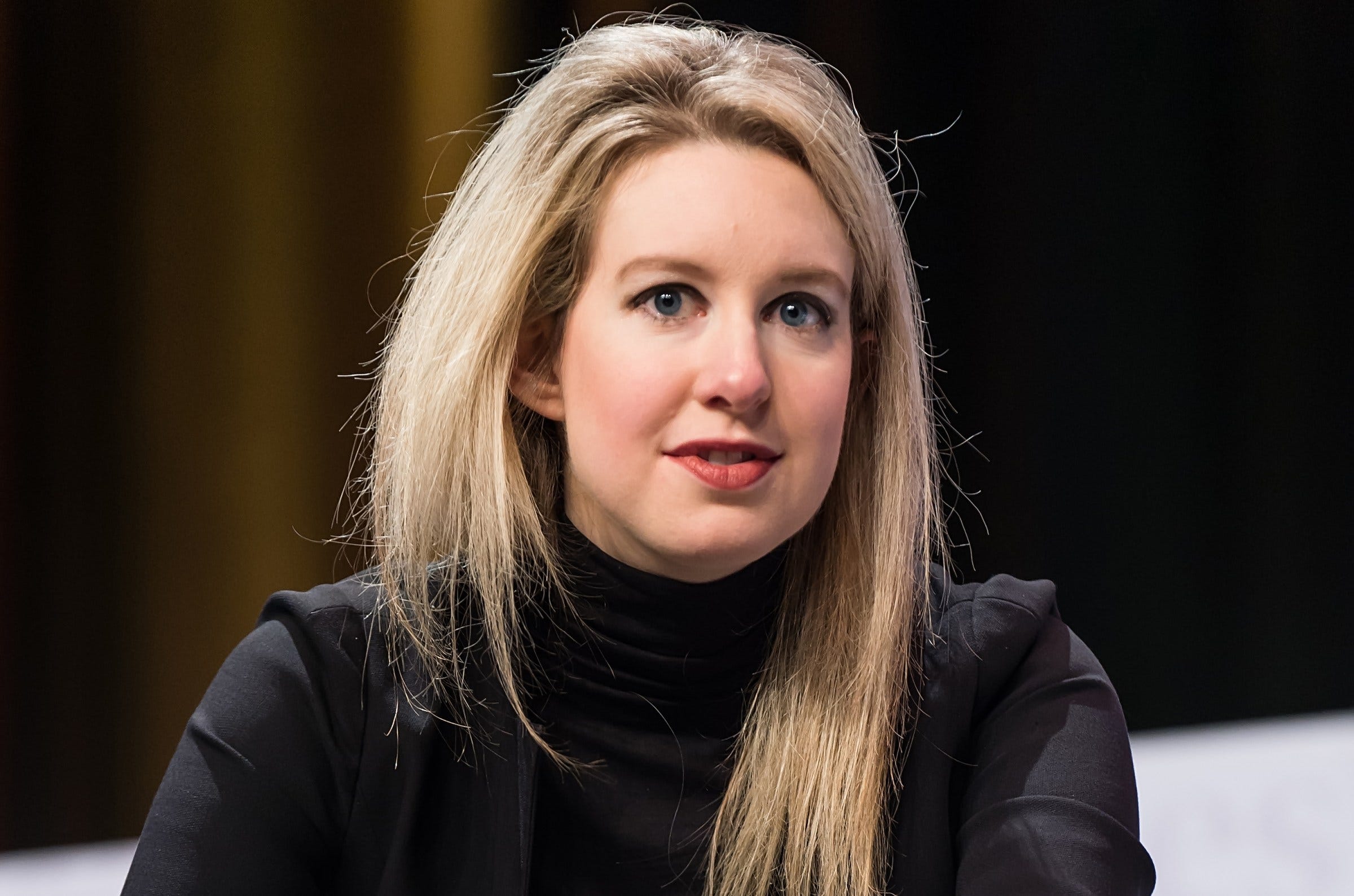
There is a certain kind of semi-mythical villain the modern world cannot get enough of, and Elizabeth Holmes is its patron saint. Young, blonde, black-polo-necked, baritone-voiced and unblinking, she was put on the cover of Forbes as the youngest self-made female billionaire in America, and then, when it all went wrong, served up to the public as a sort of Lady Macbeth of the laboratory, with blood on her hands, or at least on her finger-prick cartridges. We have had the book, Bad Blood. We have had the podcast, the HBO documentary and The Dropout, in which Amanda Seyfried did the voice. And now we have You Can See Everything, a three-hour film by Nathan Fielder and Lance Oppenheim, which opened in America this month to near-universal acclaim and which, like Holmes herself, is not entirely what it seems.
So it is perhaps worth asking an unfashionable question. Not “Is Elizabeth Holmes guilty?”, because a jury has answered that, at least in part, and the appeal courts have agreed with it. But this: is the Elizabeth Holmes of popular legend the same woman who was actually convicted? Or has Silicon Valley, an industry that has made a religion of “fake it till you make it”, found itself a convenient sacrificial lamb, or perhaps a sacrificial unicorn, to carry its sins into the wilderness?
First, the facts, as stubborn as ever.
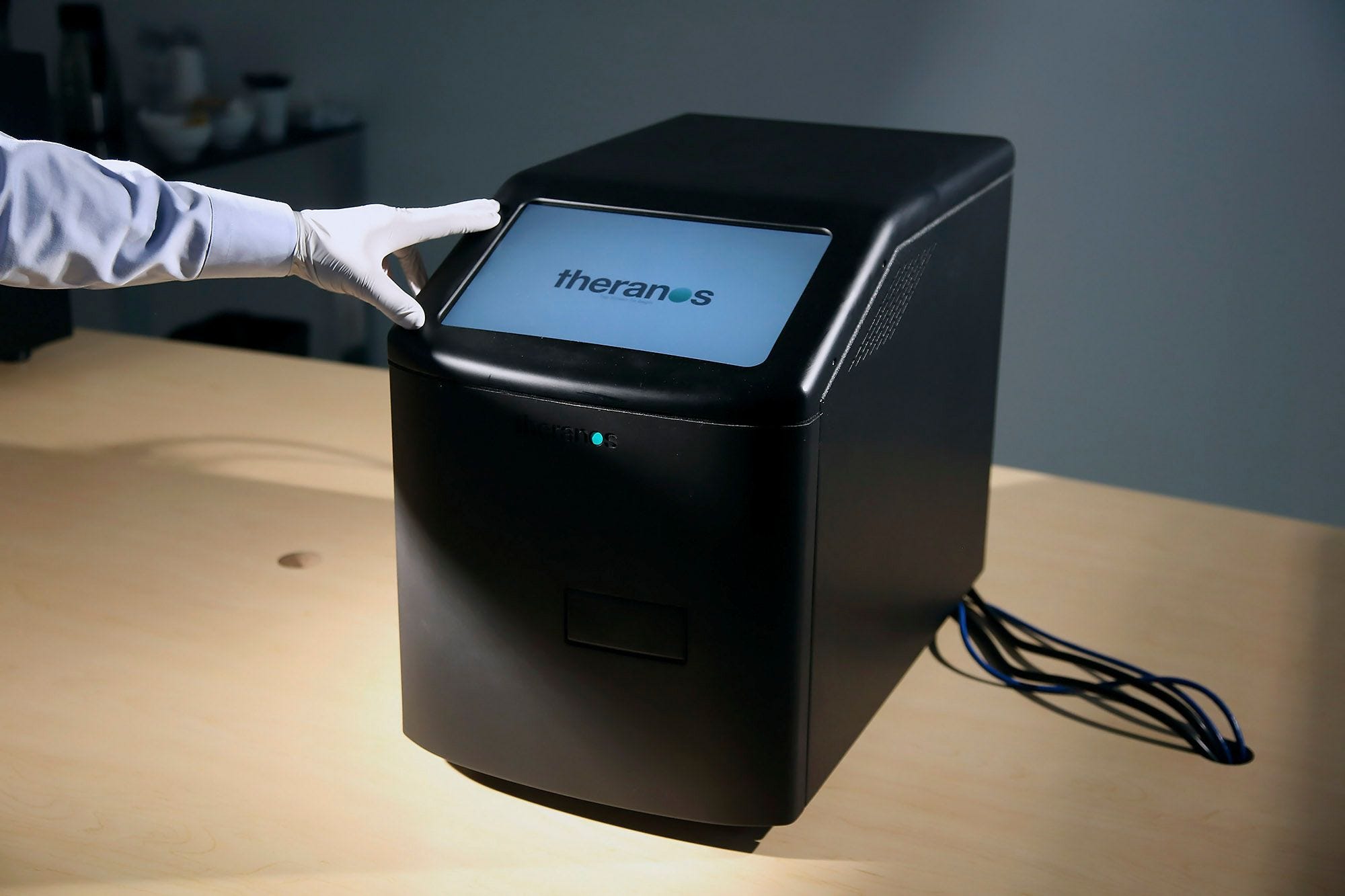
Holmes dropped out of Stanford at 19 in 2003 to found Theranos, which promised to run hundreds of blood tests from a single drop pricked from a finger, using a machine she eventually named the Edison. By 2014 the company was valued at around $9 billion and her stake at roughly $4.5 billion. She had a board that looked like a state funeral: George Shultz, Henry Kissinger, James Mattis, William Perry, Sam Nunn. She had a deal with Walgreens. She had investors including Rupert Murdoch, the Walton family and Betsy DeVos. What she did not have was a machine that did what she said it did.
In October 2015 John Carreyrou of the Wall Street Journal revealed that most of Theranos’s tests were in fact being run on modified commercial machines, mostly made by Siemens, and that the Edisons were unreliable. The company collapsed. Theranos voided two years of Edison results. Holmes settled with the Securities and Exchange Commission in 2018, and that year she and her former partner and company president, Ramesh “Sunny” Balwani, were indicted.
Now here is the bit that the legend tends to skip. Holmes went on trial in San Jose in 2021 on eleven counts. In January 2022 the jury found her guilty on four: one of conspiracy to defraud investors and three of wire fraud against investors. It found her not guilty on four others: the conspiracy to defraud patients and the wire fraud counts relating to patients and doctors. On the remaining three investor counts it could not agree, and the government later dropped them. In other words, the jury that heard every word of the evidence did not convict Elizabeth Holmes of defrauding a single patient.
Read that twice, because if you have watched The Dropout, or the evening news, or listened to anybody at a dinner party since about 2018, you will almost certainly believe the opposite. The popular image of Holmes is of a woman who knowingly handed sick people false results that put their lives in danger. There was harrowing evidence about inaccurate results, and nobody sensible would call a faulty blood test a trifle. But on the specific charges of defrauding patients, twelve Californians, having heard every word, said: not guilty. Somewhere along the line, that verdict got lost in the edit.
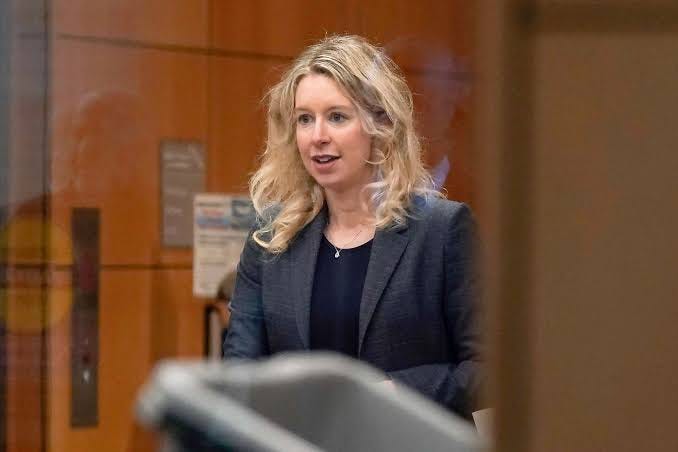
What was proven was serious enough, and I do not want to pretend otherwise. The jury heard that Holmes told investors Theranos’s technology was being used by the military in the field, when it was not. It heard that she sent investors validation reports bearing the logos of Pfizer and Schering-Plough, which those companies had not written or endorsed. It heard about financial projections that were, to put it charitably, fantastical. That is fraud, and the jury called it fraud, and in February 2025 the Ninth Circuit Court of Appeals upheld both the convictions and the sentence. Her bid for a fresh trial was rejected. In November 2022 Judge Edward Davila had sentenced her to eleven years and three months, and she and Balwani were ordered to repay some $452 million. Balwani, tried separately, was convicted on all twelve counts against him and got nearly thirteen years. Nobody can say she got off lightly.
But consider who her victims actually were. Not pensioners in Ohio. Not widows with their life savings. They were some of the richest and best-advised people on earth: Murdoch, who put in about $121 million; the Waltons; the DeVos family; private equity funds and family offices with whole departments whose sole job is to check that the thing they are buying exists. Several of them, it emerged, never saw independent validation of the technology, never asked for it, and invested largely because Henry Kissinger was on the board and the founder had a nice line in turtlenecks. I have every sympathy for anybody who has been lied to. But one does wonder how many of those billionaires would have read past the first page of the prospectus for a second-hand Vauxhall.
And this is where the “scapegoat” question bites. Silicon Valley is built on promises that have not yet come true. Founders routinely tell investors their product is further along than it is, their user numbers are about to explode, and their technology will change the world by next Tuesday. Some of them are right and become gods. Others are wrong and become footnotes. Holmes was wrong, spectacularly and expensively, and some of what she said crossed the line from optimism into lies. But she was hardly the only founder in that valley whose pitch outran her product. She was, however, young, female, photogenic and alone at the top, which made her a far better story than the blokes in fleeces who burned through billions and simply failed. The Wall Street Journal broke the story; Hollywood made it a parable.
She even told us where she got the idea. Holmes named her machine after her hero, Thomas Edison, and the choice is more revealing than she perhaps intended. In September 1878 Edison told the newspapers that he had cracked the problem of the electric light and would have it lighting lower Manhattan within weeks. He had done nothing of the sort. He had not yet produced a bulb that would burn for more than a few minutes. But the announcement sent the shares of the gas companies tumbling, and the money of J.P. Morgan and the Vanderbilts came pouring into the new Edison Electric Light Company on the strength of a promise. It took him more than a year of frantic trial and error before a carbon filament glowed for some thirteen hours at Menlo Park in October 1879. Edison faked it, and then, just in time, he made it. Nobody calls him a fraudster. They put his face on the history books, and on the side of a blood-testing machine.
Since going to prison, Holmes has, if anything, become a stranger figure still. She reported to Federal Prison Camp Bryan in Texas, a minimum-security facility outside Houston, in May 2023, two years after giving birth to her first child and months after the second. The Bureau of Prisons has repeatedly moved her release date forward, and in March this year Judge Davila granted a further reduction under a retroactive change to the sentencing guidelines, while observing that “the hundreds of millions of dollars in losses caused by Holmes’s fraud speak for themselves”. She is now due to move to a halfway house in Austin on 23 August 2027, with a projected release date of 22 February 2030. In December 2025 she asked President Trump to commute the rest of her sentence. The request is listed as “pending”. Given this President’s enthusiasm for pardoning people who annoyed the Justice Department, I would not bet the Edison against it.
Meanwhile an account in her name on X has posted thousands of times since she rejoined the platform last year, about books, free speech, her children and her innocence. Its biography reads, rather beautifully, “Mostly my words, posted by others.” Since prisoners cannot use the internet, one assumes that others are doing a great deal of the posting. Who they are, the Bureau of Prisons cannot say. According to the new film, the man with the keys is her partner, Billy Evans, who holds her power of attorney.
Which brings me to somebody I know rather better than I know Elizabeth Holmes.
Earlier this year I spent a few weeks staying with Jessica Reed Kraus and her family at their home in California. Jessica, for those few who have not come across her, writes the Substack House Inhabit, and she is quite simply a machine. I have met a great many journalists/writers in my time, most of whom are idle, some of whom just jump onto stories, essentially rewriting articles to cash in. Jessica is neither. She is writing when you go to bed and writing when you get up, chasing sources at all hours, and somehow the house is still full of laughter. Her husband, Mike, and their four children are among the warmest, funniest, most intelligent, interesting and genuine people I have ever had the pleasure of being imposed upon by. I went for a visit and left feeling like part of the furniture. A bout of depression was eased considerably through a time out in their writing room that comes fitted out with a huge bunkbed, sunset viewing at the beach, and even a trip to Mexico (I suspect that my out-of-character negative mind at the time may have been draining, even annoying for her - but I’m grateful for how much my time in her and her family’s company helped to reset my mind).
What makes Jessica remarkable is that she goes to the heart of a story when everybody else is content to circle it. She covered the Ghislaine Maxwell trial, the Depp and Heard circus and the Weinstein case, and she has done more than almost anybody to drag the Holmes story out of the Hollywood edit and back into the light. She has visited Elizabeth in prison, which is not a thing one does lightly. Federal prison security, it turns out, has firm views on metal, and so Jessica, on what she describes as “a blistering Sunday in Texas”, took a pair of scissors to the underwire of “my only good supportive designer bra so I could pass through security to visit Elizabeth in federal prison”. She called it “entirely worth the destruction of expensive French lingerie”. There are journalists who would not sacrifice their lunch break for a story. Jessica sacrificed her best bra. That is what I call support journalism.
I mention Jessica not only because I didn’t really thank her enough, but because her reporting is not hagiography, and because, when it comes to the Holmes case, I truly believe you need to head over to her Substack and read her extensive coverage. She quotes investors who say Holmes was never controlled by anybody and has shown no remorse, alongside former colleagues who believe her real crime was “failure, not deceit”. She points out that Holmes never sold her shares, at a time when they were worth billions, which is a curious thing for a woman supposedly planning to take the money and run. And she argues that “much of what we think we know about Elizabeth Holmes is the product of repetition”. If you want the inside story, rather than the miniseries, go and read her at jessicareedkraus.substack.com. You will not agree with all of it. You will learn something on every page.
And so to the film.
You Can See Everything is not a documentary in the usual sense; it is a Nathan Fielder production, which means it is part documentary, part social experiment and part very long, very awkward silence. In April 2023 Holmes and Evans invited Fielder and Oppenheim to live with them and their children in their San Diego beach house for the 34 days before she went to prison. The title is her promise: there would be nothing hidden. The film runs nearly three hours, and the first half consists largely of Fielder sitting opposite Holmes and asking her, with the deadpan of a Methodist undertaker, the questions everybody else has been too polite to ask.
Her answers are extraordinary. “All I know is my truth,” she says. She tells him the Edison “wasn’t a lie”, because the technology would have worked once the science caught up. She tells him she has never told a lie in her life, not even a white one. And in the moment that has already become a meme, she holds his gaze with those great unblinking blue eyes and asks: “Why would I ever deceive you?” Fielder shows her Abbott and Costello’s “Who’s on First?” and she concludes, gravely, that the two men are “talking past each other”. Which, in fairness, is a very good summary of the entire Theranos affair.
Then the film turns. Two years into her sentence, Evans begins to limit the crew’s access, to interject on her behalf and, according to Fielder, to seek money from the production. He is developing a laser blood-testing device of his own called Haemanthus, which he insists is “not Theranos 2.0”, a phrase I suspect will be carved on his tombstone. With Holmes now behind bars, Fielder brings in Amanda Seyfried, who played her in The Dropout, to act out the scenes he could no longer film, and the whole thing becomes a hall of mirrors: an actress playing a woman who many believe was always playing a part, directed by a comedian who plays himself. Fielder has since said that Holmes “seems so genuine at times” but that he came away thinking, “Okay, I know she’s a liar.”
Is it any good? Mostly, yes. Critics have fallen over themselves; it sits at 97 on Metacritic, and Variety called it a “one-of-a-kind reality-TV-as-hangout-movie psychodrama circus”, which is a mouthful but about right. The first half is funny, queasy and brilliant. The second sags under the weight of its own cleverness, and Time’s critic was not wrong to say it sometimes feels “more like a product they’ve brought to market” than art, which, given the subject, is almost too neat. Its great achievement is that it refuses to tell you what to think. Holmes emerges as either a woman so convinced by her own story that she cannot see the gap between what she believed and what was true, or the most accomplished performer in America. Possibly both. The film, wisely, does not pretend to know.
Nor do I. Elizabeth Holmes lied to investors and was rightly convicted of it. But she was acquitted of defrauding patients, the charge that most people still believe she was found guilty of. She was surrounded and endorsed by some of the most powerful men in America, almost none of whom have suffered for it. And she was turned into a symbol of everything that is wrong with Silicon Valley by an industry that has carried on doing many of the same things without her.
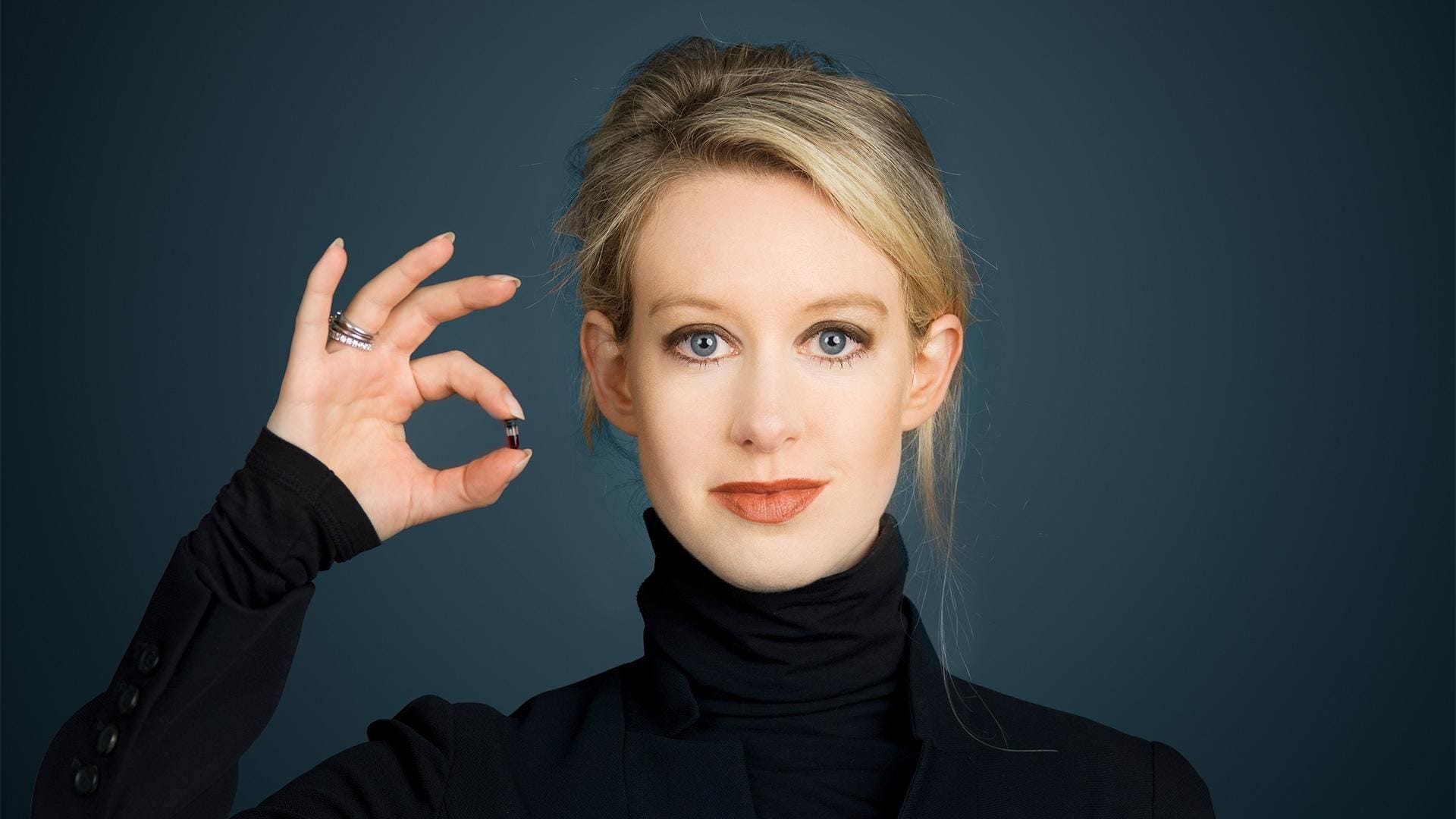
A fraudster? By the verdict of a jury, yes. A scapegoat? Quite possibly that too. The two are not mutually exclusive. And in a valley where everybody fakes it until they make it, the unforgivable thing Holmes did may have been not faking it, but failing to make it - or perhaps running out of time to make it.
Which leaves the question that nobody can answer, and which haunts every frame of Fielder’s film. Had she been given more time, more money, a few more years before the Wall Street Journal came knocking, could she have done it? Could the girl who idolised Edison have found her filament, a way to run a full battery of tests from a single drop of blood and change medicine for good? Many scientists will tell you that the physics was always against her, that a drop from a finger is simply too small and too messy for what she promised. Edison’s doubters told him much the same. The difference is that he got to the finish line before his investors ran out of patience, and she did not.
Somewhere in a prison camp in Texas, Elizabeth Holmes still insists that the Edison “wasn’t a lie”, that it simply arrived before the science did. She may be deluding herself. She may be right. We will never know, because the light went out before the bulb was lit.