


The last time Andrew Mountbatten-Windsor answered questions in public, he told Emily Maitlis that he could not have been sweating in a nightclub in 2001 because he had a medical condition that stopped him sweating, and that he remembered a particular evening because he had taken his daughter to a Pizza Express in Woking. It was, by common consent, the most catastrophic interview given by a member of the royal family since King Harold explained his views on archery. Within days he had stepped back from public duties, and he has not faced a public question since.
That is about to change.
Andrew has been served with a witness summons compelling him to give evidence in a fraud trial at the High Court, on or around December 15th. He will take the oath, step into the witness box, or appear by video link, and be cross-examined by barristers who are paid to be unpleasant. He is thought to be the first member of the royal family to be summoned in this way since the 19th century, when the future Edward VII was hauled into court, first over a scandalous divorce and later over a cheating scandal at a game of baccarat. Andrew, it seems, has a gift for reviving the more embarrassing traditions of his ancestors.
Let me be very clear about one thing at the start. Andrew is not accused of wrongdoing in this case. He is not a party to it. He is a witness, summoned at the request of one side, and nobody has suggested that he defrauded anyone. But he is a witness to some very peculiar transactions, and the trial promises to be the first occasion on which he has had to explain his money in public, under oath, with no press officer, no friendly interviewer and no Pizza Express to fall back on.
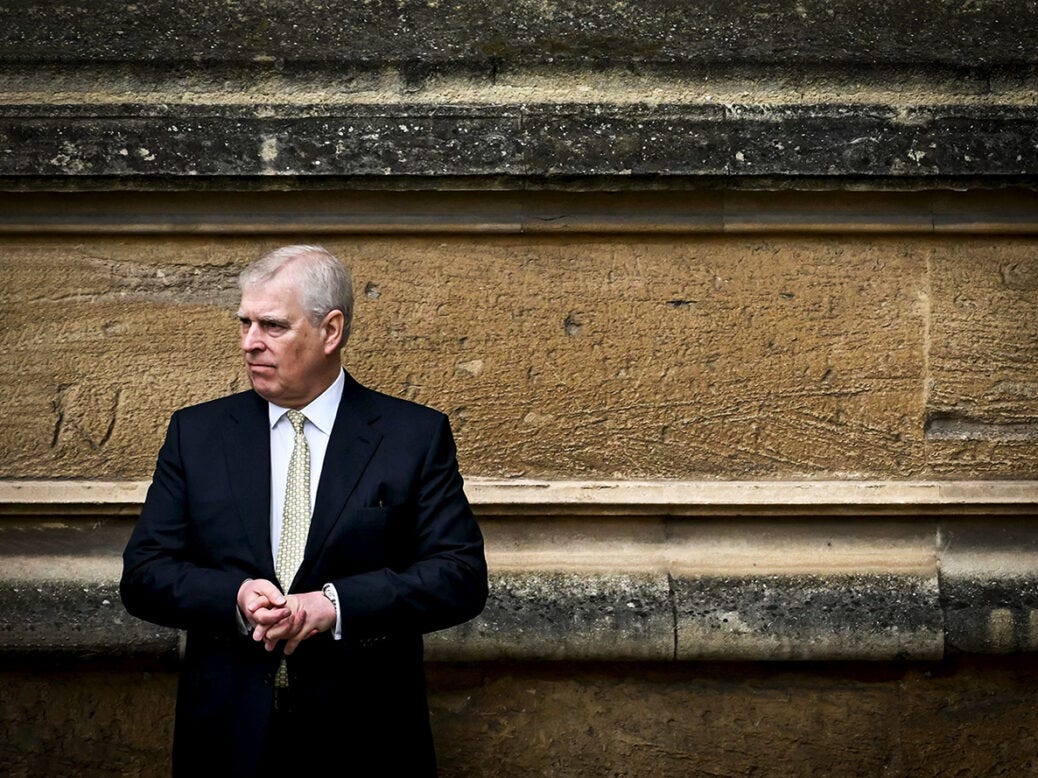
The case is a dispute between Nebahat Isbilen, a wealthy elderly Turkish woman, and her former financial adviser, Selman Turk. Isbilen alleges that Turk misled her and used her fortune to his own advantage. Turk strongly denies any dishonesty, and his solicitors say he looks forward to being vindicated in court. The trial is due to begin in the middle of this month, and it is for the judge, Mr Justice Adam Johnson, to decide who is telling the truth. I make no prediction.
Where does a former Duke of York come into it? Through, of all things, a Dragons’ Den for start-ups. In the autumn of 2019 Turk met Andrew through Pitch@Palace, the entrepreneurs’ showcase that Andrew ran from Buckingham Palace, at which young businesspeople pitched their ideas to an audience of investors and courtiers. That, according to the court documents, led to social gatherings bringing together Turk and his family, Isbilen, and the then Duke and Duchess of York. Like so much of Andrew’s life, it began as networking and ended up in a lawyer’s office.
The heart of the matter is £750,000. According to court documents, Isbilen claims that Turk misled her into paying that sum to Andrew, believing it was for help with obtaining a passport. Turk denies it, and says it was a gift made on Isbilen’s own initiative, to create goodwill with the duke, and had nothing whatever to do with a passport. The date of the transfer is the detail that will have every royal correspondent in the land reaching for their notebooks. According to the BBC, the money arrived the day after Andrew recorded his Newsnight interview, and the day before it was broadcast. At the very moment the Duke of York was explaining to the nation that he had nothing to hide, three-quarters of a million pounds was, on the claimant’s case, on its way into his account.
Then there is a second payment: around £768,000, which left Isbilen’s account in January 2020. Turk says it was a loan to Andrew to help with the purchase of a chalet in Switzerland. Isbilen disputes that, and it has been challenged in earlier hearings. Andrew, you may recall, had for some years been entangled in a long and expensive saga over a ski chalet in Verbier, which led to a legal dispute with its former owner and was eventually resolved by its sale. Whatever the truth of the January 2020 payment, it will be for Andrew to say, from the witness box, whether he thought he was being lent money, given money or neither.
It is fair to record that the £750,000 was paid back. When Isbilen’s lawyers contacted Andrew in 2021, the money was returned. That is to his credit, and it does not imply that he did anything wrong in receiving it. But it does raise the question the court is likely to want answered: what did Andrew think the money was for? A gift from a woman he had met socially a few weeks earlier? Payment for some service? A loan? Each answer invites a further question, and the man answering them will be the same man who once told the nation that staying at Jeffrey Epstein’s house after his conviction was the “honourable” thing to do.
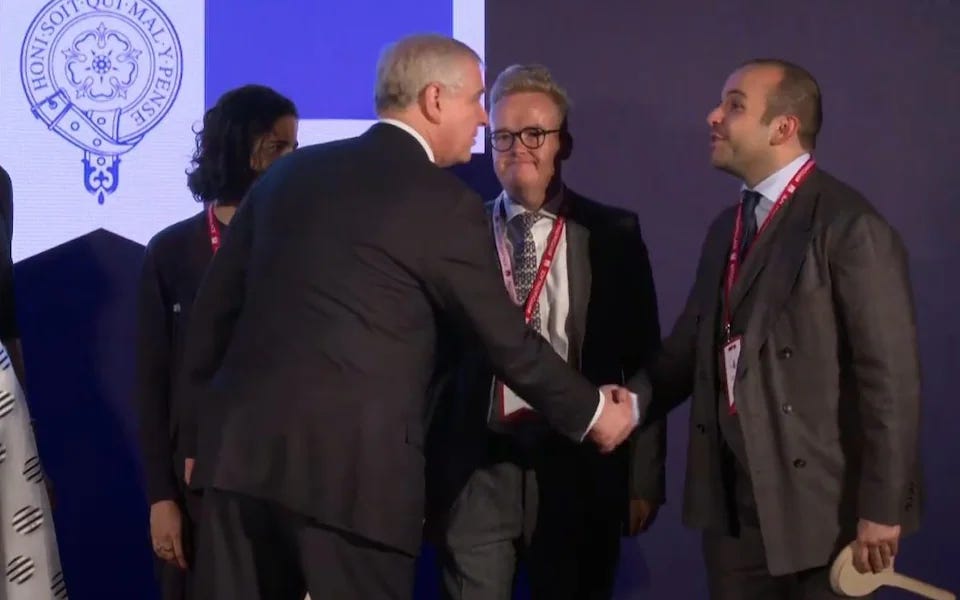
Why is Andrew being called at all? Because Turk wants him. Mr Justice Johnson ruled last month that, given the seriousness of the allegations against him, Turk should have access to “the evidence he considers relevant and material”, and that meant being able to call Andrew. In other words, it is the defendant, not the claimant, who believes the former duke’s evidence will help him. Andrew, for his part, has been approached for comment, and has said nothing.
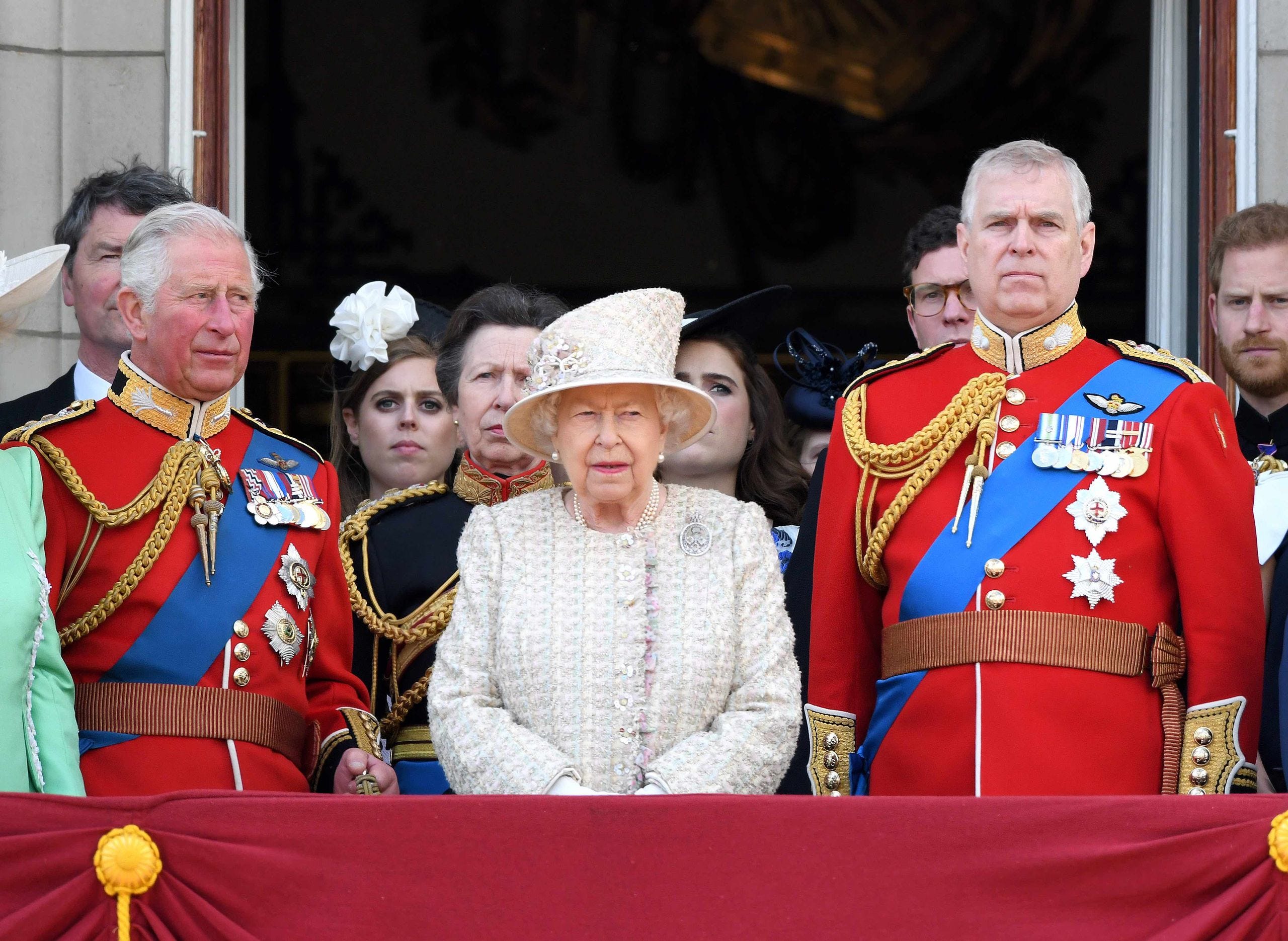
He arrives in the witness box in rather different circumstances from the last time he faced the cameras. Then, he was the Duke of York, the Queen’s favourite son, a Knight of the Garter with an office in Buckingham Palace.
Now, he is plain Andrew Mountbatten-Windsor, stripped by his brother of his titles in October last year, evicted from Royal Lodge, and the subject of not one but two police investigations. In February Thames Valley Police arrested him on suspicion of misconduct in public office, over allegations that he passed confidential information to Epstein while serving as Britain’s trade envoy; he was released under investigation and has not been charged. Last month Police Scotland said it had begun “active inquiries”, at “an early stage”, into Epstein’s and Ghislaine Maxwell’s visits to Balmoral. He denies any wrongdoing, and my 6-year investigation into the Epstein scandal has proven beyond doubt that his chief accuser, Virginia Giffure, was a a serial liar.
But those investigations have nothing to do with the fraud trial, and his lawyers will no doubt be anxious that nothing he says in December strays anywhere near them. Barristers cross-examining him in a civil case about a Turkish widow’s money are not supposed to ask about Epstein, and the judge will be watching closely to make sure they do not. But one suspects the press gallery will be thinking about little else.
That is the real significance of December 15th. Not the sums of money, eye-watering though they are to most of us, nor even the question of what they were for, but the spectacle itself. There have been many questions over the years about Andrew’s finances: how a man with a naval pension and a parliamentary allowance that was withdrawn long ago managed to fund a lifestyle of shooting parties, ski chalets and a thirty-room mansion in Windsor Great Park. There has been almost no transparency. Neither he nor the Palace has ever offered a full account. Now, at least in part, he will have to, in a courtroom, on the record, with a judge who can tell him to answer the question.
Whatever he says, it will be the first unscripted public utterance by the former Duke of York in seven years, and he will not get to choose the questions. Given his record, his lawyers will be praying he has learned something since Newsnight.