


Russell Brand arrived at Southwark Crown Court shortly before 9am on Monday, October 12th, dressed in a grey suit, an open-necked white shirt, a brown neckerchief and brown boots, his eyes concealed behind sunglasses as photographers gathered outside the building where he would finally face a jury over allegations of rape and sexual assault spanning a decade.
He had travelled to court in a black Mercedes, accompanied by his wife, Laura Gallacher, and flanked by security guards. He waited several minutes before emerging from the vehicle, removed his sunglasses as he approached the entrance and said nothing to the journalists waiting to question him. Inside, the 51-year-old comedian and former television presenter was taken to a private room near the courtroom before proceedings began. By the end of the morning, the machinery of a criminal trial had begun to turn, although the first day would be devoted largely to selecting the people who will ultimately decide his fate.
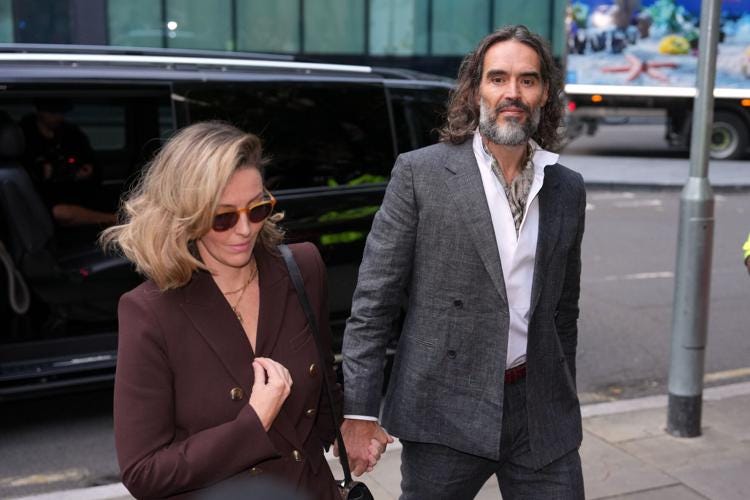
Brand arrive outside the court yesterday with his wife
Brand faces seven criminal charges involving six women, relating to alleged offences between 1999 and 2009.
He has pleaded not guilty to all of them and remains innocent unless proven otherwise.
The charges comprise three counts of rape, three counts of sexual assault and one count of indecent assault. They followed an investigation by the Metropolitan Police that began in September 2023, after a joint investigation by The Sunday Times, The Times and Channel 4’s Dispatches brought allegations of sexual misconduct into public view.
“We carefully reviewed the evidence after a police investigation into allegations made following the broadcast of a Channel 4, Sunday Times and Times investigation in September 2023,” the CPS’s chief crown prosecutor Jaswant Narwal said at the time the first charges were brought. “We have concluded that Russell Brand should be charged with offences including rape, sexual assault and indecent assault.”
“The Crown Prosecution Service reminds everyone that criminal proceedings are active, and the defendant has the right to a fair trial.”
The initial charges involved four women and alleged offences between 1999 and 2005. Two further charges, relating to reports involving two additional women in 2009, were authorised in December 2025. The case subsequently proceeded through the magistrates’ court before reaching Southwark Crown Court for trial.
The allegations include a claim that Brand raped a woman in a hotel room during a Labour Party conference in Bournemouth, that he grabbed a television worker’s breasts and forced her into a sexual act in a toilet, and that he kissed and groped a woman working at a radio station. These are allegations advanced by the prosecution, not findings of fact. Brand denies the charges, and the prosecution must prove each one beyond reasonable doubt.
The case has its origins in a much wider public controversy. On September 16th, 2023, the joint investigation conducted by The Sunday Times, The Times and Channel 4’s Dispatches resulted in the publishing of a joint investigation piece containing allegations from four women about incidents said to have occurred between 2006 and 2013. The investigation also included accounts from former colleagues who described what they regarded as inappropriate sexual behaviour and a troubling workplace culture during Brand’s years in television and radio.
Brand denied the allegations and maintained that his sexual relationships had been consensual.
The publication of the investigation led to widespread scrutiny of his professional past, renewed examination of complaints and concerns that had allegedly circulated among people who worked with him, and a police investigation that eventually resulted in the criminal charges now before the court.
One of the women, identified in the reporting as Alice, described a relationship that began when she was 16 (the legal age of consent in the United Kingdom) and Brand was approximately 30 or 31. She said they became involved in 2006 and that the relationship lasted about three months. According to her account, Brand exercised control over her, and she alleged that he sexually assaulted her, including an incident in which he forced his penis into her mouth, making it difficult for her to breathe. She said she fought him off. She also alleged that he referred to her as “the child” and supplied scripts to help her deceive her parents about their meetings.
Alice subsequently contacted Brand’s then literary agency, Tavistock Wood, in 2020, seeking an apology. According to the published investigation, lawyers acting for Brand denied the allegations and accused her of seeking financial gain. Tavistock Wood later ended its professional relationship with him, saying it believed it had been misled. The reported account was not, in itself, a criminal conviction or a judicial determination that the alleged events had occurred.
Another woman, identified as Nadia, described an alleged rape at Brand’s home in Los Angeles on July 1st, 2012. She said she had met him at an after-party following an early recording of his American television programme, Brand X, and that they had subsequently kept in contact. According to her account, Brand invited her to his home, saying he had had a difficult day and wanted company. She alleged that he greeted her naked, attempted to involve her in sexual activity with another person, pushed her against a wall and restrained her. She said she tried to get away and repeatedly told him to stop, but that he raped her without a condom.
Nadia described being left in a daze after the alleged incident. She said Brand later asked whether she was all right, to which she replied that she was not, before leaving for her car. The investigation reported that she attended a rape treatment centre at UCLA’s Santa Monica medical centre later that day and provided staff with a detailed written account. Journalists said they had reviewed that account and verified the telephone number associated with messages subsequently exchanged between Nadia and Brand. She did not initially report the allegation to the police, according to the published account, because she felt intimidated by his fame and feared possible repercussions for her family.
The messages have become one of the most discussed elements of the original investigation. Nadia reportedly challenged Brand about his behaviour and told him that she had been frightened and felt taken advantage of. Her message included the words, “When a girl say[s] NO it means no.” At 3.29am, according to the journalists who examined the exchange, Brand replied: “I’m sorry. That was crazy and selfish. I hope you can forgive me, I know that you’re a lovely person. X”
The journalists reported verifying the telephone number from which the message was sent, and they said the exchange formed part of the material they examined. Brand’s reported words constitute an apology for behaviour, but they do not explicitly state that he committed rape. The message does not, by itself, resolve every factual or legal question about the allegation. Brand denied the rape allegation, and the incident described by Nadia took place in 2012, outside the period covered by the seven criminal charges now being tried.
A third woman, identified as Phoebe, described working for Brand after meeting him at an Alcoholics Anonymous meeting in 2013. She said that after they had consensual sex, Brand asked her to work for him, an opportunity she regarded as a significant professional break. According to her account, she subsequently witnessed a constant turnover of women around him. She alleged that one evening, after attending an event with Brand in a work-related capacity, she returned to his home to collect her belongings. She said he became naked, chased her, locked her in a bedroom, held her down and attempted to have sex with her while she screamed for help. She said she eventually managed to escape.
Phoebe further alleged that Brand attempted to apologise several times afterwards but warned her not to discuss what had happened when she returned to work. She said he threatened legal action, leaving her feeling unsafe and believing she had nowhere to turn. The investigation interviewed three people whom Phoebe said she had told about the alleged assault shortly afterwards. Her account was one of the four women’s stories published in 2023, but it should not be confused with a criminal conviction or assumed to correspond to one of the seven charges without evidence establishing that connection. Brand denied the allegations made against him.
A fourth woman described a six-month relationship with Brand in 2007, during which she alleged sexual assault and physical and emotional abuse. She had written about the relationship in a book published in 2014 and subsequently told The Sunday Times that she stood by her account.
The 2023 investigation also included accounts from people who had worked with Brand in television and radio. Former colleagues alleged that he asked staff to identify attractive women in studio audiences and arrange opportunities for him to meet them after filming. Others described sexualised propositions, behaviour they regarded as harassment or bullying, and alleged incidents of exposure in the workplace. There were also concerns about sexualised remarks on air, alleged sexual activity on BBC premises, urinating in containers in studios, throwing objects and behaviour that some colleagues regarded as intimidating.
The BBC subsequently examined concerns about Brand’s conduct during his time at BBC 6 Music and BBC Radio 2, principally between 2006 and 2008. In January 2025, the corporation apologised to staff who had felt unable to raise concerns. A review led by Peter Johnston examined eight complaints and considered allegations of inappropriate behaviour in studios and on BBC premises, sexualised broadcasts and possible failures by management to respond adequately to concerns. It also examined a complaint from a woman working in the same building as the BBC’s Los Angeles office who alleged that Brand exposed himself to her in 2008 and later joked about the encounter on his radio show.
The BBC review identified compliance inadequacies in some broadcasts and reported that staff had felt Brand would get his way.
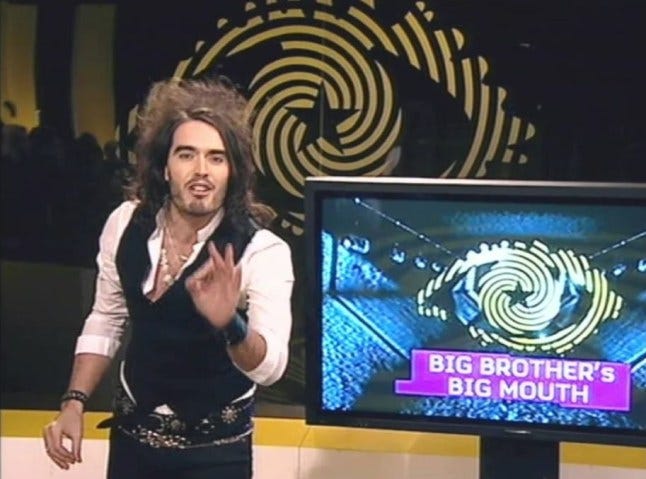
Channel 4 also conducted its own investigation into whether concerns about Brand had been known within the organisation while he was involved in programmes between 2004 and 2007. The broadcaster said the investigation reviewed 111,984 emails and 333 files of archived hard-copy documents, and approached 88 current and former employees for interviews. Its published findings said investigators found no evidence that the channel knew of the allegations contained in the 2023 Dispatches programme while Brand was presenting Big Brother’s Big Mouth and Kings of Comedy between 2004 and 2007. The investigation also found no evidence to substantiate the allegation that Brand’s behaviour had been discussed in a commissioning meeting in 2014.
Staff recollections varied about when concerns began circulating within the commissioning team, but the investigation found no written or corroborated evidence that suspicions of serious allegations were held within the channel before a Celebrity Bake Off Stand Up to Cancer special, recorded in autumn 2018 and broadcast in March 2019.
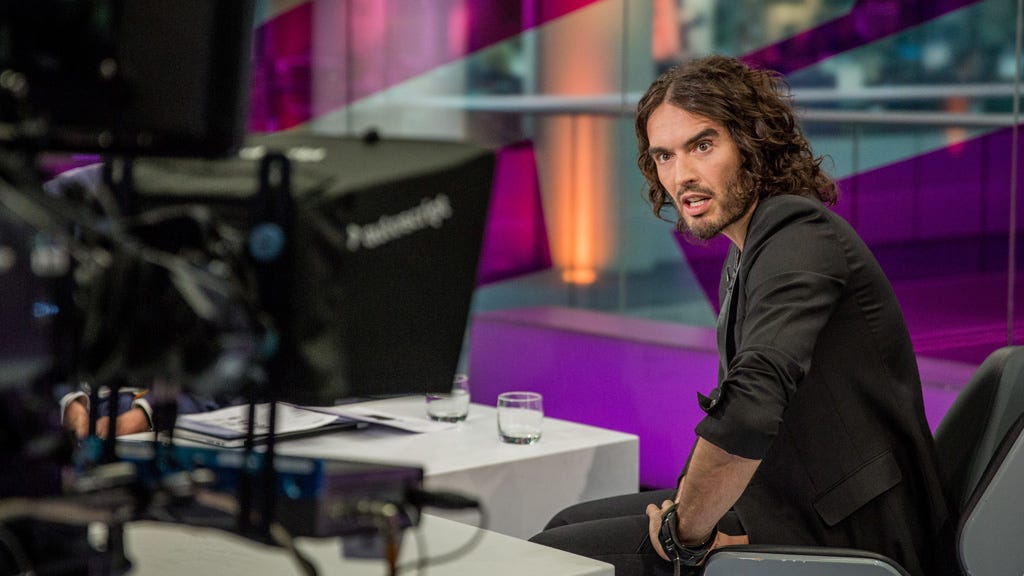
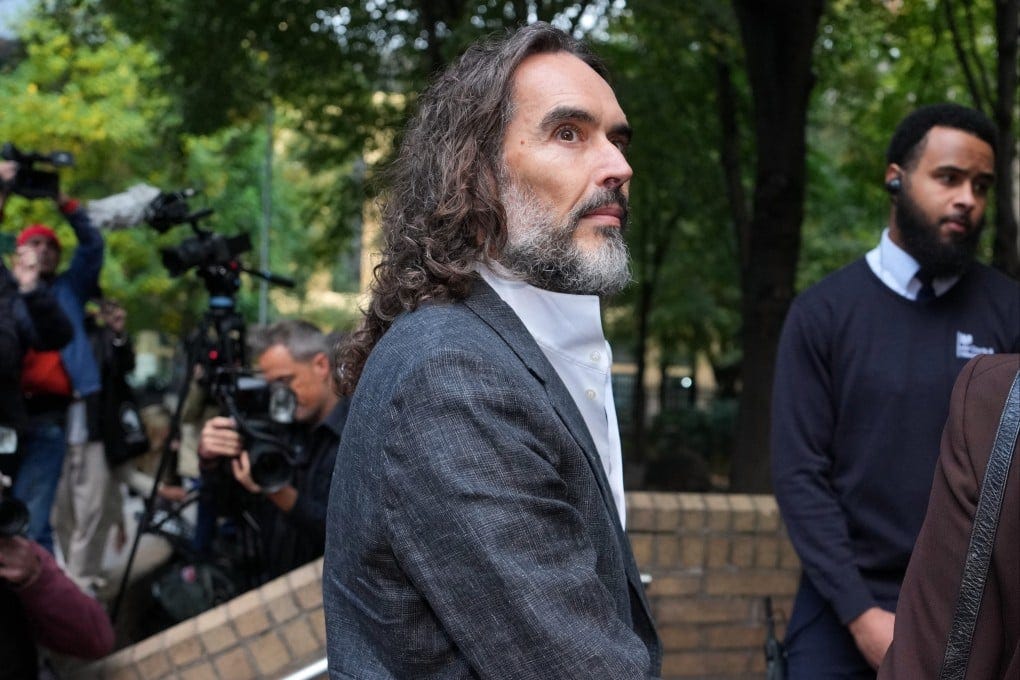
By the time Brand arrived at Southwark Crown Court yesterday, the wider public controversy had developed into a criminal prosecution involving six complainants and seven charges. The court’s first task was not to hear the evidence itself but to select a jury that could consider the case impartially despite the publicity surrounding the defendant. Mr Justice Joel Bennathan addressed 50 prospective jurors, acknowledging that Brand was a well-known figure and that many people might have encountered the earlier allegations in the media.
“We are about to start the trial of one Mr Russell Brand,” the judge told them. “Many of you will have heard of him.” He explained that approximately three years earlier a television programme and a lengthy article in The Times had reported allegations of sexual misconduct against Brand, which he firmly denied. The jury, the judge explained, would hear something about the programme and the allegations reported in the newspaper, but prospective jurors who remembered watching the documentary or reading the article were asked to identify themselves.
Six members of the initial panel were dismissed after indicating that they remembered the coverage. The judge warned the people initially selected that they must not research Brand themselves. “The defendant is clearly someone very well known. You absolutely must not carry out any research at all about this defendant Russell Brand,” he said. The instruction was intended to ensure that jurors decided the case on evidence admitted in court rather than potentially sensationalised documentaries, newspaper articles, social media commentary or personal investigations.
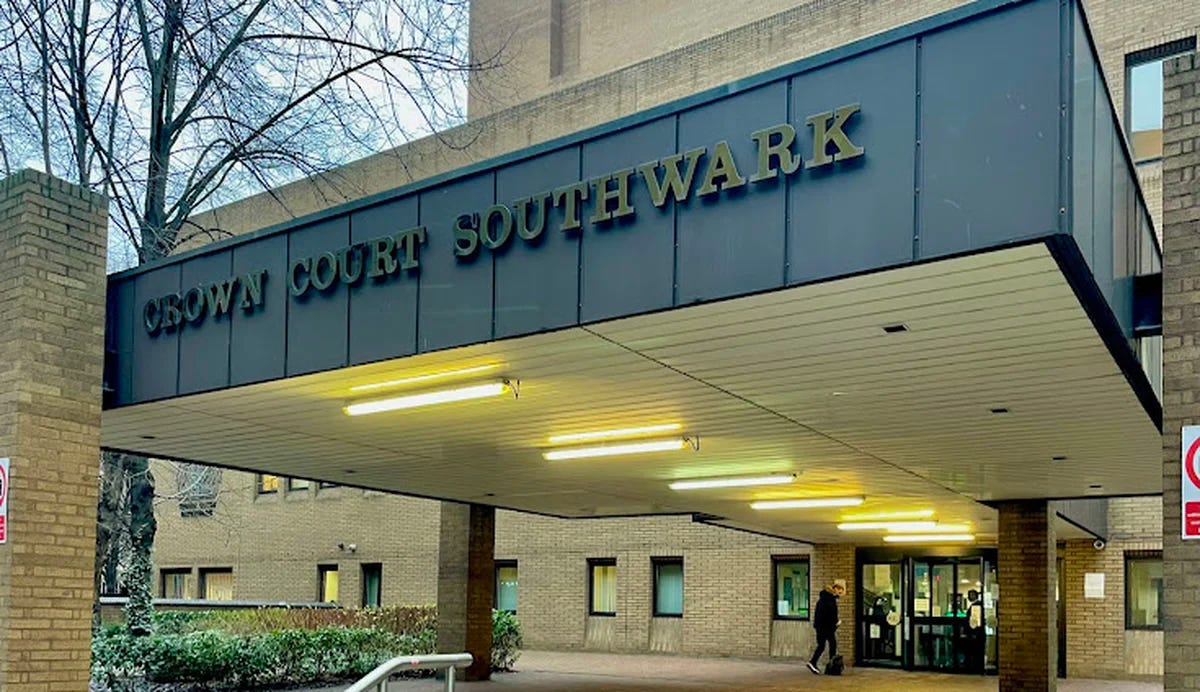
Reports said 20 prospective jurors were selected initially, with that group expected to be reduced to a final panel of 14. The selection process is due to continue today, October 13th, before the prosecution opens its case later in the week.
The trial is expected to last approximately six weeks, although some reports described a possible duration of up to ten weeks. Jurors were reportedly told that they might need to remain available until December 11th.
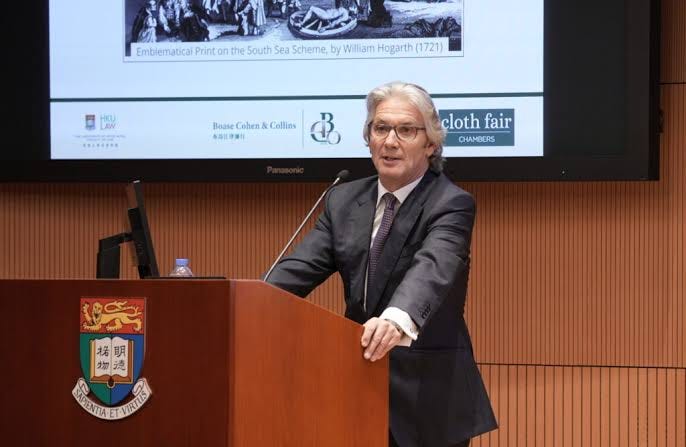
Brand’s defence is led by Ian Winter KC, of Cloth Fair Chambers, an experienced barrister who has represented defendants in complex criminal and financial-crime cases. His professional record includes work in Serious Fraud Office prosecutions and other high-profile matters. He acted for the defence in proceedings involving G4S in which the prosecution ultimately offered no evidence, represented former Tesco commercial director John Scouler in a fraud and false-accounting prosecution, and represented former Barclays executive Tom Kalaris in proceedings arising from the Serious Fraud Office investigation into the bank’s 2008 recapitalisation. His experience also includes the major prosecution identified in professional legal coverage as R v GPT.
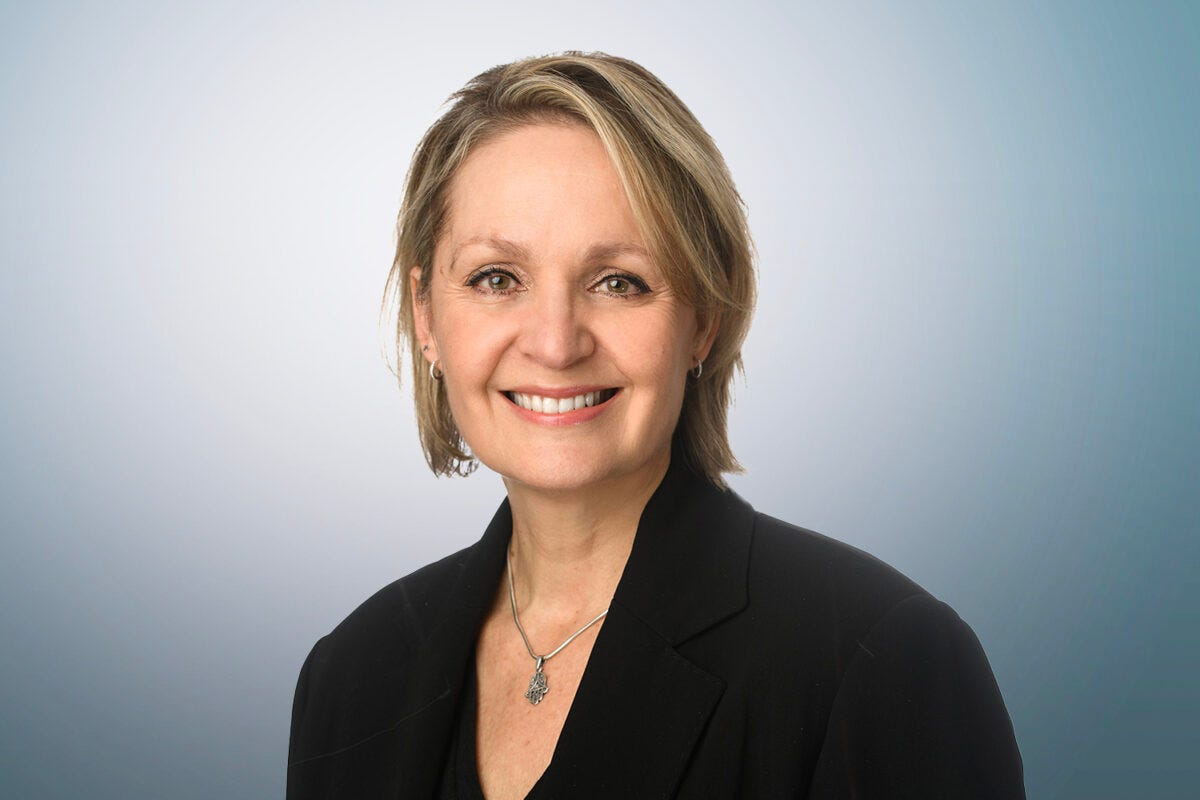
Riel Karmy-Jones KC is the lead prosecution barrister - she, representing The Crown Prosecution Service, is responsible for presenting the case, setting out the charges and calling the evidence it says supports them.
The proceedings on Monday were largely procedural. The court has not yet heard a substantive opening statement from the prosecution, and Brand did not give evidence during the first day.
He had already entered not-guilty pleas at earlier hearings.
The case was adjourned until today, when jury selection is expected to be completed and the jurors formally sworn in. The prosecution is expected to make its opening statement on Wednesday morning, setting out the allegations, the case it intends to advance, and the evidence it will ask the jury to consider.
After the prosecution opening, the trial is expected to move into the presentation of evidence. Depending on the court’s timetable and the evidence admitted, this may include testimony from the complainants, other witnesses and documentary or digital material. Witnesses who give evidence may be cross-examined by the defence.
Once the prosecution has completed its case, the defence will have the opportunity to challenge the evidence and, if it chooses, call evidence of its own. The proceedings will then move towards closing speeches by the prosecution and defence, followed by the judge’s directions on the law. The jury will retire to consider the evidence and decide whether the prosecution has proved each individual charge beyond reasonable doubt.
I’ll be covering each day of the trial and will be posting out daily updates as it progresses. I’m also expecting to attend some of the trial sessions, so will be able to provide you with evidence and coverage that the media is likely to censor.