


After three weeks at Southwark, one charge against Russell Brand has been thrown out and replaced with a lesser one, he has given evidence for more than four hours, and on Tuesday twelve citizens will begin deciding his fate. The rest of us decided it three years ago, on the strength of a television programme. That ought to worry you, whatever you think of the man.
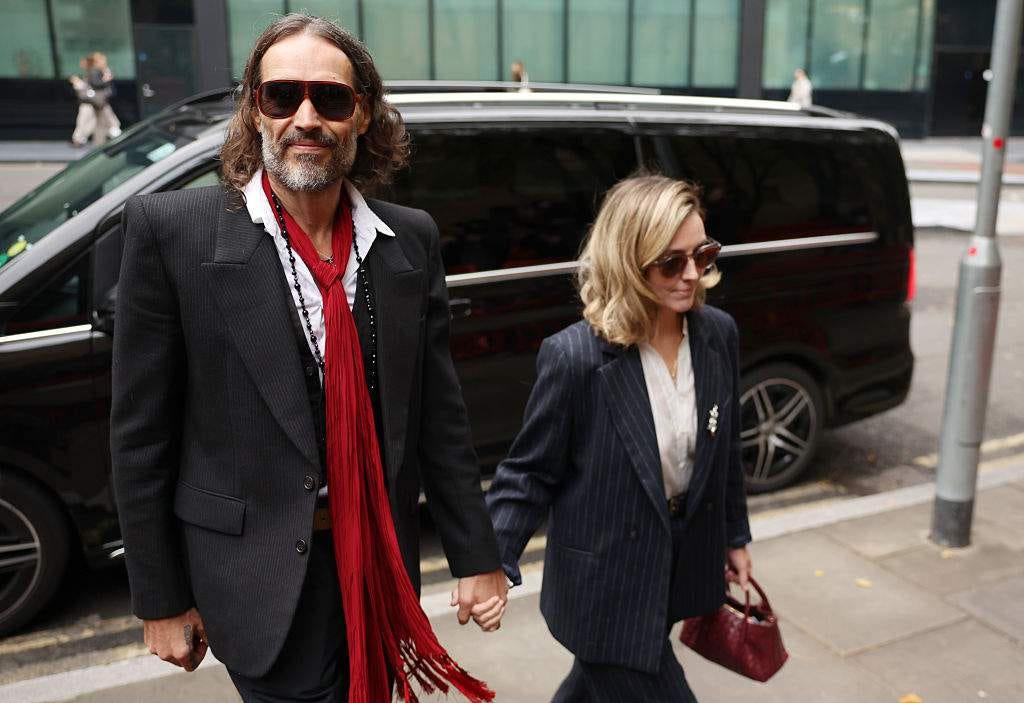
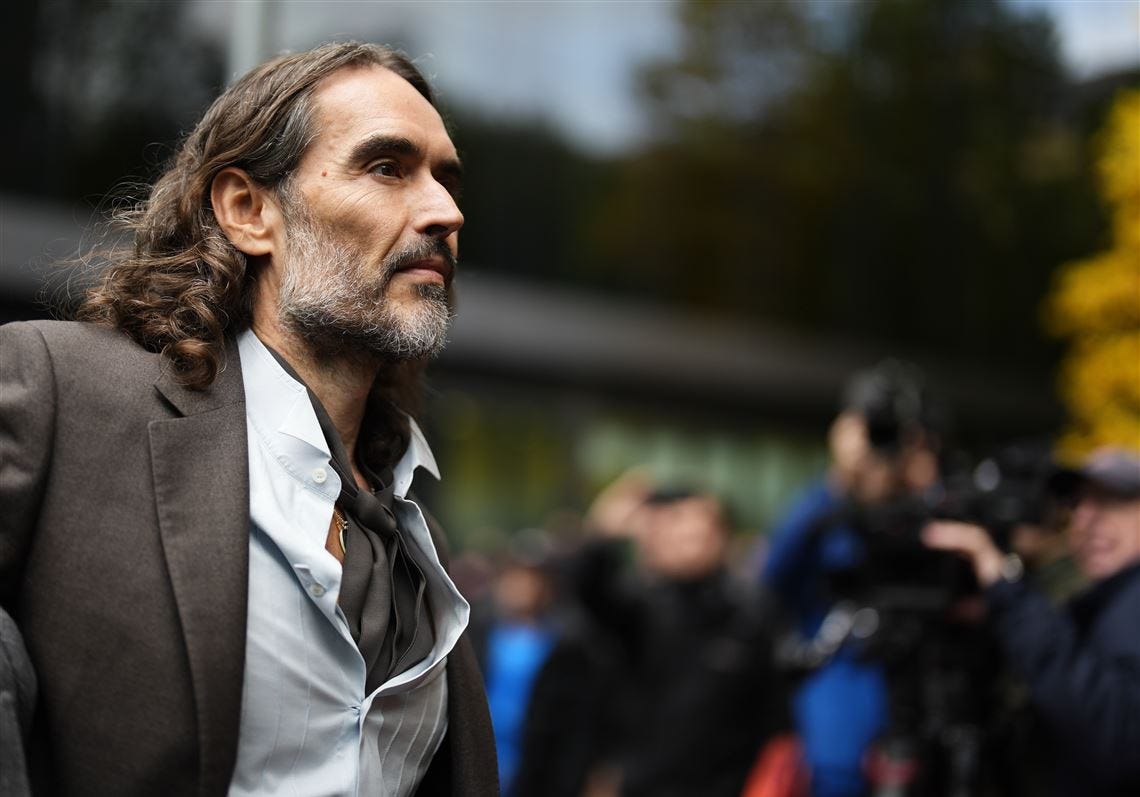
Every morning for three weeks a car has drawn up outside Southwark Crown Court, and out has climbed a man with the hair of a disgraced Regency poet and the vocabulary of a thesaurus that has been left out in the rain, holding his wife’s hand. The photographers bellow. He says something gnomic: “Today is the day for truth and justice.” Then he goes inside, sits in a glass box and listens while strangers describe, in close and harrowing detail, things they say he did to them twenty years ago. In the evening, as often as not, he and his wife sit on a porch and talk to the internet about Jesus.
This week he came out of the glass box and into the witness box, and the trial of Russell Brand moved into its final act.
Brand, 51, faces seven charges involving six women between 1999 and 2009: three of rape, three of sexual assault and one of attempted indecent assault. He denies every one of them. That last charge is not the one he went into court facing. The original count of indecent assault has gone, replaced by a lesser one, and I shall explain why in a moment. A jury of eight men and four women, sworn in on 13 October after six prospective jurors were excused because they could remember the 2023 Channel 4 documentary that set all this in motion, will hear the defence’s closing speech on Monday. Mr Justice Bennathan expects them to retire to consider their verdicts on Tuesday, 3 November, and he will accept only unanimous verdicts.
Let me say at once what I can and cannot do in this column, because it is rather the point of it. I can tell you what the jury has heard. I can tell you what each side has said. I cannot tell you which of the women I believe, or which of the allegations I think will stand up, because the law of contempt forbids it while the jury is still out, and quite right too. What I can tell you is that Southwark has produced, over three weeks, some of the most extraordinary evidence heard in an English courtroom in years, and that almost none of it resembles the story the rest of us were told in 2023.
First, the case for the Crown.
The prosecutor, Riel Karmy-Jones KC, opened on 14 October by calling Brand a “ruthless, calculated and manipulative sexual predator” whose desire for sex was “indiscriminate and voracious”. “To the defendant,” she said, “women were simply a means to an end.” She reminded the jury that he had once told a live audience he was attracted to women aged “16 to death”. The first witness, Mark Pinheiro, a former cabaret partner and housemate, said Brand had told him he hoped to sleep with 5,000 girls. The defence, in the person of Ian Winter KC, suggested his evidence was inconsistent.
The first complainant says Brand raped her in a hotel room in Bournemouth in 1999, during the Labour Party conference, after they met at a cabaret event. “I thought he was a gay man,” she told police; she had felt “sexually safe with him”. She described his tongue as “lizard-like” and said he turned “monster-like”. “He did rape me, he did push me on the bed.” She said that afterwards he dressed and wrote down his email address as if nothing had happened. Mr Winter suggested she had “fallen under his spell”, that the encounter was consensual and that she had come to regret it. “I did not fall under the spell,” she replied, “and I did not find him attractive.” He pressed her on whether she had resisted or said no; she said she had said no, had told police so, and had been unable to struggle or breathe properly. Photographs she took of Brand that night were shown to the jury. She had told police he was in his underwear; the pictures show him in trousers. The defence also put to her that the 2023 documentary had coloured her memory of the night, which she rejected. Counsel and witness then argued about the precise meaning of the word “flirting”, the sort of exchange that only happens in an English courtroom, and which would have had Jane Austen reaching for her smelling salts.
The second complainant, then working at MTV Europe in London, says that in 2001 a “wild-eyed” Brand grabbed her arm in the office and tried to pull her into the men’s toilets. “Come on, come in with me,” she recalled him saying. She freed herself in about twenty seconds. Mr Winter called it “a minor incident”.
The third, also at MTV, says that at a Soho birthday party in July 2004, within a minute of meeting her, “he literally just grabbed my boobs in the middle of the conversation”, then pulled her into a toilet cubicle and forced her to perform oral sex, saying “come on, come on, don’t be a spoilsport”. “It happened so fast,” she said. “I just froze.” Her sister told the court that, as she later described it, Brand’s eyes went “completely blank”, as if he had “been possessed”. Mr Winter told her: “Let’s be clear, he did not do that to you,” and called what she described “physically impossible”. He suggested she had gone into the toilet willingly, and that if she had been groped in the middle of a bar, somebody would have seen it. She denied being star-struck: “I wasn’t a giddy schoolgirl.” The defence pointed out that at the time she had told friends and her sister that Brand had tried to force himself on her but that she had got away, and that she first described it as rape only after the 2023 documentary and the newspaper reports. Her explanation: “I didn’t want people to judge me. I felt ashamed.”
The fourth, who worked at a London radio station in 2004 or 2005, says Brand pressed her against a corridor wall, gave her “sloppy” kisses and groped her breasts and bottom while his entourage stood by. She begged them to intervene; nobody did. She gave evidence in tears, said she had nothing to gain, and described a “culture of fear” in which women were rated on their looks by colleagues and a complaint would have been met with the observation that she was “lucky”. Text messages she sent at the time read: “He was a superstar,” and “I thought nothing would happen to him.” Asked why she had not come forward sooner, she spoke of a toxic workplace, of the fear of not being believed, and of her mortgage.
The fifth, a Channel 4 employee, says that in 2009, while recording a radio advertisement, Brand laid his head in her lap and demanded a massage, his face moving towards her groin until she could feel his breath on her. Two of his associates, she said, told her he would not carry on recording unless she did it, and shrugged and gestured to urge her on; others laughed. She said she was “repulsed”. She reported it to her line manager the following day, and a colleague backed up her account of the associates’ behaviour. Of all the complaints, hers is the one made at the time, to somebody in authority, which is worth remembering the next time someone asks why none of these women spoke up.
The sixth was 21 and a fan. She says Brand picked her out after his Scandalous show at the Hammersmith Apollo in February 2009; a friend recalled him telling the audience, in effect, that if they fancied him and he asked them up to his dressing room, they should come. Security staff took her backstage. A week or so later she went to his house in Hampstead expecting consensual sex, and says it turned into anal rape. Estate agent’s photographs of the bedroom and bathroom, taken about eight months later, were shown to the jury, and she identified them as the rooms where it happened. Months afterwards, she said, she ran from him at the Edinburgh Fringe. He later texted her: “Because you are dirty and I want to push you further.” She replied that he had treated her “like an animal”. He apologised.
Her cross-examination was the most revealing of the whole Crown case. She agreed she had been a “huge” fan who “completely adored him”, that she had gone to his house willingly expecting sex, that she knew of his reputation (The Sun had named him “Shagger of the Year” three years running) and that she had a partner she loved at the time. Going there, she said, had been a “huge mistake”. Mr Winter put it to her that, young and infatuated, she “went along with” what Brand wanted, and that he had “pushed you and probably had treated you like an animal, but he didn’t rape you”. When she said Brand “didn’t act like he’d done something criminal” afterwards, Mr Winter replied: “That’s because you consented.” He noted that in her texts she had told Brand he had treated her like an animal, not that he had raped her. She agreed. “I didn’t agree to do that,” she said. “I didn’t consent to what happened to me.” She said she had been in pain and terrified she had contracted HIV, that she had told friends and her parents at the time, and that the questioning made her feel she had brought it on herself. She went to the police in 2025, because, she said, she no longer wanted to carry the guilt and the shame.
The Crown’s final witness was a former personal assistant, whose statement was read to the jury. She called Brand “a peacock” with an “insane sexual appetite”, who loved wandering around in his underpants and would ask, “May I go and have sex now?” Women came to his flat and his dressing rooms, often women he did not know. She was once told not to take his mother or his girlfriend to the dressing room because he was having sex in it. He “never seemed happy after sex, more so depressed”. She left because she was “sick of him and feeling burnt out”. She had seen bad behaviour normalised before, she said, but “this was on another level”. And then, the line the defence will no doubt be quoting on Monday: she never saw him break the law, and nobody ever told her that he had.
Which brings us to the charge that was dropped.
On Tuesday 27 October, at the close of the prosecution case, Mr Justice Bennathan ruled on the 2001 MTV allegation. “In respect of count 2,” he told the jury, “I have reached the decision there is insufficient evidence of indecent assault.” Because the incident pre-dates the Sexual Offences Act 2003, Brand was charged under the old 1956 law, under which an indecent assault requires an assault in circumstances of indecency. On the complainant’s own account, Brand grabbed her arm and tried to pull her towards the men’s lavatory, and she broke free within twenty seconds. Nothing indecent actually happened; the question was what he intended to happen. So the judge directed a formal verdict of not guilty on indecent assault, delivered by one juror in what he candidly called a “slightly artificial process”, and the Crown added a new count of attempted indecent assault on the same facts, to which Brand pleaded not guilty. It is not quite the acquittal some of his supporters online have been celebrating. It is, however, the first time in three years that any part of the case against Russell Brand has been tested by a judge and found wanting, and it is the only result anybody has yet had in a courtroom.
The same day, the jury heard the prepared statements Brand gave to police in four interviews between November 2023 and July 2025. In each he said he had “never engaged in any non-consensual sexual activity”. He described a life of kissing hundreds of fans, having sex in lavatories and ending encounters abruptly, a lifestyle he called “very promiscuous”, which he said had been “unfavourably reframed” as crime. Of several of the women he said he had no memory at all.
Then, on Wednesday, Brand went into the witness box himself, for more than four hours, which is three hours and fifty minutes longer than most people have ever heard him be serious.
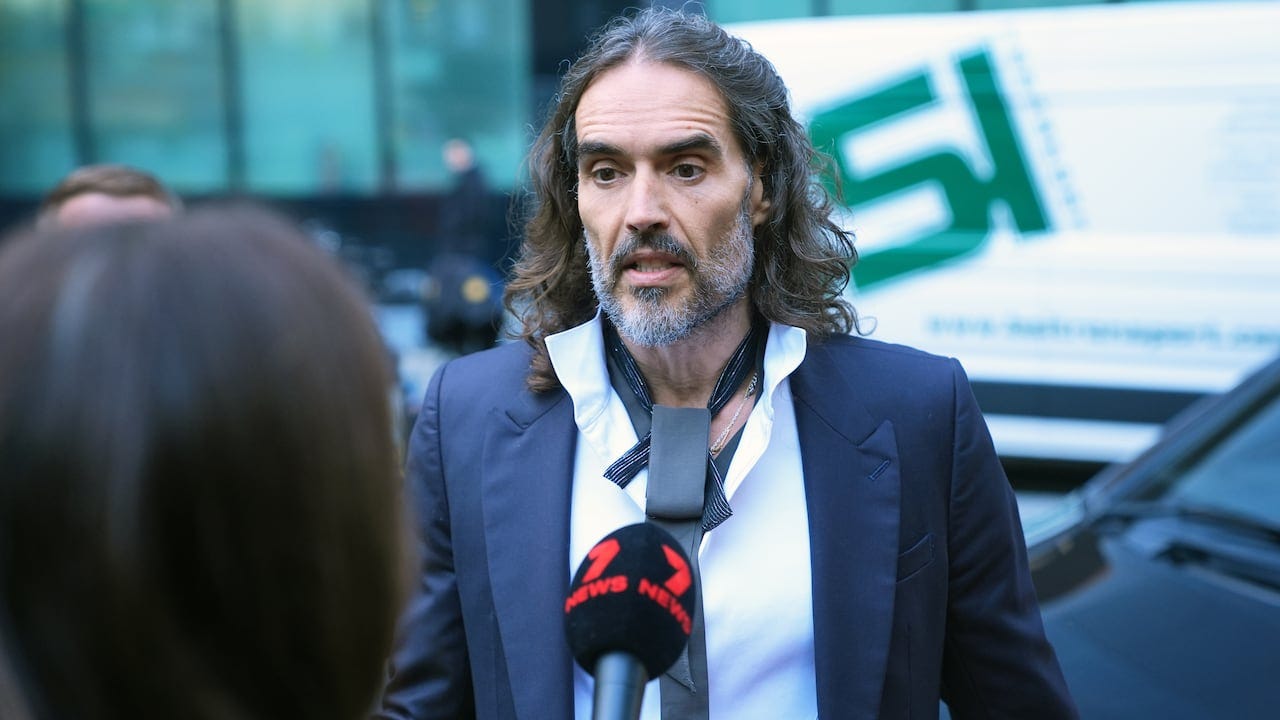
He began by answering “no” to each charge as his barrister read it out. “Consent is fundamental, essential, necessary, and indeed in many ways more important than sex itself,” he said. He told the jury the allegations had been “devastating”, that “my entire life has been consumed by these events, these allegations, these accusations”, and that they had cost him his health and very nearly his marriage. He said Great Ormond Street Hospital had barred him from staying with his baby son during open-heart surgery, citing “the material published”. Asked whether he had persuaded anybody with relevant evidence to testify on his behalf, he said: “I have not.” Asked whether any of them would “touch you with a bargepole”, he said: “No.” It is a measure of how far a man can fall that the most famous comedian of his generation could not find one old friend willing to walk into Southwark and say a kind word for him.
He then went through the women one by one. The Bournemouth woman he remembered as “loquacious” and “interesting”; asked whether he had raped her, he said no, and asked whether he thought no meant yes, he said: “I know what no means.” He denied pretending to be gay to get women into bed. Of the 2004 Soho party, he said a friend had introduced the woman by saying “there’s a bird here who really wants to meet you, mate”; that he would have told her she was beautiful; that he spoke to her for less than a minute and went into the lavatory with her to “fool around”; and that grabbing her breasts would have been “disgusting behaviour” that did not arouse him. Asked whether she might not have consented to going into the cubicle, he said: “There’s absolutely no question.” Asked whether she had performed oral sex on him there, he said no. Of the MTV office, he said he had “absolutely not” intended anything non-consensual.
The Hammersmith fan he did remember, eventually. He told police he could not recall her; in court he said he had refreshed his memory, and described a “memorable” sexual encounter in his dressing room, after which he had been “excited and enthusiastic” to see her again. He confirmed that he used to “pick out people” from the audience to invite to the upstairs bar. He said they had later had consensual sex at his house in Hampstead, and denied that she had asked him to stop. Asked whether his memory was “a little selective”, he said no.
Then Ms Karmy-Jones stood up, and the afternoon turned into something nobody who was there will forget. She read the jury passages from his 2007 memoir, My Booky Wook, including a caption in which he says he decided “to act gay to attract girls”. It was, he said, “a joke”. She asked him about his phone. He explained that a “T” beside one woman’s name stood for “tart”, his code for casual hook-ups; that “AP” meant “anal play”; and that two asterisks meant: “Never, ever forget this individual, this is a memorable encounter.” The 5,000 women he did not recall, but it was “entirely possible it’s the kind of badinage I would have engaged in when I was 24”. He agreed that much of his early life had been “beyond reckless philandering and idiocy”; that he had been obsessed with sex, though not so desperate that he could not function without it; and that “as I became more successful and famous I was very comfortable allowing that to facilitate sexual access”, which, he accepted, was wrong. He described himself as “moderately famous” in 2004, “very famous” by 2009, and, after marrying Katy Perry in 2010, possessed of “staggering fame”.
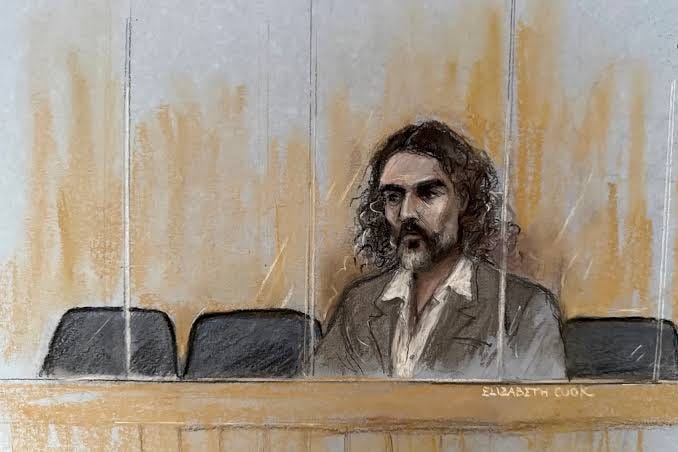
She put it to him that he had “never asked” one of the women “if she was up for it”: “You just did it.” “It’s not true,” he said, “that’s not what happened.” She suggested his account had grown more detailed since his police interviews, and he accepted that some details were inconsistent, explaining that reading the disclosed evidence, watching the interviews and revisiting the places had brought memories back. He denied tailoring his evidence to fit the women’s. At one point the judge himself intervened. “You knew,” he said, “consent was the million dollar question.” Brand replied: “I can tell the truth that I wasn’t looking at sex talk in that way.” At the end of the day he was asked once more whether he had committed any of the crimes. “Not guilty,” he said, “is my plea in every single case.”
On Thursday his wife, Laura, gave evidence. She first went out with Brand in 2006, when she was 19 and he was 31, and their relationship became sexual “at my own pace”. They split in 2007, when she discovered he was seeing other women; she was “a little heartbroken”. They reconnected in 2015 and married in 2017. She described him as “caring and kind”, a wonderful father and an attentive husband: “I feel very seen by him.” Under cross-examination, Ms Karmy-Jones produced a 2020 podcast, Made By Mammas, in which Mrs Brand had said she had “not seen [Brand] for years” when they met again; she insisted they had remained close. When Mr Winter asked her what she thought of the truth of the allegations, the judge stopped him, observing that she was not an expert witness. When he tried again by way of a question about her husband’s character, Ms Karmy-Jones called it “wholly unacceptable”, and the jury was sent out.
And on Friday the Crown closed. Ms Karmy-Jones told the jury the six women did not know each other, had sought no limelight and had nothing to gain “except perhaps some closure”. Each, she said, described the same pattern: a charming man, then “a personality change, a pivot”, then a man who “didn’t listen when I said no, he didn’t listen, he didn’t care”, who in the rape cases “just kept on going until he achieved his ultimate aim”. They were not “jealous women spurned”, and it did not matter that they could not remember what they had been wearing. The documentary, she said, was no “magic force” that had planted false memories; the women had simply “realised they are not alone”. Brand, who had remembered so little in his police interviews, now seemed to “remember lots”: his defence was “a lot of half-truths, but spun into lies”. She quoted his line about consent being “more important than sex itself” and asked whether it rang true, then read from My Booky Wook: “I will determinedly, resolutely, remove anything that’s in the way.” Consent, she suggested, was to him “just an obstacle to be removed, or perhaps to ignore”. Mrs Brand was “undoubtedly lovely”, she said, but she was not there. And then she asked the jury to sit in silence for twenty seconds, the length of one of the alleged encounters. They did.
On Monday, Mr Winter will reply. On Tuesday, the jury goes out.
Notice what almost every one of these accounts has in common. In most, nobody disputes that Brand and the woman met, or, in some, that there was sexual contact. The fight is over consent: whether it was given, whether it was withdrawn, whether it was communicated, and whether a woman who went somewhere willingly, or said nothing at the time, or described events differently to friends than she later did to police, can be sure twenty years on where the line was crossed. The defence has pointed to underwear that turned out to be trousers, to a first account of escape that became an account of rape, to a text that said “animal” rather than “rape”, to a former assistant who never saw a crime, and to a documentary that came before every one of the complaints. The Crown has pointed to six strangers telling strikingly similar stories, to a contemporaneous complaint to Channel 4, to texts and sisters and friends, to a defendant whose memory improved markedly between the police station and the witness box, and to a phone in which women were catalogued with letters and asterisks. Those are precisely the questions twelve jurors must now answer. It is not only Russell Brand on trial at Southwark. It is the very nature of consent itself.
That is the case. The jury will decide it. I will not.
But notice one thing about that summary. I have been able to tell you the defendant’s name, his age, his hairdo, his wife’s name and her podcast, his memoir, his phone codes, his former addictions, his religious conversion and the precise wording of his denials. I have been unable to tell you a single identifying detail about any of the six women, and if I tried, I would be committing a criminal offence. Since the Sexual Offences (Amendment) Act 1992, complainants in sexual cases have enjoyed lifelong anonymity from the moment they make an allegation. The accused enjoys nothing of the sort. He is named on arrest, sometimes before, and his name is then carried around the world like a severed head on a pike.
There are good reasons for complainant anonymity, and I want to be fair to them, because they are serious. Sexual offences are among the least reported crimes there are. Few women would walk into a police station if they knew their name, and the most intimate details of the worst night of their lives, would be on the front of the Daily Star next morning. Victims who are named are hounded. Victims who are not named are more likely to come forward. And the law is right to tell juries, as it does, that a delay in reporting is not in itself a sign of a false complaint, because people who have been assaulted very often say nothing for years.
All true. But consider the other side of the ledger, which our legislators have tended to leave blank.
When the accusers are anonymous and the accused is not, the scrutiny runs only one way. A journalist may dig into the defendant’s past, his old stand-up routines, his ex-girlfriends, his radio show, his bizarre politics, his baptism in the Thames and his views on vaccines, and publish the lot. A journalist may not, by law, so much as hint at who the complainants are, and therefore cannot scrutinise them at all. Inside the courtroom, both sides are tested. That is what cross-examination is for, and as the past three weeks have shown, it is a brutal and necessary business. Outside it, where most of the public actually forms its views, only one person is ever on trial.
And in Brand’s case, the public verdict arrived long before this one. In September 2023 Channel 4’s Dispatches, together with The Times and the Sunday Times, broadcast and published anonymous allegations against him. YouTube cut off his advertising revenue. His agent dropped him. His publisher paused his books. Great Ormond Street, if Brand’s evidence is right, barred him from his own baby’s bedside. Brand, who had been described in the press as a “comedian” for fifteen years, was by the end of that week described almost exclusively as an “alleged rapist”. None of this was done by a court. And here is a curious detail that emerged at the trial and has received remarkably little attention: according to Reuters, none of the six women whose allegations the jury is now considering was among the anonymous women in that original programme. They came forward afterwards. The documentary that made Brand a pariah is, in the strict sense, not the case he is facing at all.
Mr Justice Bennathan has been admirably blunt about it. He told jurors that the documentary was “one-sided and dramatic in manner”, that the allegations in it had “never been tested in any court”, and that they must try the case on the evidence before them and nothing else. The defence is entitled to argue, as it has, that the film shaped how the women remembered things. The prosecution is equally entitled to argue that the film simply gave six women the courage to speak. That is precisely the sort of question twelve people in a jury box are there to answer. It is not a question a television producer, or a man on X with a frog for an avatar, is equipped to settle.
We have been here before, and it did not end well. In 2014 the BBC filmed a police raid on Sir Cliff Richard’s home from a helicopter. He was never arrested, never charged, and won substantial damages for breach of privacy. Paul Gambaccini spent a year on police bail for nothing. Harvey Proctor and the late Lord Brittan were accused of monstrous crimes by Carl Beech, a fantasist who enjoyed complainant anonymity right up until the day he was convicted of perverting the course of justice and jailed for eighteen years. The men he smeared had their names in every paper in the land. His was protected by law.
Parliament once understood this. Between 1976 and 1988, men accused of rape in England and Wales were also entitled to anonymity unless convicted. The protection was scrapped, largely on the argument that naming a defendant can encourage other victims to come forward, which it sometimes does. That is a real argument and I do not dismiss it. But it is an argument for naming people when they are charged, not for naming them on the strength of a documentary, and it does nothing to answer the basic unfairness of a system in which one party is shielded from the gaze of the entire world and the other is stripped naked in front of it.
There is a further absurdity, and it is this very column. While the trial runs, the newspapers that did more than anyone to turn Brand into a pariah must behave like Trappist monks, reporting only what is said in court. Meanwhile Brand himself has spent the trial broadcasting a weekly show called Sunday Service with the Brands to an audience larger than most national newspapers, opening one episode with a prayer asking God to “guard my lips”, and promising not to “refer to the events in the trial, so that truth and justice is served for everyone”. “Truth and justice,” he said, “are the only things that can save me.” His wife has told viewers they pray every morning before court and read psalms in the car on the way in. I make no comment on the sincerity of any of this; a man is entitled to pray, and his wife is entitled to stand by him. I merely observe that it would once have been thought odd for a defendant in his own rape trial to be releasing hour-long devotional videos, and that it is a curious state of affairs when the accused has a larger platform than either the prosecution or the press. The modern trial takes place in three rooms at once: the courtroom at Southwark, where the rules are strict and ancient; the newspapers, which are muzzled; and the internet, where there are no rules at all, and where Brand’s supporters and detractors reached their verdicts years ago and are now merely shouting them at each other.
Look at how this trial has been reported, and how trials like it are always reported. The juiciest line of the day goes in the headline, wrapped in a pair of quotation marks that are doing more work than any barrister at Southwark: “BRAND FORCED ME INTO TOILET”. “STAR’S ‘TART’ CODE”. The quotation marks are the newspaper’s legal fig leaf. They mean “somebody said this”, not “this happened”. But nobody reads the quotation marks. They read the words, and the words read like a verdict. The cross-examination that followed, in which the same account was picked at, questioned and occasionally contradicted, turns up in paragraph fourteen, if it turns up at all, below the photograph of the defendant looking shifty on the court steps. Everybody looks shifty on court steps. It is the steps.
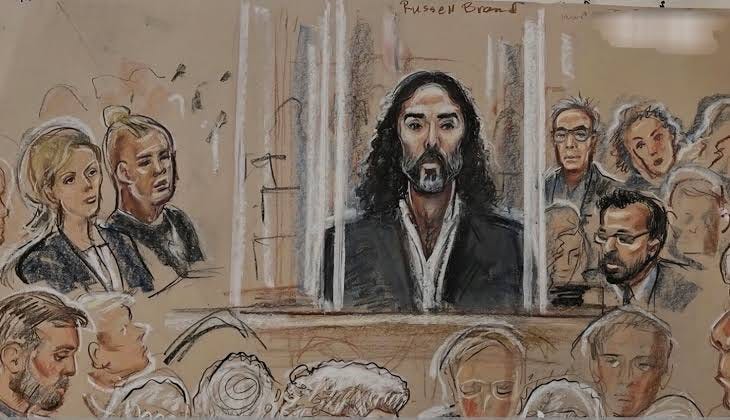
This is not a conspiracy. It is a business model. An allegation of rape against a famous man sells newspapers; the words “the defence suggested she was mistaken” do not. A complainant’s evidence, given on a Tuesday, gets the front page. The defendant’s denial, given three weeks later, gets a few lines on page nine, by which time the reader has long since made up his mind. And a sexual allegation, by its nature, is almost always one person’s word against another’s, about something that happened behind a closed door with nobody else watching, years or decades ago. That is precisely why we have juries, rules of evidence and cross-examination. It is also precisely the nuance that a tabloid headline is designed to strip away. The headline cannot say “one woman says this happened and one man says it didn’t, and twelve people will have to work out which of them to believe”. So it simply prints what she said, in capital letters, and lets the reader do the convicting.
The presumption of innocence is supposed to be the golden thread running through English criminal law; that is how the House of Lords described it in 1935, and it is written into Article 6 of the European Convention on Human Rights. It means that a man is innocent until twelve of his fellow citizens are sure he is guilty. It does not mean innocent until a newspaper decides otherwise, or innocent until a hashtag starts trending, or innocent until his agent stops returning his calls. But that is what it has quietly come to mean. By the time a famous man walks into a crown court today, the presumption has been reversed in every forum except the one that counts. He has lost his job, his income, his friends and, in Brand’s case, apparently his place at his son’s hospital bedside. The jury is told to put all that out of its mind. The rest of the country is told nothing of the kind.
And the mob does not wait. Social media has given every man with a phone a seat on the jury and none of the obligations: no oath, no evidence, no duty to listen to both sides, and no requirement to be unanimous, or even literate. Remember Christopher Jefferies, the retired Bristol schoolteacher arrested in 2010 over the murder of his tenant, Joanna Yeates. The tabloids monstered him for his eccentric hair and his fondness for poetry, and published every piece of lurid gossip they could find. He was entirely innocent. Another man was convicted. Eight newspapers paid him libel damages, and two were found guilty of contempt of court. Nobody paid for the thousands of people who had convicted him in pubs and comment sections in the meantime, because nobody ever does. The mob never apologises. It simply moves on to the next name.
None of this is an argument that the women in this case, or in any case, should not be heard. They should, and they have been, at length, in a courtroom, under oath, which is exactly where allegations belong. It is an argument that a newspaper, a television documentary and a mob on X are not courts, and that every time we treat them as if they were, we weaken the one protection that every one of us, famous or otherwise, would want on the day the knock came at our own door.
So here is my modest proposal, which I offer without expectation that anyone in Westminster will read it. Keep complainant anonymity, because the reasons for it are good. But restore pre-charge anonymity for suspects, so that a man is not destroyed by an accusation that may never reach a court. And let us all, journalists most of all, rediscover the old-fashioned habit of waiting for the jury before we hang a man from the lamp post of public opinion. If Brand is guilty, he will go to prison, as he should, and the women will have been vindicated in the only forum that counts. If he is not, then a great many people owe him an apology that he is unlikely ever to receive.
Either way, from Tuesday the twelve people in that jury room are the only ones whose opinion actually matters. The rest of us, myself included, should have the humility to admit that we were not in the hotel room in Bournemouth, or the cubicle in Soho, or the bedroom in Hampstead, and that we do not know.
Which is, after all, why we have trials.