


Tony Priest came home to the flat in Lyndhurst Drive, Leyton, at about twenty past five on the evening of 18 March 1975. It had been snowing. On the floor of the ground-floor hallway lay a bunch of dried flowers and grasses, dropped where somebody had let them fall. Upstairs, in the bedroom, he found his girlfriend.
Eve Stratford was 21. She was lying partly undressed, in a flimsy pink bra and knickers and a blue nylon negligee that hung open at the front. Her hands had been tied together with a scarf. A nylon stocking was knotted around one of her ankles. Her throat had been cut, not once, but somewhere between eight and twelve times, from ear to ear, and her face and neck had been savagely mutilated. There would have been a great deal of blood. Detectives who had spent their careers in the East End described it as one of the most horrific murder scenes they had ever seen. Some of them noticed something else, too: a strange, cloying smell hanging in the room, a scent that did not belong to Eve, and which the man who did this seems to have left behind him.
There was no sign that the door had been forced. There was no sign of a struggle, and, more chillingly, the pathologist would find no defensive wounds on her hands or arms. Whoever had done this had not fought his way in. Eve had, in all likelihood, let him in, or been followed through the door before she could close it.
An hour earlier, at around half past four, two women living downstairs had heard a man and a woman talking calmly upstairs. There was no shouting, no screaming. Then there was a thud, then footsteps, and then nothing. Whoever left that flat walked down the stairs, past the flowers in the hall, out into the snow, and disappeared for the next fifty-one years.
He has not been found. He may be dead. He may be alive, a man somewhere in his late sixties or early eighties, pottering round a garden centre, collecting his pension and watching the news. That is the thought I cannot shake about the case of the Playboy Bunny murder, and it is the angle I want to take, because we are close, now, to the point where the killer of Eve Stratford wins simply by outliving us all.
First, the girl, because she deserves to be more than a crime-scene photograph.
She was born Elizabeth Eve Stratford on 28 December 1953 in Dortmund, in what was then West Germany. Her mother, Liza, was German. Her father, Albert, was an English medic in the Royal Army Medical Corps, who had met Liza in the 1940s while he was serving with the British Army of the Rhine among the ruins of the Reich. It was the sort of post-war romance that the generals frowned upon and the war brides made the most of. Army families move about, and the Stratfords moved about the world before finally settling, as army families tend to, in Aldershot, the garrison town where nothing much happens except the changing of the regiments.
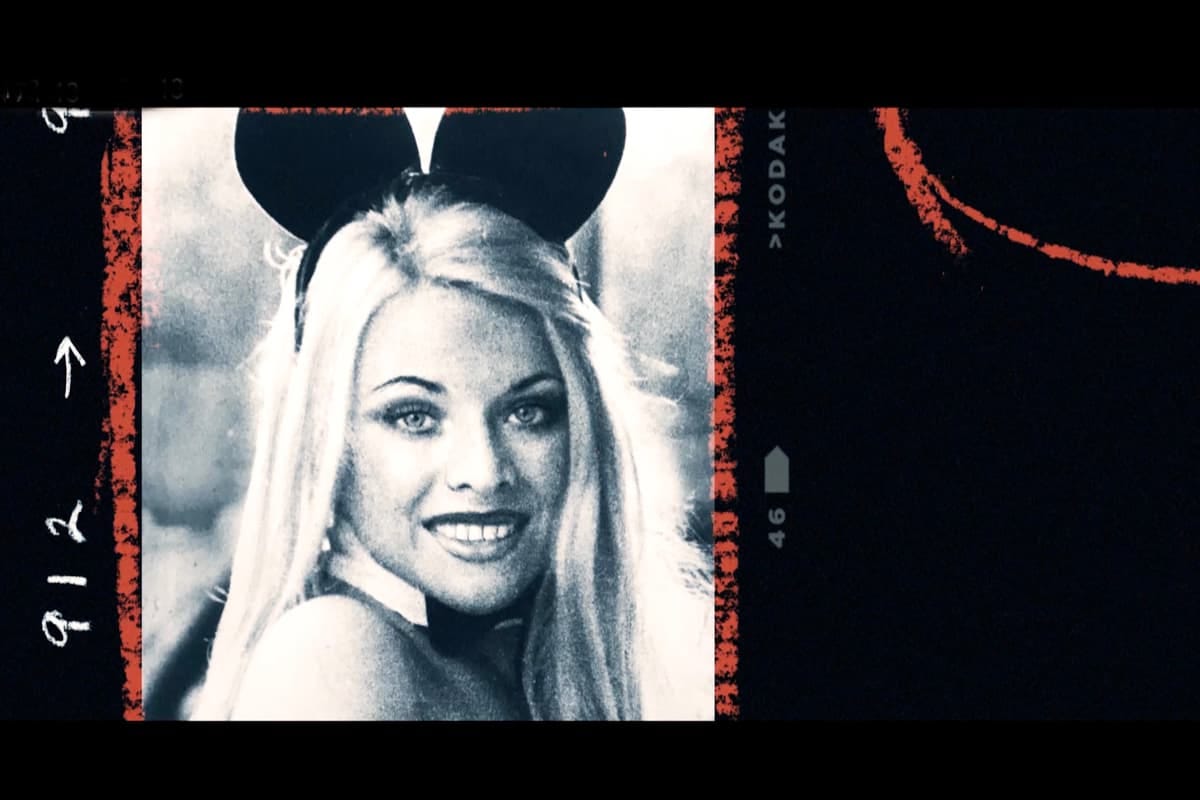
Eve was strikingly pretty, and knew it. As a teenager she won three beauty contests in Germany. She was bright, bilingual and restless, and Aldershot was never going to hold her. In 1972, aged 18, she moved to London to live with Tony Priest, the lead singer of a rock band called Onyx, a group that had started out in Cornwall and was later renamed Vineyard. The band, it was reported, had supported acts such as Queen and Thin Lizzy on their way up. Eve and Tony rented a four-bedroom upstairs maisonette at 61a Lyndhurst Drive, which they shared with two of his bandmates. It was the sort of arrangement that every 19-year-old girl in 1972 dreamed of and every father dreaded: long hair, loud music, cheap wine and the permanent prospect that next year would be the big one.
Priest is the only boyfriend of Eve’s that the record names, and theirs seems to have been, by the standards of the time, a settled relationship. They had been together for nearly three years when she died. But the men who mattered in this story were not, it seems, the men she chose. They were the men who watched her.
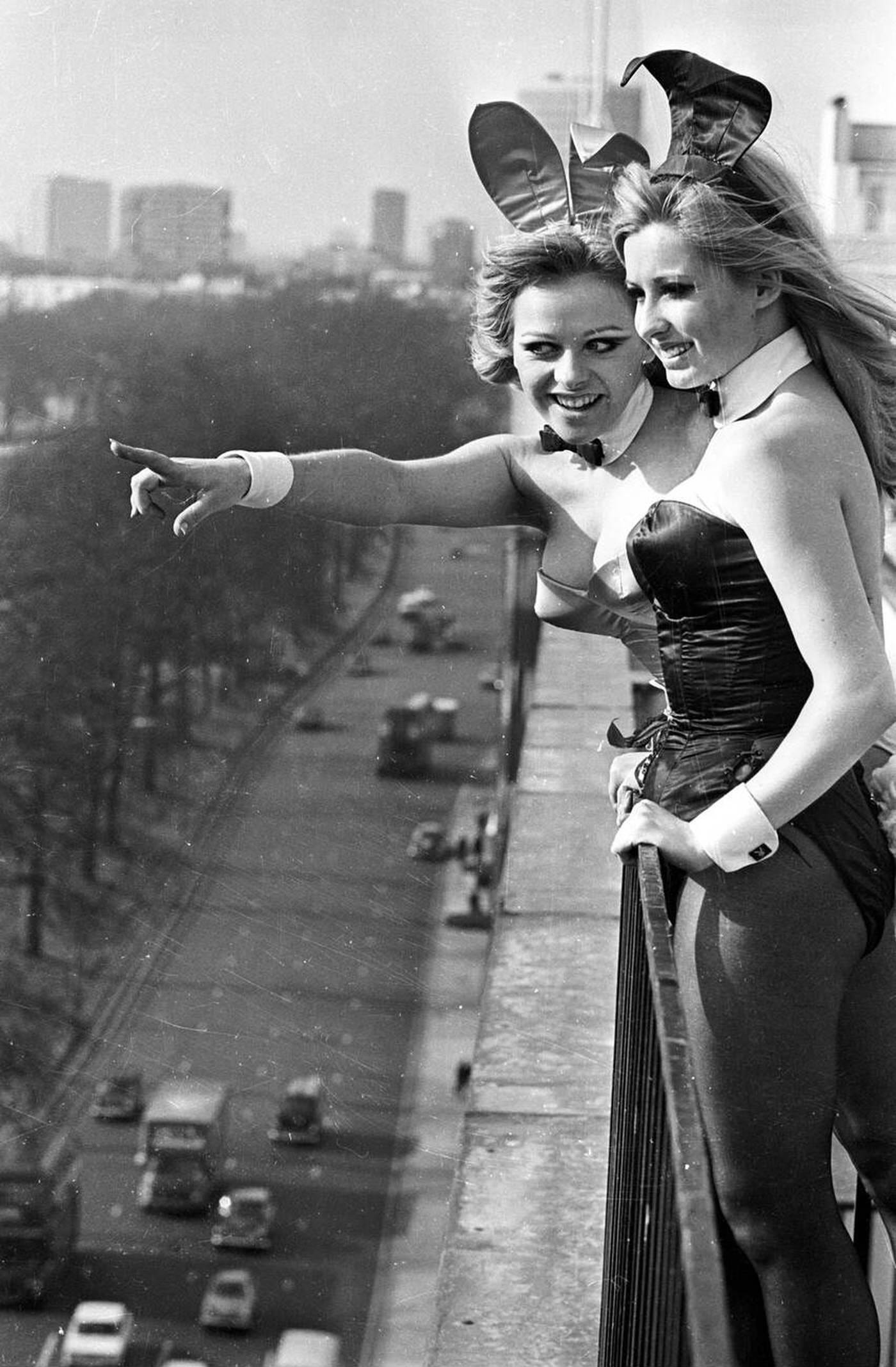
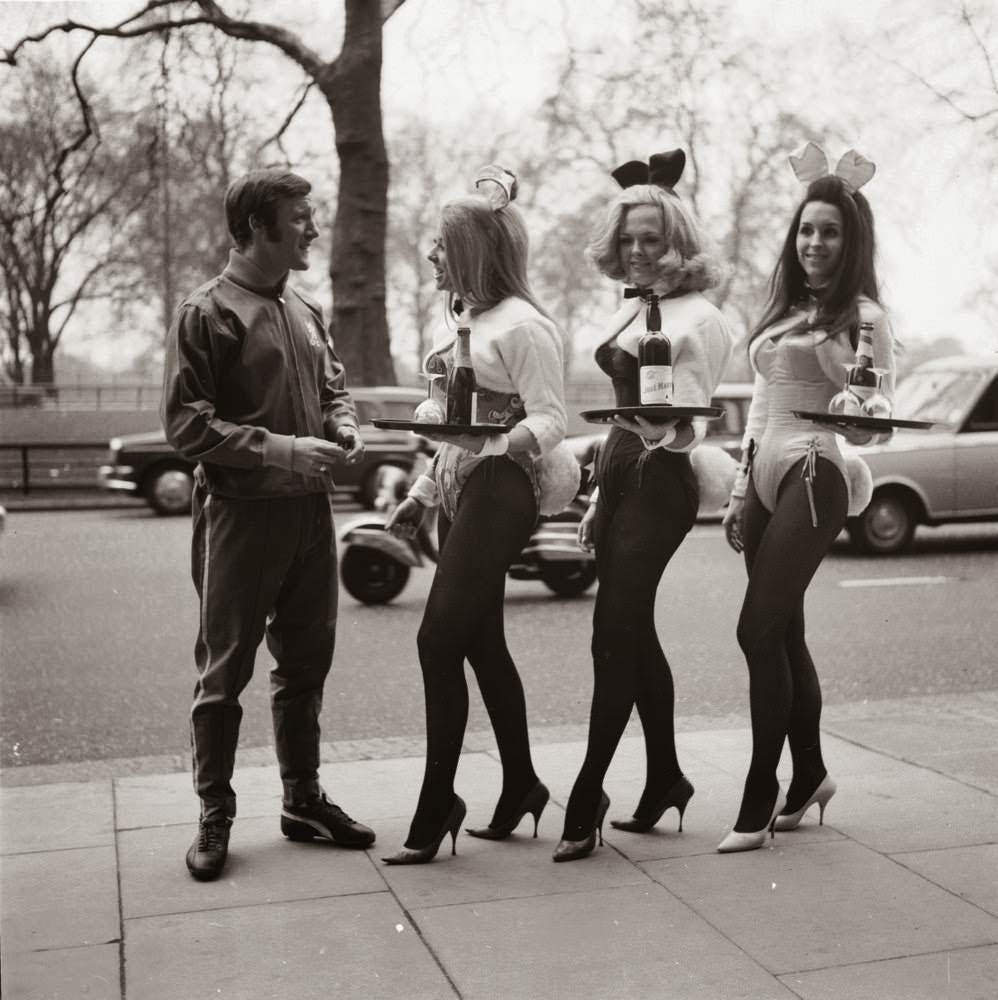
In 1973, on a friend’s recommendation, she got a job as a Bunny at the Playboy Club on Park Lane. It is hard now to convey what that meant. The London Playboy Club, opened by Hugh Hefner’s lieutenant Victor Lownes in 1966, was the most glamorous nightspot in the capital and, thanks to its casino, one of the most profitable businesses in the entire Playboy empire. Actors, gangsters, footballers, Arab princes and minor aristocrats came there to gamble, drink and gaze at young women in satin corsets, cuffs, bow ties, rabbit ears and a fluffy cotton tail.
A Bunny’s working day was a curious mixture of the glamorous and the regimental. The girls reported for their shifts in the evening, were inspected before they went on the floor, and could be given demerits for anything from a laddered stocking to a droopy tail or a few extra pounds round the waist. They were overseen by a “Bunny Mother” and trained to serve drinks with the famous “Bunny dip”, a sort of backwards sideways bend, so that they did not lean forward over the customers and spill out of their costumes. Some worked as cocktail waitresses; others dealt cards or ran the tables in the casino. The customers were not allowed to touch them. The Bunnies were not allowed to date the customers, were not allowed to give out their phone numbers, and were, in theory, untouchable, which was, of course, the whole point. It was erotic theatre run with the discipline of a girls’ boarding school, and Eve was very good at it.
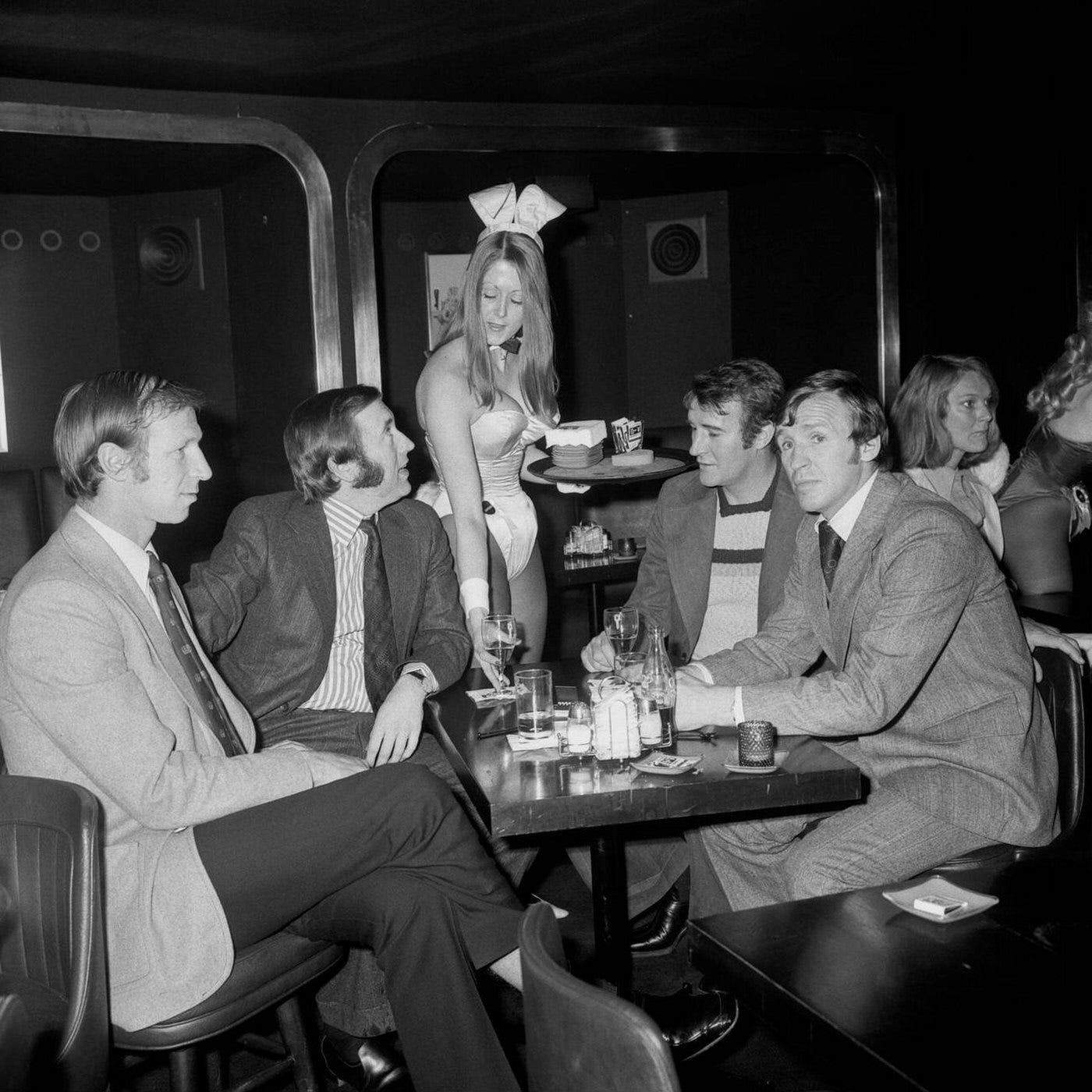
She took the stage name Eva von Bock, was known around the club as “Bunny Ava”, and mingled with the stars of the day; she counted Sid James and Eric Morecambe among her acquaintances. But she did not want to spend her life carrying cocktails. She wanted to be a model, and she was on her way.
In March 1975 she was Mayfair magazine’s “Girl of the Month”, in its “Spring Bonanza” issue, with a topless cover and a centrefold inside. The magazine was on the top shelf of every newsagent in Britain that month. It was a significant break and a fatal one. Posing for a rival publication was a breach of her Playboy contract, and Lownes suspended her, reportedly for three months. Eve does not seem to have been greatly troubled; she wanted to use the cover as a springboard, and in the weeks that followed she reportedly did two more shoots, one for a South African men’s magazine and one for the cover of a crime novel.
And then there was the interview. In the breathless style of the men’s magazines of the time, “Eva” told readers: “I like to be dominated.” She described herself as bisexual, said she found it “quite easy to turn men on”, and claimed to live alone with her cat, which was untrue; she lived with three young men. Her colleagues at the club were shocked by how outspoken it was, and Eve herself was reportedly upset that the piece made her sound like a lesbian. It was, in all likelihood, a persona written for her by a features desk. But somebody may not have known that. Detectives later came to believe that this cover, and those words, on the news-stands that very month, may well have attracted her killer. Somewhere in London, a man read that interview, looked at those photographs, and decided something.
There is a detail that makes the point horribly well. The dried flowers and grasses Eve was carrying when she came home that afternoon looked very like the flowers in her Mayfair photographs. And when police later searched the gardens, dustbins and drains around Lyndhurst Drive, they did not find the knife. They found a badly torn copy of Mayfair, among a stash of other pornographic magazines.
The day she died began ordinarily. She went to see her agent in Camden and visited a promotions consultancy in Bayswater, left at around half past three and took the Tube home to Leytonstone. A neighbour saw her walking alone through the snow towards her flat just before four o’clock, in a floppy hat, carrying her bunch of dried flowers. Within minutes of getting through her front door, it seems, she was confronted. The flowers on the hall floor, rather than in a vase upstairs, suggest she never got as far as her own rooms of her own accord.


The post-mortem was carried out at Walthamstow mortuary. The cause of death was knife wounds to the throat. The weapon was never found, and detectives concluded that the killer had brought it with him and taken it away again, which tells you that this was not a burglary gone wrong or a row that got out of hand. It was planned. Vaginal swabs revealed semen. “There was undoubtedly a sexual motive to Eve’s murder,” as one account of the case put it, and when the case was finally reopened, the senior detective said that both of the killings now linked to this man were sexually motivated “without a shadow of a doubt”. The binding of her hands and the stocking around her ankle suggested a man acting out something he had imagined for a long time. The mutilation of her face suggested a man who wanted to destroy the very thing that had made her famous.
There were warning signs, and in hindsight they are chilling. Eve had complained of being followed by a man who loitered near her home, a man with a strange, stiff, strained way of walking. In the days before her death she had been receiving obscene and silent phone calls, the caller either whispering filth or simply listening and hanging up. There were three on the day she died. She was not the only one. Other Bunnies were getting obscene calls too, and another model, Marilyn Looms, received death threats after her nude centrefold appeared in Mayfair.
The police released photofits of two men seen in the area that day. One was in his late thirties or early forties, of medium height, with a ruddy complexion and a peculiar limping gait. The other was about the same age, taller, with thick, black, wavy hair. Neither was ever traced, which is perhaps not surprising: a limping man with a ruddy face and a taller man with good hair describes roughly half the saloon bars in 1970s London. There was a lurid story that an aggrieved Arab acquaintance had tried to run her down in a car outside the club months earlier; it was never substantiated. Detectives considered a secret lover, and a friend or acquaintance she might have let in, and thought both less likely than a stranger who had fixed upon her. In October 1975, seven months after the murder, police in Liverpool found newspaper cuttings about her death in an empty bedsit, smeared with lipstick, along with magazine photographs of Eve that appeared to have been stabbed with a dart. Whose bedsit it was, and what it meant, nobody has ever said. It is the sort of clue that, in a detective novel, would crack the case by chapter twelve. In real life it went in a box. Priest himself, as the man who found her and the obvious first suspect, was arrested and released without charge. By 1976 the inquiry had been wound down. The file went into storage, and the man who did it went on with his life. He had, it turned out, unfinished business.
And then, six months after Eve’s death, the same man killed again.
On 3 September 1975, Lynne Weedon, a 16-year-old schoolgirl, had been out at the Elm Tree pub on New Heston Road in Hounslow, west London, celebrating her O-level results with friends. At about eleven o’clock she set off home alone and, against her own better judgement, took a shortcut down an alley called Short Hedges, which she had said she would never use after dark. At about twenty past eleven, somebody struck her from behind with a heavy object, possibly a lead pipe, fracturing her skull. He lifted her over the gates of an electricity substation, dragged her out of sight and raped her. The school caretaker, Victor Voice, found her the next morning. She was still alive. She never regained consciousness, and died in hospital a week later.
There were sightings. A dog walker saw a white man walking down the alley. Others saw a man running across the Great West Road and into it, and the detective leading the case said he was sure that was the attacker. A motorist, Bernard Andrews, reported a hitchhiker on the Great West Road at around one in the morning, and a photofit was produced. Police came to believe the killer had stalked Lynne from the main road, and that he knew the alley well. He was, in other words, a local man, walking home past the semis of Hounslow with a lead pipe and a schoolgirl’s blood on his hands, and nobody stopped him.
For thirty years nobody connected the two crimes, and you can see why. One was a glamorous model killed in her bedroom in the East End; the other a schoolgirl attacked in an alleyway in the far west. Then, in 2004, detectives reviewing Lynne’s case recovered a DNA profile. A review of Eve’s case found DNA on her clothing. In 2006 and 2007 the profiles were compared, and they matched. The same man had killed both women. Detectives went back to the sixteen main suspects in the two cases and took their DNA. None of them matched. Thirty years of suspicion, thirty years of whispers in the pubs of Leyton and Hounslow, and every one of them was the wrong man. Neither did Paul Thomas, a jailed policeman who had terrorised schoolgirls and who had been interviewed back in 1983, when he produced what police called “a satisfactory alibi”.
In 2007 the cases appeared on Crimewatch, under the banner of Operation Stealth, which kept going until its funding ran out in 2011. In 2015, on the 40th anniversary, the Metropolitan Police offered a £40,000 reward. “It’s inconceivable the killer of Eve and Lynne has kept the perfect secret for 40 years,” said the lead detective. They said the killer was a white man who had been between 17 and 30 in 1975, who knew the Hounslow alley well, and who may have confided in somebody over the years: a wife, a friend, a psychiatrist, a probation officer, a cellmate. Because the police only began routinely taking DNA from people they arrested in 1995, he could have a criminal record from before then and still not show up on the database.
Inevitably, once you have a double murderer, people go looking for more, and there has been no shortage of candidates. Elizabeth Parravincina, 27, was struck from behind with a blunt instrument and killed less than a mile from Lynne’s alley in September 1977, almost two years to the day after Lynne was attacked. Patsy Morris, 14, was found strangled with her own tights on Hounslow Heath in 1980, with her hands tied behind her back, as Eve’s had been; some have tried to pin her death on Levi Bellfield. Lynda Farrow, a 29-year-old pregnant croupier at a Mayfair club, had her throat cut at her home in Woodford Green in 1979. The retired detective Colin Sutton, the man who caught Bellfield, is convinced that the same man killed Eve, Lynne and Lynda. “I have no doubt,” he has said. The DNA, however, does not link Lynda’s killer to Eve’s, and the Met says there is “no evidence” connecting Eve and Lynne to any other historic case, while keeping “an open mind”. Sutton’s own suspect, a Lebanese gambler called Abdul Khawaja, who died in the early 2000s and who Sutton linked to Eve and Lynda through their work, has since been eliminated, according to The Sun, after his son provided a DNA sample. A crime writer has even argued, against the DNA, that the Yorkshire Ripper was responsible, Peter Sutcliffe being the default answer to every unsolved murder of a woman in the 1970s, rather as Jack the Ripper is for the 1880s. Nothing has stuck.
Television, it must be said, has been a great deal more interested in Eve Stratford than the Home Office has. In 2023 Marcel Theroux presented a two-part ITV documentary, The Playboy Bunny Murder, which raised the possibility of a police officer’s involvement and warned that, with witnesses ageing and memories fading, this might be “the last chance” to establish whether a serial killer had been at work in 1970s London. In 2024 a four-part series, West End Murders, followed Sutton as he went back over the cases. And in March last year, on the 50th anniversary, the Met confirmed that both murders remain live investigations, now led by Detective Chief Inspector Ali Foxwell of its Specialist Crime Command. “As this is a live investigation,” a spokesman said, “it would be inappropriate to provide a running commentary.” Fifty years in, one might gently observe that there has not been much of a commentary to run.
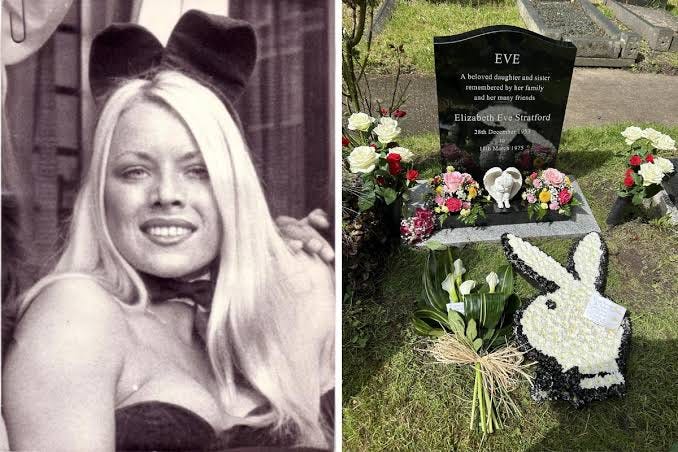
Eve’s old friends had no such reticence. Sheen Doran, now in her seventies and one of Eve’s closest friends at the club, joined three other former Bunnies to send flowers to Eve’s grave. She still remembers walking near Oxford Circus and seeing an Evening Standard poster that read “Bunny Girl Dead”, and running all the way to the Playboy Club. Half a century on, she says, it is still “too much”. Eve’s father, Albert, has died without ever learning who killed his daughter, or why.
Eve is not the only Playboy woman to meet a violent end, which says something about the shadows that have always followed the glamour. Dorothy Stratten, Playboy’s Playmate of the Year for 1980, was murdered in Los Angeles that summer, aged 20, by her estranged husband and manager, Paul Snider, who then shot himself; her story became the film Star 80. Paula Sladewski, a 26-year-old former Playboy model, was found burned in a Miami dumpster in January 2010; her boyfriend was a person of interest, and the case remains unsolved. Christina Carlin-Kraft, a 36-year-old former Playboy model, was found strangled in her apartment in Pennsylvania in 2018. And in the oddest reversal of all, Kelsey Turner, a model who had appeared in Playboy, was sentenced in 2023 to between ten and twenty-five years in prison in Nevada for her part in the killing of a 71-year-old California psychiatrist whose body was found in the boot of her Mercedes outside Las Vegas, after entering an Alford plea, which allowed her to accept the conviction while still maintaining her innocence. But of all of them, Eve’s is the one that should keep the police awake at night, because in her case they have the killer’s DNA and still do not have the killer.
Which brings me back to the pensioner.
If the killer was between 17 and 30 in 1975, he is between 68 and 81 today. Men who commit crimes like these rarely stop at two, which means that, if he is alive, he may well have a criminal record, and yet his DNA has never turned up on the national database. He may have died. He may have emigrated. “Did he die, or move abroad?” Sutton has asked. “My gut feeling tells me he is still out there somewhere.” He may have spent half a century as a model citizen, a grandfather, a churchwarden, a regular at the local, with a secret that only he knows. The police have, in effect, a signed confession in a test tube. What they do not have is a name to put to it.
And here is the question nobody in authority seems keen to answer: why not? In America, detectives have spent the past decade solving cases exactly like this one using investigative genetic genealogy, uploading a killer’s DNA to public family-history databases and building a family tree from his distant cousins until only one man fits. That is how they caught the Golden State Killer in 2018, a former policeman then aged 72 who had raped and murdered his way through California in the 1970s and 1980s. It has since been used to solve hundreds of cold cases. In Britain, the technique has been used only sparingly, hedged about with legal and privacy worries, and, as far as I can find, the Met has never said publicly whether it has tried it in this case. Earlier this year somebody started a parliamentary petition calling on the Government to approve a national protocol for genetic genealogy in murder and rape cases. It closed in August with 49 signatures. Forty-nine. If ever there were a case crying out for it, it is this one: a known DNA profile, two murdered young women, and a clock that is running out.
I understand the privacy concerns. I also understand that every year that passes, the chance of justice for Eve Stratford and Lynne Weedon shrinks. Many of the detectives who worked the original case are retired or dead. The witnesses who heard voices on the stairs are elderly or dead. Eve’s parents are dead. The only person who certainly still knows what happened in that bedroom in Leyton is the man who did it, if he is still breathing. And somebody, somewhere, may still know something: the wife who wondered about the bloodstains in 1975, the friend he once drunkenly confided in, the cellmate he boasted to. Anyone with information can call the police on 101, or Crimestoppers anonymously on 0800 555 111. The £40,000 reward has never been claimed.
Eve Stratford was 21. She was clever, ambitious and beautiful, and she was going places. She was killed because a man saw her in a magazine, or followed her home through the snow, or both. He walked out past her flowers and into fifty years of freedom. The least we owe her is to try every tool we have to find him before he dies peacefully in his bed, a mercy he did not show her.