


Michael Gove’s relationship with Dr Lola Salem lasted approximately two years. They attended parties together, were photographed kissing in a London restaurant and shared a flat in west London. Then, in October, the former Conservative Cabinet minister reportedly moved out. The Daily Mail announced the separation. Days later, newspapers reported that Salem was facing trial on charges of possessing indecent images of children.
There is a detail in this chronology that has received rather less attention than it deserves. Oriel College, where Salem taught music, said it became aware of the serious charges against an employee in June 2026. Yet the relationship’s demise only became public in October, when Richard Eden reported that Gove and Salem had already parted some time earlier.
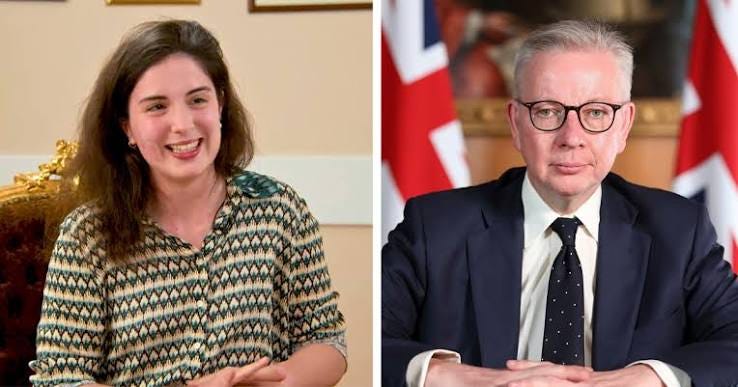
When, precisely, did they split? Did Gove know about the charges? If so, when did he learn of them? And why have articles about the case subsequently disappeared from several newspaper websites?
There are no established answers to all these questions, and there is no evidence that Gove committed any wrongdoing. But the chronology is sufficiently curious to merit a closer examination.
Salem, 33, is a French academic whose career has taken her from music and philosophy into the world of cultural policy, journalism and conservative intellectual circles. She trained at the Maîtrise de Radio France between 2005 and 2010, studied musicology at the École Normale Supérieure and pursued aesthetics and philosophy of the arts at the Sorbonne before completing a doctorate at Oxford in 2022.
Her doctoral research examined the commercial and legal structures of French opera in the seventeenth and eighteenth centuries. She subsequently taught music and musicology at Oxford, having begun teaching there in 2018, and took up a position at Oriel College in October 2022. She also held teaching responsibilities in French at Wadham and St Catherine’s colleges.
There was more to her professional life than academia. Salem worked as head of development at the Canterbury Institute between 2021 and 2023 and later became a business development partner at The Critic. She contributed to publications including The Telegraph, CapX and Engelsberg Ideas, writing about culture, education and the institutions that shape artistic life.
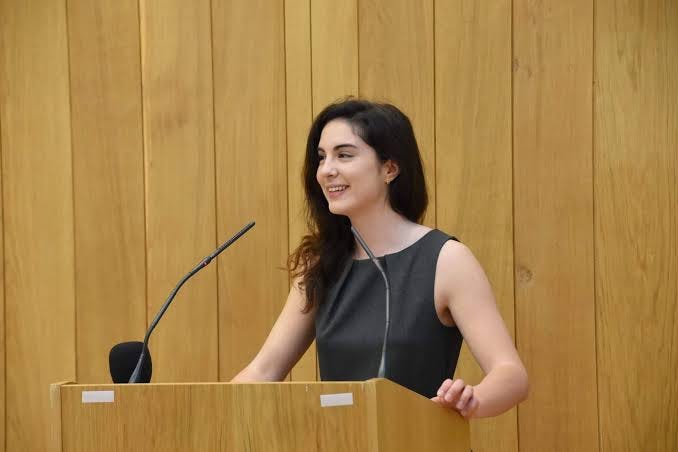
Her research fellowship supported work on what she describes as the post-cultural state, and she had been preparing a book entitled Artless, examining the relationship between culture, politics and institutions. Her published biographies describe a researcher interested in translating complex political and institutional questions into practical decisions.
Her professional connections placed her within a world familiar to Gove. Both moved through overlapping networks of conservative commentators, magazines and cultural organisations. Salem appeared at the Battle of Ideas festival and was associated with Freedom in the Arts. Gove, meanwhile, had spent years at the centre of British Conservative politics before becoming editor of The Spectator.
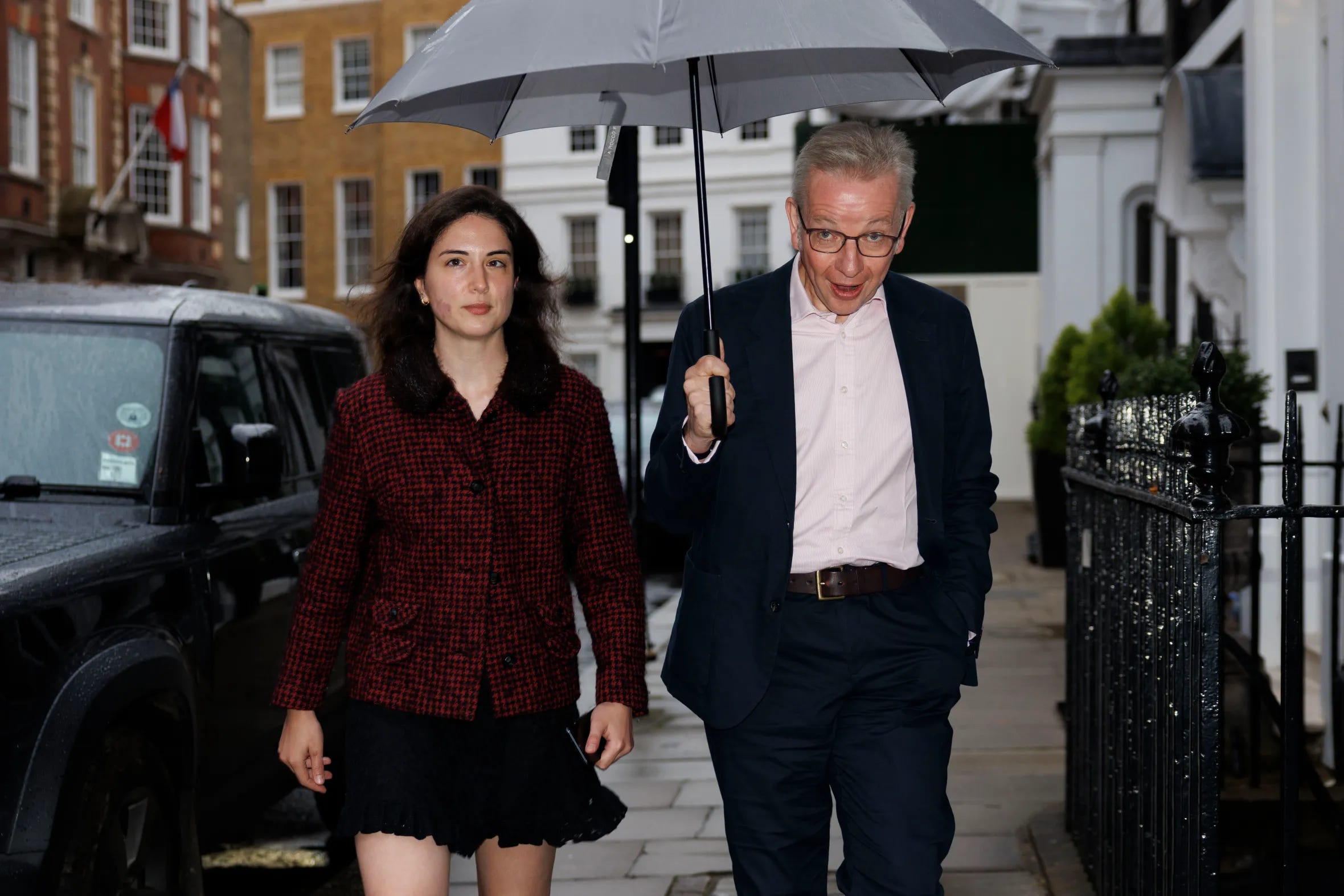
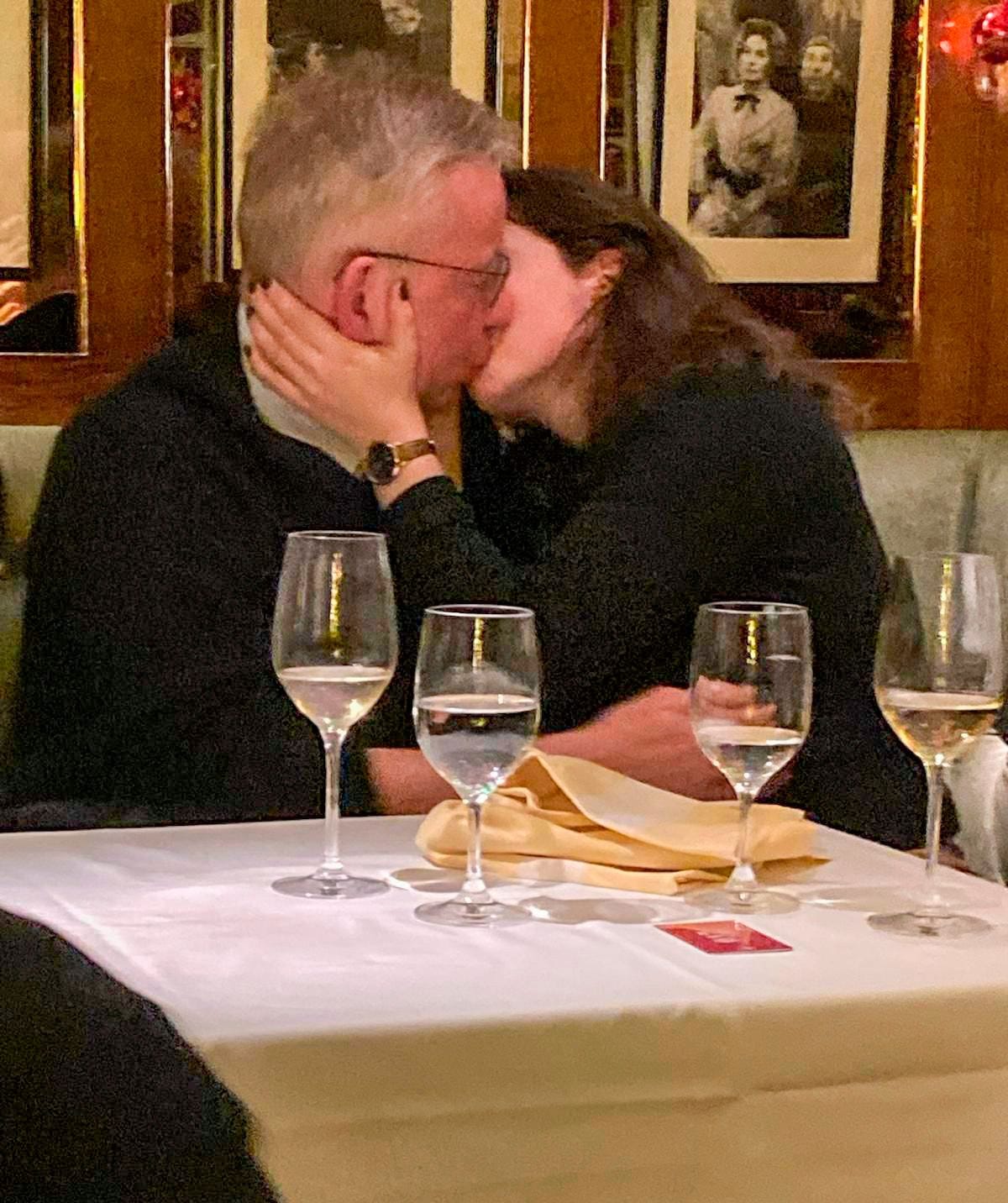
The couple first appeared publicly together at The Spectator‘s summer party in London in 2024. Gove was photographed holding an umbrella over Salem as they arrived in the rain. Later that year, they were photographed kissing at J Sheekey, the seafood restaurant in Covent Garden where they shared a meal and glugged down a bottle of white wine.
The photographs attracted attention partly because of the age difference. Gove was 57 when the relationship became public; Salem was in her early thirties. He had separated from journalist Sarah Vine in 2021, after almost two decades of marriage, and had left Parliament following the 2024 general election.
For the next two years, Gove and Salem kept their private life relatively discreet, although their appearances together were hardly secret. They shared an apartment in west London.
The pair appeared inseparable. But then, on October 2nd of this year, the Daily Mail suddenly reported that the relationship had ended. Their source said Gove had moved out of the flat they shared and described the separation as having happened ‘some time earlier’, with both parties remaining silent about the reasons.
Then came the exposing of allegations against Salem. These concern four images she allegedly possessed between 2021 and 2023. Salem was arrested, though her arrest was hidden from the public. She now faces one count relating to three Category B images, classified as the second most serious category, and another relating to one Category C image.
Thanks to the blanket silence there is no verified public description establishing the precise contents of the images, the identities or ages of the children depicted, or the circumstances in which police allegedly found them. Nor has anyone yet established the date on which police first arrested Salem, which devices were seized or what she told investigators.
Oriel College’s statement is the clearest indication of when the institution learned of the case. It said it became aware of serious charges ‘against an employee’ in June 2026 and suspended that employee pending the outcome of the legal proceedings. Salem was subsequently identified as the lecturer concerned.
Salem appeared at Oxford Combined Court Centre in July, with court listings recording hearings on the 22nd and 23rd. She pleaded not guilty to both charges. Further hearings were recorded on the 29th and 30th of September.
She currently remains on bail, with a further appearance scheduled for December 7th, and a trial at Oxford Crown Court on March 20th, 2028.
The question, then, is not whether Salem has been found guilty. She has not. It is what happened to the relationship while the case was progressing through the courts.
The Daily Mail‘s report offered no explanation for the separation beyond its source’s assertion that the couple had parted some time earlier. There is no verified date against which to compare the breakup with the college’s June announcement, the July hearings or the September court appearances. Without that information, the suggestion that Gove ended the relationship because of the charges remains speculation, though a reasonable assumption.
If the couple separated before the charges became known to Gove, that would be one chronology. If they separated after he learned of them, that would be another. At present, the public reporting does not tell us which is correct.
Then there is the matter of the missing articles.


On October 10th, The Telegraph published a report by Gordon Rayner about Salem’s criminal case. The Daily Mail published its own account, attributed to Elizabeth Ivens, and GB News also reported the charges. By October 11th, however, the original Telegraph report had been removed and the link reportedly redirected to the newspaper’s homepage, while the Mail article was returning a 404 error indicating that the page had similarly been removed.
The changes extended beyond the criminal case. Salem’s article for Spectator Life, published on October 9th under the title “You cannot devolve a culture that you cannot define”, also disappeared from the magazine’s website, along with her author page (Salem republished the article on her own Substack). Her contributions and author page at The Catholic Herald were also removed, although other work under her byline remained available.
The pattern has prompted suggestions that a court injunction or some other legal intervention might explain the removals. Yet no publicly accessible order establishing that explanation has been identified in the material I reviewed. Nor have the publishers supplied a verified explanation for their decisions.
It is a legitimate question, particularly given Gove’s position at The Spectator.
What matters is that the relevant questions have not been answered publicly. Did the publishers receive legal correspondence? Was a reporting restriction imposed? If so, what does it prohibit? And why were some articles removed while other contributions by Salem remained online?
Those questions deserve direct answers from the publishers and, where appropriate, clarification from the court.
The more immediate mystery concerns the relationship itself. Gove and Salem were together for about two years, shared a home and appeared publicly as a couple. The separation was reported in early October, but the source said it had occurred sometime earlier. The college had known about the charges since June, and Salem had already appeared in court twice in July before the breakup became public.
That chronology is not proof of anything beyond the dates themselves, but, I repeat, it still leaves one question that neither the gossip column nor the criminal reporting has answered: when did Gove and Salem actually separate, and what, if anything, did he know about the case at the time?
Until those facts are established, the rest is guesswork. Either way, the case is certainly curious, the suppression of Gove’s name from subsequent articles (those that haven’t been deleted, that is) even more so.