


It is twenty years since Samantha Pressdee lay in Russell Brand’s bed in Hampstead, behind a barricade of pillows, and told him that she would not have sex with him after all. It is three weeks since a jury at Southwark Crown Court decided that, on another night in Hampstead, with another woman, he did not take no for an answer. And it is a measure of the times that, of the two of them, it is Pressdee who is now considered to be beyond the pale.
Brand, for his part, says he is innocent. “As you know,” he wrote from his cell this month, in a message his wife read out on his YouTube channel, “I am not guilty for the offences I have been jailed for, so something strange is happening.” Downing Street pronounced this “clearly appalling” and said it was being “urgently investigated”, since prisoners are not supposed to make statements that distress their victims, nor to get round the rule by having someone else publish them. A convicted man saying he did not do it is not, historically, the most shocking event in the annals of British justice. But there we are. In 2026 it is a matter for the Prime Minister.
So it takes a certain nerve for anyone else to say it, and Samantha Pressdee has nerve in abundance. “I was in the entertainment industry my whole adult life,” she tells me. “I worked as a professional cheerleader with Pineapple Cheerleaders. I was a model, I did a little bit of acting, and eventually I became a comedian, and then got cancelled in 2023 because I spoke against gender ideology.”
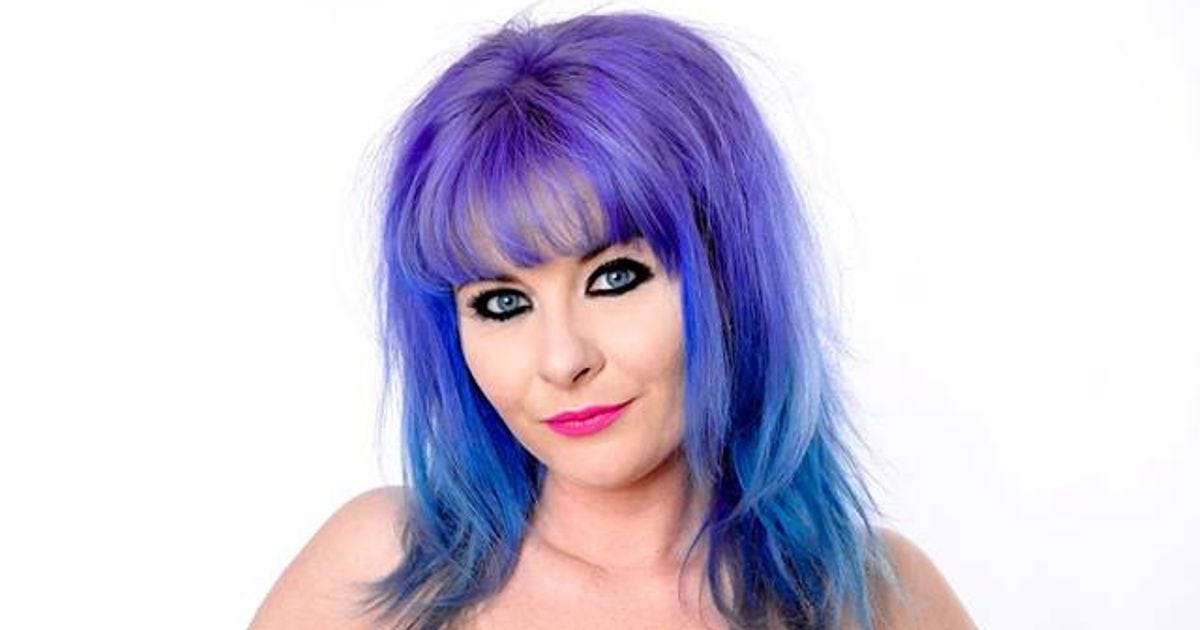
That year she wrote a piece for the comedy website Chortle under the gentle headline “Goodbye comedy, I won’t miss all of you self-censoring wimps”, and the industry duly obliged her by not missing her either. She is 44 now, and has what she calls “a normal job”, which she would rather not name, because “I quite value my privacy these days.” You can see why. She has decided to say, on the record and under her own name, what almost nobody in Britain will say out loud this month: that Russell Brand is innocent, that the women who accused him should not have been believed, and that the trial that sent him down was not fair.
Here is what she is up against. On 5 November the jury convicted Brand, unanimously, of raping a 21-year-old fan at his home in Hampstead in 2009, and of sexually assaulting three other women between 2004 and 2009. It acquitted him of two other rapes and an attempted indecent assault. Four days later Mr Justice Bennathan, calling him a “sexual predator”, gave him ten and a half years: nine for the rape, with the sexual assaults on top. He will serve two-thirds before release on licence and will be on the sex offenders’ register for life. He is now in HMP Littlehey in Cambridgeshire, which he describes as “the biggest sex offenders’ prison in Europe”, presumably not as a recommendation.
And here is what happens to people who agree with her. Last week the musician Ian McNabb, formerly of the Icicle Works, posted that Brand had been “stitched up” for his outspoken views, that women had been “throwing themselves at him every night”, and that women who came forward years later were “the worst”. Within days his UK tour was cancelled. “I simply can’t work with him moving forward,” said his promoter. McNabb deleted the posts, announced that he had been “CANCELLED”, and promised a period of “self-reflection and contemplation”, which is the modern equivalent of being sent to a monastery. Pressdee raises him unprompted, as Exhibit A for her central thesis: that anyone who might have spoken up for Brand has been frightened into silence.
So let us hear her out, and then let us test what she says, which is, after all, rather more than the internet has bothered to do for either side.
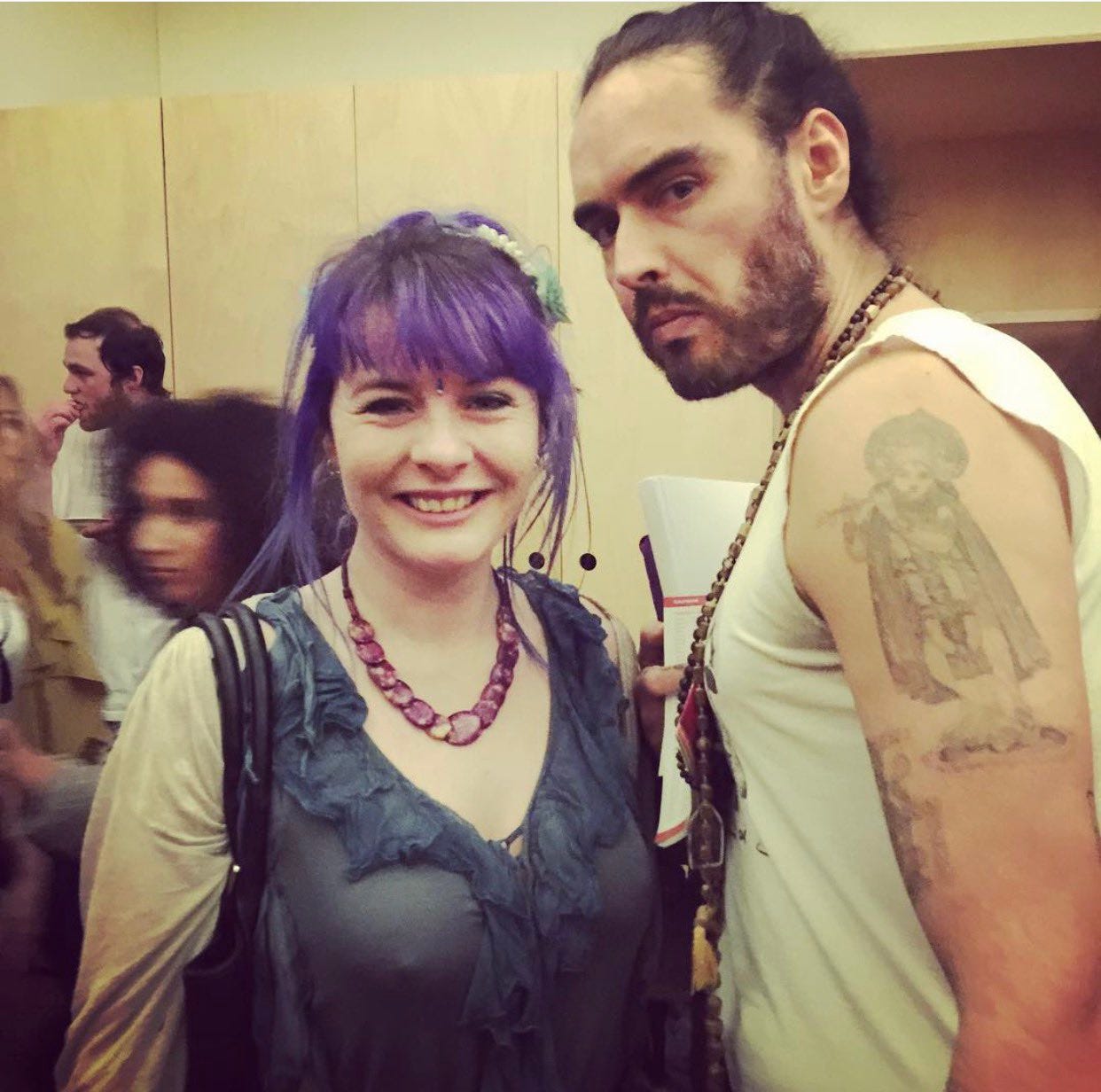
She met him in 2006, at Bar Monster in Camden, where his friend and writing partner Matt Morgan was DJing. She was 24, fresh from cheerleading practice, “wearing like Daisy Duke short denims and like a white kind of milkmaid top”. “I wasn’t a fan,” she says. “I knew who he was, but I wasn’t a fan. He was kind of like moving around the bar, like the Pied Piper. People were following him.” She was outside having a cigarette when he came over. “On his way out he said, hello, are you coming with me? And I said, where? And he says, to my home. And I think I said no originally, and he says, oh, come on, it’ll be an adventure.”
It was 2006 and he was Russell Brand, so of course it was. She went. What she describes next is, in its way, the mirror image of the case he was convicted on. At the house he offered her wine; she asked if he drank, he said no, and she said she wouldn’t either. “He seemed quite touched that I said that.” She noticed he had framed his old unemployment book. “I says, why have you got your dole book framed? And he says, oh, so I never forget.” She trod on a snail in the garden. “And he’s like, oh gosh, you’re like a child.” It is not, you will agree, the opening scene of a Channel 4 documentary.
In bed, she put pillows between them, “like they used to do on Love Island”, and he kept “popping up over the pillows and asking me for a kiss”. “I probably said no about three times.” Eventually they kissed, and things progressed until both were down to their underwear. “And the last possible moment, I said to him, no, sorry, I can’t. I just met you. Which, you know, people would say that’s quite an infuriating thing to do to any man. He had an erection, but he accepted that. He accepted the no. There was absolutely no pushback. There was no coercion.”
Later, coughing, she decamped to the sofa so as not to wake him. “He came out naked and he’s like, oh, there you are,” and invited her back to bed “because he wanted me to be comfortable”. In the morning he left first, she thinks to dodge the paparazzi, and met her in the corner shop, where he saved her number in his phone as “Ninkumpoop”. She never sold a story about him, she says, though a journalist from the Sun pursued her. Later, upset about another man, she rang him drunk. “He was very nice. It was almost like he was trying to calm me down and soothe me, and, it’ll be okay, oh bless you, like really sweet, like really, really, really sweet.”
Years later they met again in political circles, Brand having reinvented himself as a revolutionary with very good hair. His campaign paid to wrap her van in his slogans, and she drove it round her gigs at the Edinburgh Fringe. “That’s when I reconnected with him,” she says, “when he was like a different person.” Her verdict on the noughties Brand is this: “I never had a problem with him. I thought he was quite sweet, and back then, you know, everybody was behaving like him. It wasn’t just Russell Brand. There were a lot of people sleeping around.”
Pressdee’s experience is a perfectly good reason to hesitate before believing the worst of him - though it is not an alibi.
Her objections to the women who accused him are harsher, and some of them will make readers wince. She knew the noughties club scene intimately, and she thinks it bred a certain kind of unreliability. “These were the kind of clubs where footballers would hang out and glamour girls would hang out and Page 3 models, the kind of girls that would sell kiss and tells,” she says. She tells the story of a glamour model who sold a lurid tale about a former boyfriend of hers, which she believes was invented, and who, years later, she says, admitted as much to her face in China White. “So that’s one of the reasons that I have a different perspective on this whole thing,” she says, “because those kind of women back then that were doing that, you can profile them. They were attention seekers, they were manipulative, they were catty with other women.”
That, of course, is not evidence about any of the women in this case, none of whom she knows, and none of whom, so far as anyone knows, sold a story to anybody. Pressdee accepts this, up to a point. “I don’t know any of them personally, I don’t know who their names are,” she says. Which is precisely what bothers her. “We don’t know who these women are, they’re anonymous. If they weren’t anonymous, it may well be that an ex-boyfriend might come forward and say, look, this woman ruined my life, she told lies about me. It feels like we’re missing a big part of the puzzle.”
On the rape conviction, the one that really matters, she does not mince her words, or indeed anything else. The complainant, a fan who went to Brand’s house expecting sex and said that it then became anal rape, admitted in court that she had a partner at the time and that going there had been a “huge mistake”. Pressdee goes further. “When it all came out in court about her character, like she’s cheating on her boyfriend, I think I heard that she was in active addiction from the court, what she did in his dressing room,” she says. “I think that is not a good character that a jury should believe the word of over the word of the person that has to defend themselves, especially all those years later,” Pressdee says. “It sounds like the kind of woman that might fly into a rage if she’s rejected. People don’t like to talk about this, and I’m hated for saying these kind of things, but women scorned can be absolutely diabolical. Women are human beings and we make mistakes and we do bad things.” I have not been able to confirm that any evidence of addiction was put before the jury, and Pressdee, to be fair, says only that she “heard” it. She is scathing about what passed for corroboration. “This woman has been allowed to come forward and say, look, I didn’t tell the police, but I told ten of my friends. So what? You told ten of your friends. You could have been lying. Like, why is that evidence?”
That last point is not as daft as it sounds. Evidence that a complainant told people at the time is admitted in English courts to show that her account has been consistent, not to prove that what she describes actually happened. Her friends were not in the room. On every count on which Brand was convicted, the heart of the case, the act itself and the absence of consent, came down to one person’s word against another’s, with supporting evidence that could show a woman was upset but not what had happened. Text messages in which she said he had treated her “like an animal”, and in which he apologised, were the nearest thing to hard evidence, and they do not use the word rape.
On the three sexual assaults Pressdee is harsher still. Of the young Channel 4 worker on whose lap Brand allegedly laid his head while demanding a massage: “She should have just said no. I’m not gonna give you a massage. Like, this whole feminist narrative that women don’t have agency, it’s not true. We can say no.” Of the woman in the Soho bar, whom the jury found he groped within a minute of meeting her: “Didn’t she get into his car with him after to go to a party? Again, you know, that’s just a woman scorned. I don’t believe that Russell would just randomly grab a tit in a public place. He wouldn’t need to. And if he did, surely there would have been witnesses.” And of the radio station worker he pinned against a wall and kissed: “Had she brought it forward years ago, then maybe it would have some credibility.”
Here she is on firmer ground in one place and on very thin ice in another. It is true that the Soho woman got into a car with Brand after the alleged assault, and told the jury he exposed himself in it too. It is true that no independent witness came forward to say they saw the groping in a crowded bar. It is true that the same jury acquitted him of the more serious allegation from the same woman, the oral rape in the lavatory, which she had first described as rape only after the 2023 documentary. And it is true that the MTV charge collapsed altogether, after the judge had already cut it down for lack of evidence. A jury that convicts on some counts and acquits on others is plainly not convicting on reputation alone, which is reassuring, or on evidence alone, which is not.
But the Channel 4 case was the strongest of the four, not the weakest. The young woman complained to her line manager the very next day, and a colleague backed her account of Brand’s associates telling her he would not carry on recording unless she gave him a massage, while others laughed. Channel 4 has since apologised to an employee for failing to investigate a complaint about him at the time. “She should have just said no” is a fine principle in a nightclub at 2am. It is a rather different thing for a junior runner on a television set, faced with the star of the show and a room full of his sniggering entourage, on whom her job depends.
Then there is the question everybody asks: why did they not go to the police at the time? “If they were truly brave, they would have gone to the police if something had happened, thinking of other women,” Pressdee says. “That would be the truly feminist thing to do.” She speaks from bitter experience. In her early twenties, she tells me, she was raped after a bikini competition. “I went straight to the police. I told them my story. I had all the swabs and everything. And it came down to, it’s not that we don’t believe you, but it would be your word against his. They arrested him. He said, I consented.” Nobody was charged. “My rapist maybe didn’t go on to try that again with another woman because of what he did to me, because he knew that there was a police record.”
It is a brave thing to say, and it deserves respect. It also illustrates, rather painfully, why so many women never report at all. She did everything right and got nowhere. The Office for National Statistics estimates that fewer than one in six women who are raped tell the police, and the reasons usually given are embarrassment, fear of not being believed, and the belief that the police could not help, which is exactly what happened to her. Delay is not, in itself, evidence of a lie. Neither, it must be said, is it evidence of the truth. It makes cases harder to test, memories less reliable and defences harder to mount. Brand’s barrister, Ian Winter KC, called delays of up to 24 years “monstrous”. On that, Pressdee and the defence are as one.
Where she is at her most persuasive is on the media. “I don’t think the trial was fair,” she says. “I don’t think there should have been a trial, because the documentary had already solidified public opinion, and we saw that on social media. I saw that with people that I know just calling him a rapist before he’d even had a trial.” She says she heard the Hampstead allegation being passed round as gossip at the Edinburgh Fringe in August 2023, a month before the Dispatches programme went out, and discussed openly on stage as an “open secret”. She wrote to the police, the Attorney General and Brand’s lawyers asking whether what was circulating on social media amounted to contempt of court. Nobody wrote back. Of course they didn’t.
“Had these journalists really cared about justice,” she says, “once they’d got a few women together, they should have said, right, let’s pause the documentary, let’s go to the police.” Instead, she argues, the programme acted as a recruiting sergeant. “Inviting people to come forward, like, in some cases 20 years later, you don’t know what their motives are. If they didn’t do it at the time, why are they doing it now?” She is particularly exercised by a podcast about the case made, she says, by the same journalists. “I listened to the very first one, and immediately I saw that it was biased. These brave women, these brave women. I mean, they’re already assuming that the women are telling the truth and that he’s guilty, and that subverts what we’re supposed to stand for. In the West, innocent until proven guilty, human right to a fair trial.”
This was, almost word for word, the defence case. Journalists, Ian Winter told the jury, had “poisoned the well of justice”, in “the hope and intention that other people come forward and make allegations against him”. Every complainant, he said, had come forward “for reasons connected to the TV programme”. Six prospective jurors were excused because they remembered the documentary, and the judge warned the rest that it was “one-sided and dramatic in manner”, which is about as close as a High Court judge comes to calling a television programme a hatchet job. Whether that warning was enough is likely to be at the heart of any appeal. It is a serious argument, and it is not answered by calling the people who make it rape apologists, which is, she says, what she has been called.
She is particularly cross about the comedians who lined up to talk about Brand’s reputation, and in particular one who appeared in the documentary repeating what he had heard about him, and who was, she says, hailed as brave “for being brave enough to just repeat some rumours that he’d heard. Just repeat some rumours, that’s all he did.” She then does precisely what she accuses him of, with a certain mischievous symmetry. “When I was at the Edinburgh Fringe, the rumour was that he was always coked out of his head and having promiscuous sex,” she says. “So the same rumours are about him. Nothing like as bad as raping someone, but that’s illegal. Taking drugs. People talk bad about him too, so I don’t think he’s a good character.” I have no idea whether there is a word of truth in that, and I am not going to name him, because it is exactly what it sounds like: Fringe gossip. Which is, rather neatly, her point. “Gossip is bad, it’s morally wrong,” she says, “and it just seems like gossip has been the main contributing thing towards the conviction.”
She is on shakier ground when she compares Brand with Tommy Robinson. “Tommy Robinson got arrested for standing outside a court when one of those grooming gangs things were going on,” she says. “But the press were allowed to report on this case.” In fact Robinson was jailed for contempt for broadcasting about defendants while a reporting restriction was in force, and the press is ordinarily allowed, indeed expected, to report trials as they happen, fairly and accurately. Open justice is not a bug in the system. It is what stops trials happening in secret. Her deeper point, though, that jurors in 2026 go home every night to phones full of commentary on the very case they are trying, is a fair one, and nobody in the justice system has a remotely good answer to it.
And then there is anonymity. “I do think that if the victims get to be anonymous, the accused should be anonymous too,” she says. “Otherwise, how are you going to get a non-prejudiced jury? How can you have a fair jury trial?” It creates, she says, “a power imbalance”. “We don’t know if they are of good character, if they’ve told lies before,” she says. “If they’re mentally ill.” Of one complainant who, as Pressdee recalls it, said she had felt safe inviting Brand back to her hotel room because she assumed he was gay, Pressdee says: “That astonishes me. I think that’s a sign of mental illness. Sorry, I think they’re mentally ill, some of these women.” There is no evidence that any of them is, and it is the sort of remark that explains why so few women in her position are willing to speak up for Brand: it hands his critics their best argument, gift-wrapped. But her underlying point, that anonymity stops the press testing a complainant’s history in the way it tests the defendant’s, deserves an answer. “Sexual assault cases should be taken seriously, but dealt with in a very delicate way to protect the course of justice, and it should be kept out of the media that are profiting from other people’s distress, whether that’s the accused if they’re falsely accused, or the victims if they have actually been hurt.” I happen to agree with her. Either both parties should be protected until a court has decided, or neither should. What we have is a system that protects the accuser, exposes the accused, and then has the cheek to call itself fair.
What of the other allegations against Brand that have been knocked down, or at least knocked about? There are some. Two of the rape charges failed: the 1999 allegation from a woman in a Bournemouth hotel room during the Labour Party conference, and the oral rape in Soho. The MTV allegation was first trimmed by the judge and then thrown out by the jury. The 2014 complaint by Szilvia Berki, a masseuse booked for his birthday at Jemima Goldsmith’s Oxfordshire home, was looked at again by Thames Valley Police in 2024, which found “no new information or evidence to justify further investigation”; Goldsmith said she had been present throughout and “did not see anything untoward”, and that the masseuse had subjected her to harassment and antisemitic abuse, for which she obtained a harassment order. Pressdee cites this as evidence of how flimsy rumour can be. And she points to Vanessa Feltz, who has replayed an old clip in which Brand asked whether he could sleep with her or her teenage daughters, and said she had been “deeply offended then, as I remain deeply offended now”. “It was clearly a joke and she was laughing,” Pressdee says. “This is like memory hole stuff from 1984, like rewriting history.” Pressdee also says she has heard that Georgina Baillie, the woman at the centre of the 2008 Sachsgate row, was approached for the documentary and not used because her story “didn’t fit the narrative”; I have not been able to confirm that.
But honesty demands the rest of the ledger, and it is not short. The same Jemima Goldsmith whom Brand’s supporters quote on the masseuse posted on the day he was sentenced that she herself had suffered “violence, coercive control, and abuse” during their relationship in 2014, and had called the police to have him removed from her house after “a violent incident”. She did not press charges. Brand has not responded publicly, and none of it has been tested in any court. The Times and The Sunday Times have published the accounts of six more women alleging sexual misconduct between 2005 and 2015, and the Met says it is assessing two further allegations of rape, one involving a girl who was 16 at the time. None of these has been tested either, and Brand has not been charged with any of them.
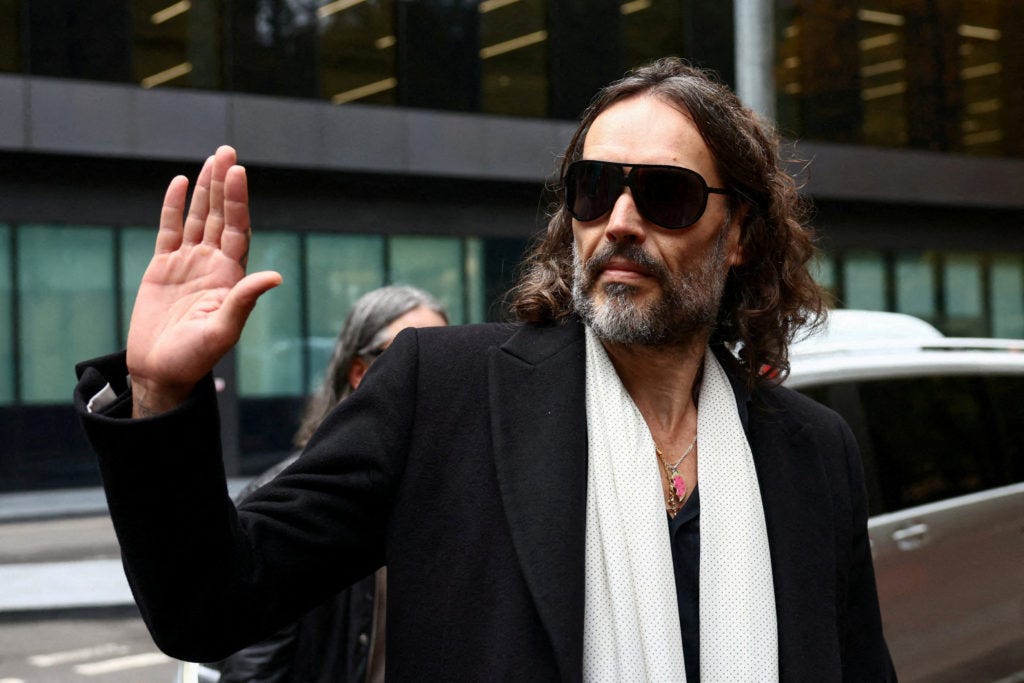
That leaves the appeal. Brand’s barrister made his feelings plain on the court steps, replying to a journalist who said justice had been done: “Well, it wasn’t.” The likely grounds are the ones Pressdee keeps coming back to: lumping six complainants spanning a decade into a single trial, which let the prosecution suggest they could not all be wrong; the effect of the documentary and three years of hostile coverage on both the women and the jury; and the sheer age of the allegations. Appeals against conviction rarely succeed. That is not the same as saying they never should.
Pressdee is, by her own admission, no lawyer, and some of what she believes is wrong, some of it is unkind, and some of it, about the women in particular, I would not want to defend in front of my mother. “I think they’re manipulative. I think they’re gold diggers,” she says at one point, a claim for which she has no evidence whatsoever about any of them. She is candid that affection colours her view. “I do think I know his heart, and he’s not a bad guy,” she says. “He was sick back then. He got himself better, and he helped a lot of other people get better from addiction.”
But on the bigger questions she raises, she is neither alone nor mad. Can a man get a fair trial when a television documentary has declared him a predator three years before a jury is sworn? Should an accuser be anonymous while the accused is named? Is “I told my friends at the time” evidence of a crime, or only of consistency? Should a conviction that rests on one person’s word against another’s be described as proof? Serious lawyers argue about these things, and a free country ought to be able to discuss them without the people asking losing their livelihoods. Ian McNabb lost his tour for asking them badly. Pressdee lost her career, she says, for asking other questions. And “everybody’s the media now,” she says. “Everybody’s got a phone, everybody’s got social media, everybody’s got an opinion, and most of them are shit.” On that, at least, I suspect even her fiercest critics would agree with her.
“I’m saying this because of the precedent that it sets,” she tells me, towards the end. “This isn’t just about Russell Brand. This could happen to anyone.”
Russell Brand has been convicted by twelve people who heard all the evidence, and in law he is guilty. He has every right to appeal, and I hope that appeal is heard, and reported, with the same care as the verdict. Samantha Pressdee has every right to believe he is innocent and to say so, even if Downing Street would apparently prefer that he did not. The rest of us have a duty to accept the verdict, to remember that juries are not infallible, and to resist the urge to treat anyone who questions one as a monster. That is not rape apology. It is what the presumption of innocence, and its awkward cousin, the right of appeal, are for.
Hell hath no fury like a woman scorned
And…women seek fame from fam
ouse men by acusing them of rape….its just copycat femenists who hate rejection by famouse men