


If you were ever accused of a crime you had not committed, you would want one thing above all others: to stand up in front of the jury and say so. It is the moment every courtroom drama builds towards, from Twelve Angry Men to Rumpole, and it is the bedrock of the whole system. Whatever else happens, the accused gets to speak.
Sean Bw Parker never did. In February 2018 he sat through his rape trial at Portsmouth Crown Court in total silence, because on the third day his own barrister took him into a side room and suggested that his stammer might strike the jury as “a sign of guilt” (the barrister in question claims he didn’t say this - Parker asserts he has either forgotten or is lying). He was convicted, sentenced to eight and a half years, and sent to the cells with his barrister’s parting advice ringing in his ears: to treat the sentence as “a pause”. Magnolia Graffiti, written largely from a cell on Dartmoor, is what he did with that pause. It is the speech he was never allowed to make, and having read it, I am in no doubt that the jury should have heard it.
Let me declare my hand. I believe Sean Parker is innocent. I believe he is the victim of a miscarriage of justice, produced not by any one villain but by a system that, at a particular moment in our history, stopped bothering to test the evidence in sex cases and started counting convictions instead. You may not agree by the end of this review. But I would wager that you will not be comfortable.
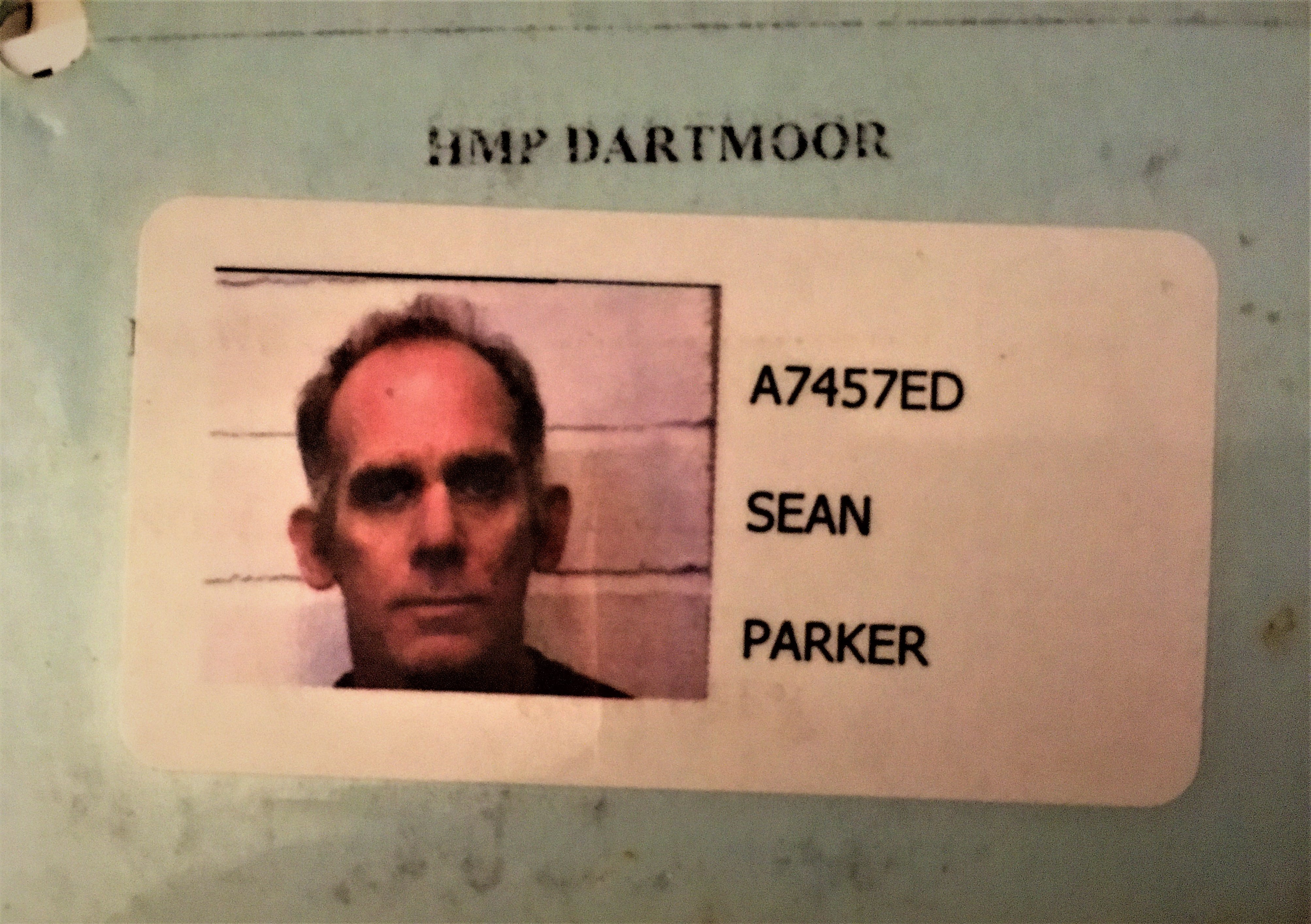
“I didn’t so much decide to write the book as it decided to come out as a way to stay sane while in prison,” Parker told me. “It was both therapeutic and cathartic to write. I’m a communicative artist, and was plucked from ‘regular’ society, for four and a half years, on bogus, ideological pretexts. At least we’re allowed writing materials inside, so in the absence of normal communication routes, Magnolia Graffiti became the receptacle of all those pent up feelings.”
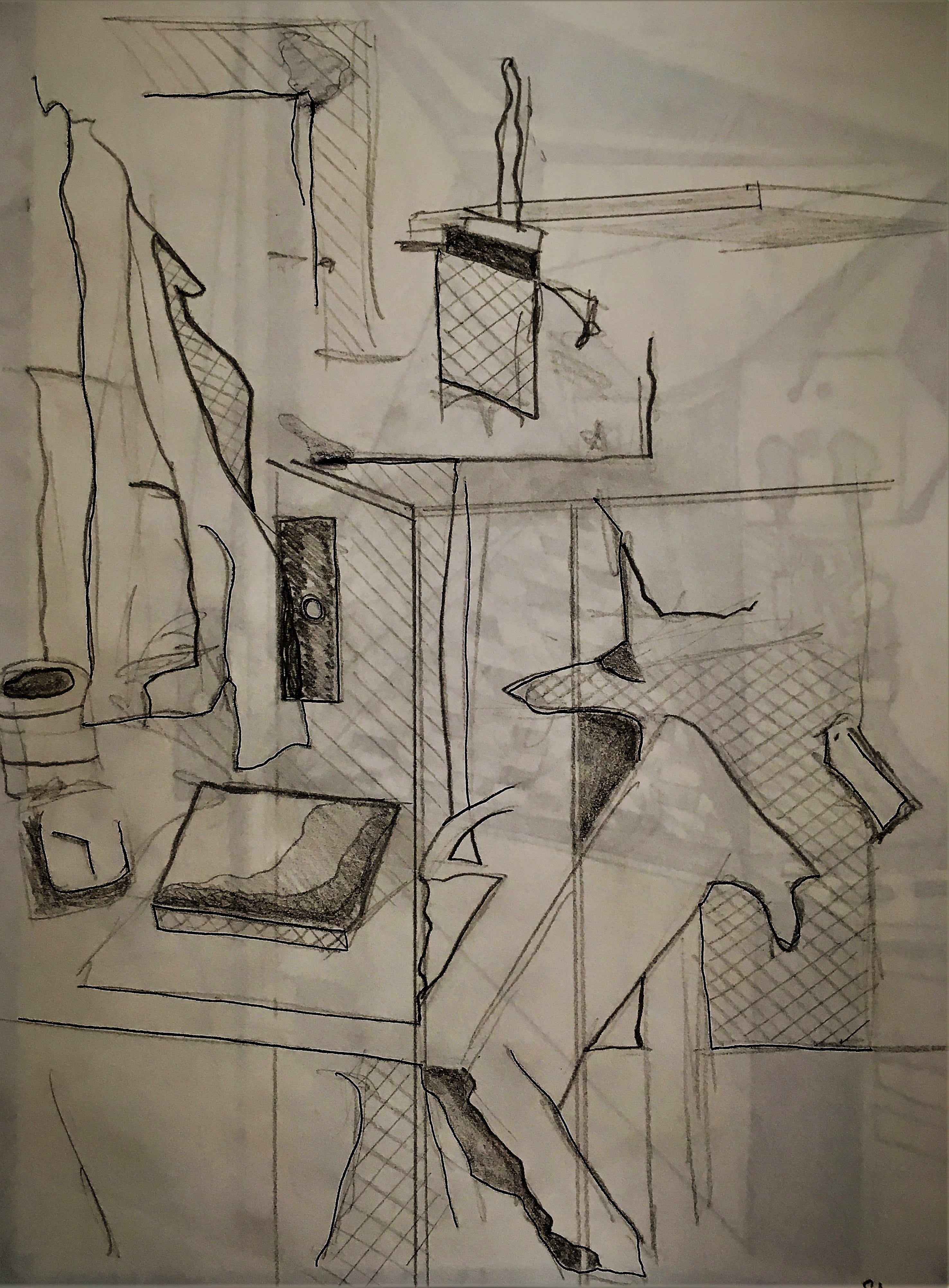
The title comes from the room where it all started. On the night of his arrest, Parker found himself once more in “a magnolia, moulded, gloss-painted police cell”. Magnolia is the colour of British officialdom, chosen precisely because it offends nobody and means nothing. The graffiti is what one man scratches across it. Part memoir, part prison reportage, part forensic dismantling of his own trial, it is angry, funny, erudite and, in places, genuinely beautiful.
Parker was born in Exeter in 1975 and grew up in Devon and then Carmarthenshire, where an English boy with a stammer was, as he puts it, “relentlessly victimised for being ‘Saesneg’”. The stammer became the central fact of his life, and he writes about it with rare honesty, treating it not as a defect to be cured but as a “new neurology” to be lived with. He went to art school as a mature student, took an MA, and spent a decade in Istanbul, teaching, lecturing at the university, making a record called Spit It Out and giving a TED talk entitled “Stammering and Creativity”. By 2016 he was back in England, running Seafish, an arts café in Bognor Regis that he imagined as “a New York diner in a British seaside resort”. The local council saw late-night lock-ins and a cavalier attitude to licensing hours. Parker concedes that “both versions contained elements of the truth”. Running a bohemian café with lax closing times is many things. It is not a crime.
He was convicted on three charges. Only one was rape, and it concerned a single woman. That charge, and one count of sexual assault, related to one night with one complainant; the third charge, a sexual assault, related to an unrelated “kiss” incident involving a different woman six months earlier. The two cases were tried together. The main one concerned a friend, a regular at the café, who in December 2016 stayed over in his room after a long night’s drinking. Parker has never denied that they slept together. “I do not deny that consensual sex took place,” he writes, “after we had been drinking - wine for me, Malibu and cokes for her - together for around ten hours, drink in which she acknowledged she had willingly partaken.” They went upstairs, he says, as they had arranged the night before, when she realised she had drunk too much to drive home.
The law asked one question of him: did he reasonably believe she consented? He answers it plainly. “After drinking together for around ten hours, … being at a similar level of inebriation, going up to my bedroom together, the subsequent laughter/happy sounds and positive, generally non-verbal cues, I believed that consent had indeed been given. This was further shown by my friend/complainant staying the night, agreeing to meet the following day, and sending jokey text messages later on. There was absolutely no force, violence or intent to harm whatsoever.”
Now look at the evidence that supported him, because there is a great deal more of it than in most cases of this kind. A tenant in the room below heard, in his own words to police, “laughing and moaning”. Two other neighbours heard nothing untoward. Another tenant testified that she had been “fine, coherent” when she went up to bed. In the morning, Parker writes, he walked her to the door and she said: “I’ll be back tomorrow to give you a lift.” Later that day she sent him light-hearted texts. It was only that afternoon, back at home, that things changed. According to the book, her boyfriend, then applying to join the police, told the court that he had “pushed and pushed her until she was compliant” with reporting it, and that she had begged him not to, because Parker was her friend. Within hours, six pairs of police boots were coming up the stairs at Seafish, and Parker was being arrested “on suspicion of rape”.
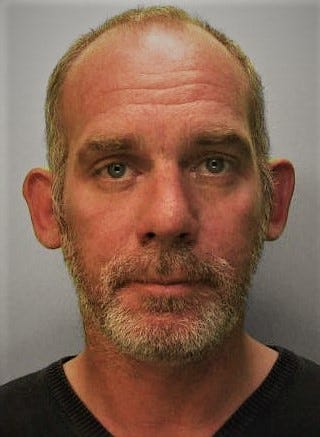
Parker does not accuse her of malice. On the contrary. “Despite everything,” he writes, “I wish nothing but the best towards my complainant - we were good friends once.” That is not, I think, the sentence of a guilty man looking for someone to blame. It is the sentence of a man who believes that something consensual between two friends was turned, by other people, into something it was not.
The second allegation was weaker still. It dated from July 2016 and had originally been dropped by the police with no further action. Parker records that a police officer at the time remarked that the woman appeared to have been “caught in the act” of some indiscretion by her partner. The venue’s own CCTV, his barrister later noted, showed her “kissing the defendant during a long after-hours session of drinking at the bar”. It was revived only once the second complaint arrived, and then put before the jury alongside it, so that two flimsy cases could be presented as a “pattern”. Parker’s own solicitor, he reports, believed that “the one charge wouldn’t have been brought without the other”. He puts it with characteristic bluntness: “The flimsy evidence in this case wasn’t important until you bundled it in with a more serious allegation from six months later.” Under cross-examination, he notes, the two complainants answered that they “couldn’t remember” on more than a dozen occasions.
Here, then, was a case with a consensual account from the defendant, a witness who heard laughter, a witness who saw a coherent woman go to bed, a friendly goodbye, jokey texts, CCTV of a kiss and a police decision that the earlier complaint was not worth pursuing. It was the sort of case in which a jury might well have found reasonable doubt. And the jury never heard most of it from the one person who could have explained it.
The hinge of the book is a short conversation in an ante-room. Before the trial Parker had sent his barrister a video of his TED talk, so that counsel would know who his client was. Halfway through the third day, the barrister pulled him aside. “‘Bit of a stammerer aren’t you Mr Parker?’ to which I replied that yes, I was. I then asked if in his opinion I shouldn’t give evidence because of this, and he replied that that might be a good idea.” A legal representative whom Parker and his family believed to be his solicitor gave the same advice. He signed the waiver, he writes, “with less than five minutes before court resumption”. He had been, in his words, “nervously looking forward to giving my side of things”. He now calls the decision “fatal”.

It is hard to think of a crueller irony. The whole message of Parker’s TED talk had been that a stammerer should walk straight into the feared word rather than avoid it. “If I had followed my own advice in the TED talk,” he writes, “I’d have gone into the word regardless, unafraid. I would have had my day in court.” Instead, in an atmosphere he describes as one of “distrust, disbelief and ‘guilty until proven innocent’”, fearing that his stammer “could descend at any moment, on any word or letter, and so prove my barrister right”, he stayed in his seat. To the jury of nine women and three men, his silence “must have looked in hindsight like either evasion or arrogance … neither of which should have been the case”.
And then, to make matters worse, the jury heard the complainants’ video-recorded interviews in full, but not his. His own police interview, in which he gave his account, was never played; it apparently “couldn’t be found”, and parts were read out by the prosecution instead. “If I had known in advance that my own … interview … wouldn’t be played,” he writes, “I would never have agreed not to give evidence.” The tenant who heard the laughter, whom his barrister had noted gave an account “not compatible with the relevant part of the complainant’s account”, was never called. The Legal Ombudsman later observed that if he “had taken the stand and told the court what he told the police he had heard, then the matter may have been decided differently and may have received a different verdict”. Even the firm that represented him, in its response to his complaint, conceded: “had your defence been put differently, the outcome may have been acquittal.”
Read that last sentence again. His own lawyers, in writing, accept that he might have walked free. And yet he served his sentence anyway.
The trial judge, Parker notes, went on to tell the court that he had seen Seafish as “a useful place to attract women”, a remark Parker calls “untrue and arbitrary, particularly as I hadn’t even spoken in court for this to be adduced”. That is the absurdity of the whole affair in a single sentence. A man was judged on his character, his motives and his state of mind, having never been given the chance to say a word about any of them. As he puts it: “The judge instructed the jury not to find based on emotion, but when no evidence is needed to convict and only one side of the emotion is heard, the verdict is almost bound to be adverse.”
From this, Parker builds an argument that ought to be required reading for every barrister and judge in the country. Juries judge credibility partly on fluency, eye contact and composure. A defendant who stammers, or has Tourette’s, autism or ADHD, risks being judged on his symptoms rather than his evidence, or, worse, being advised by his own lawyers to keep out of the witness box altogether. The campaign group SAFARI told him they were “horrified” that such advice had been given. “The court must look, listen and empathise,” Parker writes, “beyond the sometimes anti-social appearance of these neurologies, towards the person.” It is a modest demand. That it needs making at all is a scandal.
The prison chapters contain the finest writing in the book. After two months at Winchester, Parker was moved to Dartmoor, a two-hundred-year-old granite fortress in the middle of the moor. “Being in prison,” he observes, “is like falling asleep drunk and waking up in a David Lynch film.” He is a sharp, humane and frequently hilarious observer of the men around him, and his verdict on them is one of the best sentences I have read this year: “I have met few angels in prison, but I have met even fewer monsters.” Prison itself he describes as “a very gentle, implacable, monolithic pressure cooker, carved out of granite”.
He is especially good, and especially moving, on the peculiar torment of the prisoner who maintains his innocence, known in the jargon as a PMI. Rehabilitation courses assume guilt and demand that the prisoner “change”. “What, pray, is the PMI to change?” he asks. “Is s/he to change his or her position that s/he is not guilty of that of which s/he has been convicted, simply because the state decrees?” To hold that position for years, he writes, “puts you in a position of permanent protest, and the authorities know and rely on that exhaustion wearing the PMI down”. His stammer, which he had spent years taming, grew worse inside, because there “silence was apparently the best policy”. He found his way back by reading poetry aloud, alone, in his cell. I defy anybody to read that passage and feel nothing.
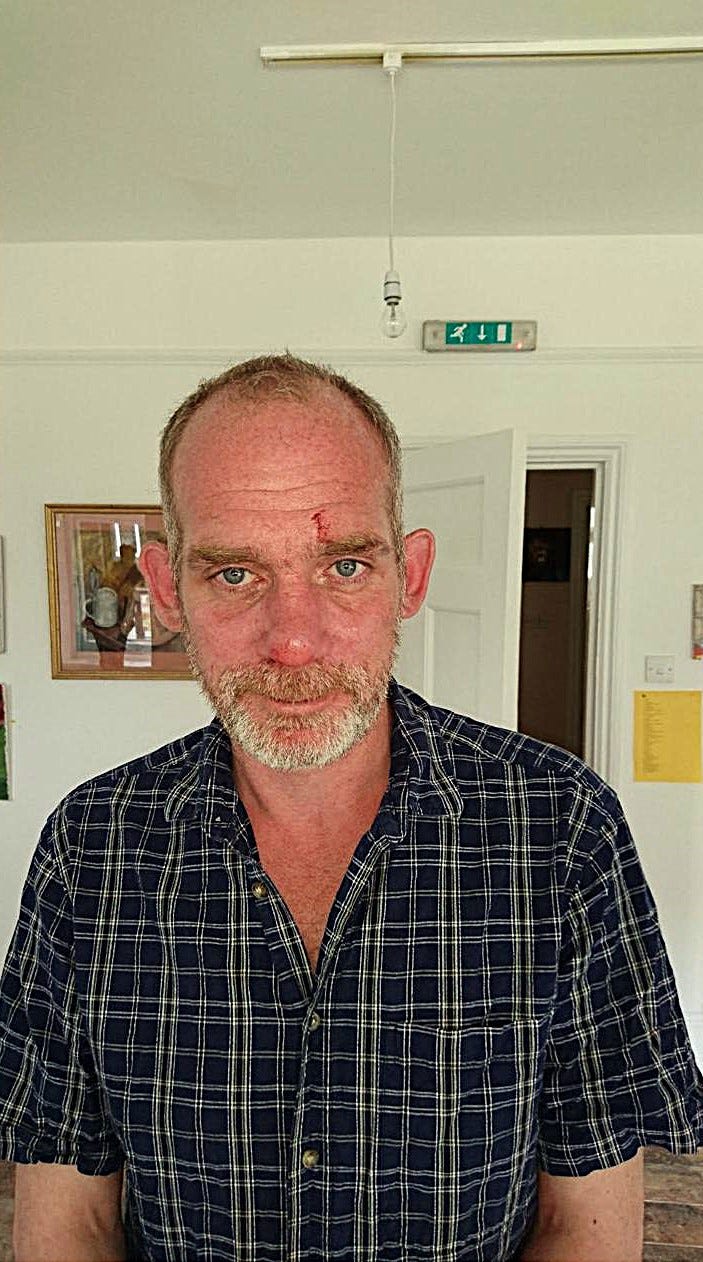
Every avenue of appeal was closed to him. The Court of Appeal’s single judge decided that his stammer “would have had no relevance to the decision”, and that the uncalled witness was “likely to be unhelpful”, which is a curious thing to say about a man who told the police he heard laughter. The Criminal Cases Review Commission declined to refer the case. Charities, he discovered, will not publish the work of serving prisoners, and others will not publish before an appeal, which will not be granted without new evidence: “a terrible Catch-22 pincer-movement for prisoners maintaining innocence”. The Westminster Commission on Miscarriages of Justice, to its credit, cited his account in its 2019-20 report. Justice for Men and Boys called the case “a clear miscarriage of justice”. FACT, which supports falsely accused carers and teachers, told him that “your case is extraordinary” and “clearly deserves” an appeal.
English law has a phrase for this sort of thing: “lurking doubt”, the uneasy sense that a conviction, however regular on paper, may still be wrong. Parker’s case reeks of it. It sits in a decade that gave us the collapse of Liam Allan’s trial over undisclosed text messages, the shambles of Operation Midland and Sir Richard Henriques’s devastating verdict on the “believe the victims” approach, which turned the presumption of innocence on its head. In a case that came down entirely to what two people believed in a room above a café, the jury heard one of them in full and the other not at all. They never heard the independent witness. They never saw his interview. They heard a dropped complaint dressed up as a pattern. On those facts, I do not see how anybody can call the conviction safe, and having read his account, I believe him.
The book digresses at times, into culture and into politics, and I have left those passages alone. I was not interested in his views on the wider world. I was interested solely in the case and the evidence, and on those, the book is devastating. Parker himself insists he is “not an intentionally persuasive person and these are not meant to be intentionally persuasive arguments. I’m just explaining what happened.” That modesty does him credit, but it undersells the book. It is persuasive precisely because it is not a polemic. It is a careful, documented account, backed by his lawyers’ own admissions and the Ombudsman’s findings, of how an innocent man can be convicted without ever opening his mouth.
I asked the author for his thoughts on the MeToo movement, considering that movement’s initially powerful and much-needed message, and how it morphed into something sinister, has often been the focus of my own work covering sex crime allegations.
“While it was largely a positive that the excesses of ‘casting couch’ culture in Hollywood was exposed, #MeToo quickly turned into a ‘war on men’,” he said. “More specifically, a reframing of what natural behaviours such as seduction or ‘consent’ really involve. Ten years on, structural feminism is only interested in the complaints, never the nuance, and it takes cases such as the Cornell 7 to illustrate its current extremities.”
“MeToo may have become hotly contested in society, but the UK Supreme Court has recently ruled that courts in Scotland have been treating the accused to harshly in these types of allegations. We need this to spread to similar scrutiny of the situation in the rest of the UK. Meanwhile, the Russell Brand and Cornell 7 cases are showing the public what has become of ‘consent’ law, leading many men to ask ‘am I next?’, and an increasing number of women to say ‘not in my name’.”
“Most people who have been through the fire of false/spurious allegations or wrongful conviction just want to slide off and try to piece their lives back together, and never think about it again. That was tempting for me too, but the implications for heterosexual life are so onerous, and the judicial processes so wrong, that I felt compelled to try to shed light on it. Also, as an artist, part of what I do is to try to turn negative experiences into something creative.”
I then asked him why he believes the book hasn’t yet had much coverage in the mainstream media.
“The mainstream media and justice systems in Britain across the west are in cahoots, and both sectors are now fully run by structural feminism,” was his reply. “This strand of legal-dominance feminism can’t bear challenging narratives like mine, and editors, even if they sympathise with my case, care loathe to go up against the new ‘progressive establishment’ by reporting on it. It might even mean career suicide. That said, some woke-critical writers such as Joanna Williams (Times, Spectator etc) have reviewed and passed comment.”
Parker is free now. He is a contributor at False Allegations Watch for the campaign group Empower the Innocent, and lectures on stammering and justice reform. His proposals, among them properly funded legal aid, an end to the routine joining of unrelated charges, and equal treatment of the defendant’s recorded interview, deserve to be taken up by people who have never heard of Seafish. But the book’s real demand is simpler, and it should unite every reader, whatever they think of him.
Let the accused speak.
Magnolia Graffiti is published by Hunsbury Press. You can buy a copy by clicking here.