


On the evening of September 30th, in a cinder-block room at Riverbend Maximum Security Institution in Nashville, a group of journalists sat behind a curtain and listened to a woman snore.
They had been waiting since half past eight that morning. They had watched the curtain open at 7.27pm on Christa Pike, 50, strapped to a gurney, her Buddhist spiritual adviser in a wine-red sash singing softly beside her. They had heard her last words: “I’m going to leave this world the way I’ve spent most of my life, and that is with love.” They had watched the State of Tennessee inject her with enough pentobarbital to kill a horse, and then, when that did not work, inject her again. And then the curtain had closed, and for the best part of forty minutes they had sat in the dark listening to the sound of her breathing on the other side of it.
“Do they do a third round?” one of the reporters asked the prison’s communications director. “Are you going to resuscitate her?” There was no answer. Nobody, it seems, had thought that far ahead.
Before I go any further, let me be clear about one thing, because it matters, and because every word that follows depends on it. Christa Pike is not a sympathetic figure. What she did in a patch of woods in Knoxville in January 1995 was monstrous, and if you have a weak stomach you may wish to skip the next few paragraphs. I would rather you didn’t. If you are going to have an opinion about what Tennessee did to her, you ought to know what she did to Colleen Slemmer.
Christa Gail Pike was born prematurely on 10 March 1976 in Beckley, West Virginia, into the sort of childhood that social workers write case studies about and that the rest of us prefer not to imagine. Her father later alleged that her mother drank and smoked heavily through the pregnancy; her lawyers say the drinking left her with frontal lobe brain damage. An aunt remembered the infant Christa crawling across filthy floors and being fed by relatives because nobody at home could be relied upon to do it. According to her clemency petition, the facts of which the state does not dispute, she was sexually abused by her grandmother’s boyfriend from the age of two to five. At about eight she took an overdose of paracetamol. At eleven a neighbour in her trailer park molested her. Her mother did not believe her. When her grandmother, the one adult who seems to have cared for her, died in 1988, the 12-year-old tried to kill herself. At 17 she was dragged into woods by a stranger and raped, and escaped only by hitting him with a rock. He was never caught.
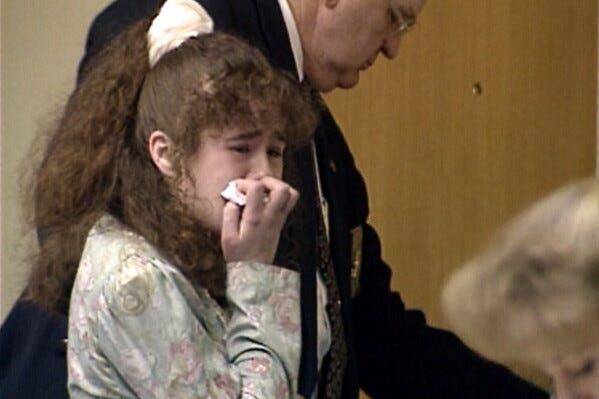
That is the short version. The long version was written down as early as 1995, by a forensic psychologist called Dr Diana McCoy, who was hired by Pike’s own defence team. She found a child severely neglected by both parents; physically and sexually abused by a succession of her mother’s husbands and boyfriends; raped several times, once at 11 and again at 17, and, as was later discovered, repeatedly as a toddler. Time and again, McCoy found, her mother simply refused to believe her. In 2023 another forensic psychologist, Dr Bethany Brand, assessed her and said her case was extremely rare because she had been abused by so many of the people who should have protected her. “Her childhood was replete with physical, sexual and emotional abuse,” she said. “She was sexually violated by a number of men, starting before she was school age.” I make no claim that any of this excuses what came next. Nothing could. But it is worth knowing what sort of creature walked into Job Corps at 18, and who made her.
She bounced between schools, ran away, spent a year in a juvenile facility and came out with an ambition, of all the touching things, to become a nursing assistant. In late 1994 she enrolled at the federal Job Corps centre in Knoxville, a residential training scheme for disadvantaged young people which, by most accounts, was less a seat of learning than a holding pen with razor blades. There she met Tadaryl Shipp, a 17-year-old with an interest in witchcraft and the occult, who reportedly hit her, kicked her and forbade her from speaking to other boys. She adored him.
And there she met Colleen Slemmer, 19, a girl who, her family says, “just wanted to go to Job Corps to be able to better her life and learn”. Pike became convinced that Slemmer was trying to steal Shipp from her. She also caught her, she said, going through her things. Jealousy, in an 18-year-old with a brain like Christa Pike’s, curdled into something else.
On the night of 12 January 1995, Pike, Shipp and an 18-year-old friend, Shadolla Peterson, told Slemmer they wanted to make peace, and offered to share some marijuana. They walked her to a secluded spot by an abandoned steam plant near the University of Tennessee campus. Peterson kept watch. What followed lasted, by the prosecution’s account, about half an hour.
They taunted her. They beat her. They slashed her with a box cutter, repeatedly cutting her throat, and they cut her body. Shipp carved a pentagram into her chest. And then Pike picked up a large chunk of broken asphalt and smashed it down on Colleen Slemmer’s head, again and again, until her skull broke open.
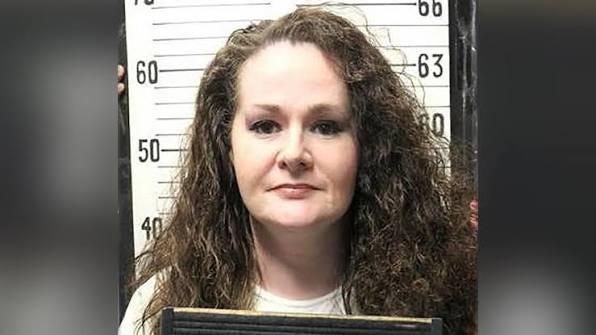
Then Pike picked up a piece of it. She kept a fragment of Colleen Slemmer’s skull, and the next day, back at Job Corps, she showed it off to her classmates. The former Knoxville police chief, Phil Keith, remembers her displaying the blood on her shoes. He described her as “ruthless, without any remorse, almost giddy”, and said that even hardened detectives found that “the brutality was different”. Two other residents of the camp later testified that Pike had bragged about the killing both before and after it, and had shown them the piece of bone. When police arrested her, within 36 hours, it was in her jacket pocket. Slemmer’s mother has asked for it back, time and again, so that she could bury her daughter whole. The state has kept it as evidence.
Pike waived her rights and confessed. She said they had only meant to scare Slemmer, and that things had got out of control. A jury took a few hours, in March 1996, to convict her of first-degree murder and conspiracy, and on 30 March she was sentenced to die in the electric chair. She was 20. She would be the first woman executed in Tennessee for some two centuries.
Here is the thing the jury never heard. Pike’s trial lawyer had Dr McCoy’s report. He did not put her on the stand, and he did not call many of the witnesses she recommended. The rapes, the toddler years, the mother who did not believe her: almost none of it was put before the twelve people deciding whether she should live or die. It surfaced more than a decade later, when a new legal team argued that her original lawyers had been ineffective; the judge disagreed. “It is mind-boggling that they did not present any of her history of abuse and rape, even though they knew about it,” says Sandra Babcock of Cornell Law School, an expert on gender and the death penalty who has worked on Pike’s defence. “Her case is so uniquely compelling, not just because of her really incomprehensible history of sexual violence but the combination of that with her youth and her mental illness.” Dr Brand believes that untreated manic episodes from bipolar disorder, together with untreated post-traumatic stress, “absolutely influenced how threatened she felt by the girl she ended up killing and her lack of emotional control in that situation”. The federal courts, for their part, have ruled that the jury did hear about her difficult childhood, from her mother, father and aunt, and that the new evidence of bipolar disorder, PTSD and brain damage “mostly repeated” what it had heard and would not have changed the verdict. Whether a jury that heard about a “difficult childhood” from the very mother who refused to believe her daughter had been raped really heard the same thing, I leave to you.
What happened to the others is instructive. Shadolla Peterson, the lookout, testified for the prosecution, pleaded guilty to being an accessory after the fact and walked out with probation. Tadaryl Shipp, the boyfriend who carved the pentagram, was two months past his 17th birthday, which made him too young to be executed. He got life with the possibility of parole. He was turned down for parole last October and now sits in a minimum-security unit. His own trial lawyer has since written in support of Pike’s clemency, arguing that the gulf between their sentences came “from their slight age difference, rather than their respective role in this crime”. Her current lawyers also say that just before her trial, prosecutors offered Pike life without parole, and that her original attorneys spent about 90 minutes discussing it with her before the offer vanished.
Her years in prison have not been those of a saint. In 2001 she and another inmate attacked a fellow prisoner, Patricia Jones, and tried to strangle her with a shoelace; Pike was convicted of attempted first-degree murder and given another 25 years. In 2001 and again in 2002 she tried to drop her appeals and asked to be executed, and a judge actually set a date, before her lawyers persuaded an appeals court to intervene. In 2012 a New Jersey personal trainer who had been visiting her, and a prison officer he had recruited with cash and gifts, were caught plotting to copy a prison key and break her out. She was not charged.
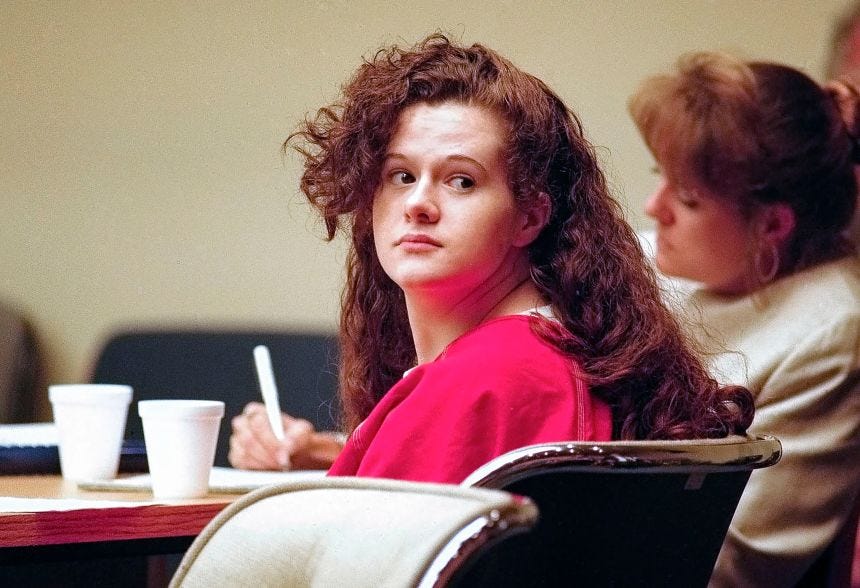
Her appeals ground slowly through every court in the land. Her state appeals were exhausted by 2008. A federal judge rejected her claims of ineffective counsel and mental illness in 2016, and the Sixth Circuit upheld him in 2019. In 2023, after the Tennessee Supreme Court ruled that mandatory life without parole for juveniles was unconstitutional, her lawyers argued that an 18-year-old with her history was not so very different from a 17-year-old. The judge replied that the law addressed only juveniles, and that Pike was legally an adult. In September 2025 the Tennessee Supreme Court set her execution for 30 September 2026, exactly a year later.
In the meantime, something happened to Christa Pike that happens to a great many people who spend thirty years in a small room. She got older. In 2021 she was diagnosed with bipolar disorder, and has been medicated ever since; she has also been diagnosed with post-traumatic stress disorder. She spent 28 years in solitary confinement, until a legal settlement in 2024 allowed her, the only woman on Tennessee’s death row, to live alongside other women prisoners. She took up Buddhism. The giddy teenager who showed off a piece of skull became a middle-aged woman with grey in her hair, meditating in a cell in Nashville. I make no claims about the state of her soul; I have no idea. I merely note that the woman Tennessee strapped to a gurney last month was not, in any sense that a biologist or a psychologist would recognise, the person who walked into those woods in 1995.
As 30 September approached, the case drew the attention of the world. Only 18 women have been executed in the United States since the 1970s, against 1,663 men. Pike’s lawyers filed a 226-page clemency petition, and United Nations human rights experts called publicly for the execution to be halted. Babcock put it bluntly: “If they let her be executed, then what it tells us is that the death penalty in this country is just a joke. It’s not for the worst of the worst. It is for the people who receive the worst legal representation and who are the most damaged and vulnerable.” There were echoes of Lisa Montgomery, the abused and mentally ill woman executed by the federal government in Indiana in 2021, whose lawyers made much the same arguments and lost. Pike asked that the team handling her on the day be all female, because, she said, being held down by a group of men would revive her trauma; the state said that was the goal but would not guarantee it. She had earlier asked, if she must die, to be shot by an all-female firing squad, which she thought less likely to go wrong; Tennessee refused, because the firing squad is not a lawful method in the state. Days before the execution she texted her friend Ashlee Sellars, who met her on the high-security unit while serving a sentence of her own, talking through the meal flaps in their cell doors, to say she did not want any of her loved ones to watch. “She doesn’t want us to experience that,” Sellars said. “Christa in this moment, I think she is fighting much more for her life to matter than she is to actually live.”
Colleen Slemmer’s mother, May Martinez, wanted it done. “She did the crime. I think she should pay for it,” she said. “My heart breaks every single day because I keep reliving it and reliving it, and I can’t no more, and I want this to happen before I die.” She wanted, she said, to “relieve my daughter, so she finally can be resting”. She also said she would feel better if Pike “felt the same pain that Colleen did”. A victims’ group, the Justice Coalition, raised money to fly her to Tennessee to watch. Nobody with a heart could blame her for any of it.
And Pike’s lawyers warned them. In January, nine months before the execution, they filed papers saying that Pike had thrombocytosis, a grossly elevated platelet count, likely caused by a rare blood cancer called a myeloproliferative neoplasm, which could put her at risk of “severe pulmonary edema”, fluid flooding her lungs, so that she would feel as though she were suffocating as she died. They described her history of difficult blood draws and failed needle insertions, recommended special needles, and warned that the injection could cause “pain, suffering, terror, and shame”. Tennessee had form. In May, the state had tried to execute another prisoner, Tony Carruthers, and abandoned the attempt after more than an hour of failing to find a vein. Nine Republican state senators called for an independent review of the protocol. The Governor, Bill Lee, said executions would go ahead without changes. A special master appointed by the state Supreme Court held three days of hearings in August and concluded that Pike had not shown the required risks. On 28 September the Governor refused clemency. Before the execution, Pike was recorded voicing her fear that she would end up “suffocating and drowning on my own bodily fluid and blood”.
On the morning of the 30th, less than an hour before the 11am execution time, the Sixth Circuit granted a stay. The witnesses waited for nine hours. Just before 7pm, the United States Supreme Court lifted it, over the dissent of its three liberal justices, and the machinery started up again.
What happened next comes from the witnesses and from a court filing by Pike’s lawyer, Randy Spivey, who was in the room, and it does not make pleasant reading. The IV team started trying to find a vein at 6.34pm. They found one in her right arm within about six minutes. The left arm took the best part of an hour. They went through some ten needles, searching both arms, while Pike lay strapped down, wincing and grimacing, at one point helpfully suggesting that they try higher up. At 6.57pm a team member wondered aloud whether a vein was “blowing”. “It’s either blood or blown,” said another, “I need to know.” One needle came out bent at an angle of 90 degrees. At 7.07pm somebody said: “I think it’s blown.” At 7.13pm they decided, on balance, that they had a line in, taped her hands down, and wired her to a heart monitor. They could not flush saline through it properly. They carried on anyway.

The witnesses, meanwhile, had sat for 45 minutes behind a closed curtain with the microphone switched off. When it opened at 7.27pm, Pike spoke her last words. Then, a few minutes later, at 7.34pm, she said: “I feel like my arm is about to bust. It burns.” She asked the staff whether that was normal. Pentobarbital, her lawyers point out, is “caustic and highly alkaline”, and burns on contact with flesh. If it is going into the tissue of your arm rather than into your bloodstream, it does not put you to sleep. It cooks you.
She kept talking to her spiritual adviser for another ten minutes, which is roughly nine minutes longer than anybody is supposed to stay conscious. At 7.44pm the reporters realised that “something was very wrong”. The adviser was ordered back into the chamber, the curtain reopened, and the state gave her a second full dose. This time she stopped talking and began to snore: an “agitated snoring sound”, according to Spivey, who over the next half hour watched her strain, flinch, move her head and struggle to breathe. Her right arm turned purple and began to blister. Her lawyers say she was heard “crying, whimpering, and breathing loudly”. At 8.05pm the curtain closed again, and stayed closed.
Behind it, the man waiting to pronounce her dead was beginning to worry. Dr Mark Fowler, one of the few doctors in America willing to take part in executions, and who had also been present at the failed attempt on Tony Carruthers, has since told Intelligencer that most executions take about ten minutes. About 45 minutes in, he realised something had gone wrong, and was called to speak to the warden, who told him Pike was not dead. His advice: “Give it a few more minutes.” About half an hour later he concluded that she might be left in a permanent vegetative state, diagnosed her as comatose, and the execution was stopped. He then called for an oxygen tank and an ambulance. The IV line, he says, had been “delivering medicine to the subcutaneous tissue” of her arms rather than into her bloodstream. It was not his job to insert it, he points out. “I’m not an evil, vicious person,” he says. “I’m not unscrupulous. I’m not uncaring, and I’m not incompetent.” One would not, of course, wish to suggest otherwise. One merely notes that a doctor whose answer to a woman failing to die was to give it a few more minutes has an unusual idea of what his oath requires.
Spivey wanted to raise the alarm. He was not allowed to use the phone in the witness room. Instead he was led on what he called a seven-minute walk through six locked doors to find one. At 8.22pm he reached his colleagues and asked them to stop the execution, then went back and told the deputy attorney general that his client needed immediate medical attention. At 8.53pm the warden’s voice came over the loudspeaker: “Media witnesses, please exit the area.” Tennessee’s protocol permits a second dose of pentobarbital. It says nothing whatever about what to do if the second dose fails as well.
So they called an ambulance. Or rather, they tried to. According to the 911 recordings released this month, the first call for help went out from the execution chamber at 8.40pm. At 9.03pm, an emergency dispatcher announced: “Per supervisors here at the DEC we have been informed it is a false call. There is no medical assistance needed at Riverbend Prison.” A woman was lying unconscious on a gurney with two lethal doses of barbiturate in her, and the emergency services thought it was a prank. When responders asked why they were waiting outside the gate, a prison official told them: “We didn’t call anybody, I would have been the one to call you guys.” Meanwhile Pike’s attorney, Kelly Gleason, was on the phone herself, explaining that her client was “still alive and breathing and needs immediate life-saving care”. At 9.07pm a responder radioed in: “Somebody is outside the gate at the prison telling us that it’s real and demanding us to go in.” Not until 9.11pm did prison officials confirm that the call was genuine. Half an hour had been lost. A paramedic asked the dispatcher to make sure the prison knew they were taking her, “because there’s been so much other confusion”. Pike was taken to hospital at 9.34pm, almost an hour after the first call for help, and the State of Tennessee, having spent the evening trying to kill Christa Pike, began trying very hard to save her life.
It succeeded. She arrived with both arms “swollen, burned, and blistered”, was intubated, put on a ventilator and lay unconscious for six days, and spent more than a week in intensive care. At one point her lawyers believed she was brain-dead. She developed pneumonia. She could not move her arms or swallow. On 6 October she woke up, “confused and in pain”, and on 10 October she was discharged and sent back to the prison infirmary where she has lived for thirty years. The Death Penalty Information Center says she is the first person known to have survived a lethal injection of this kind, and called the attempt “the worst we’ve ever seen”. The Governor called it “a tragedy”, paused executions for the rest of the year and appointed a former US attorney to find out what went wrong. The state’s prisons commissioner resigned. A judge ordered every needle, logbook and phone record preserved. Tennessee, it emerged, had spent nearly $1.2 million on lethal injection drugs since 2023. It has, so far, botched two executions in five months.
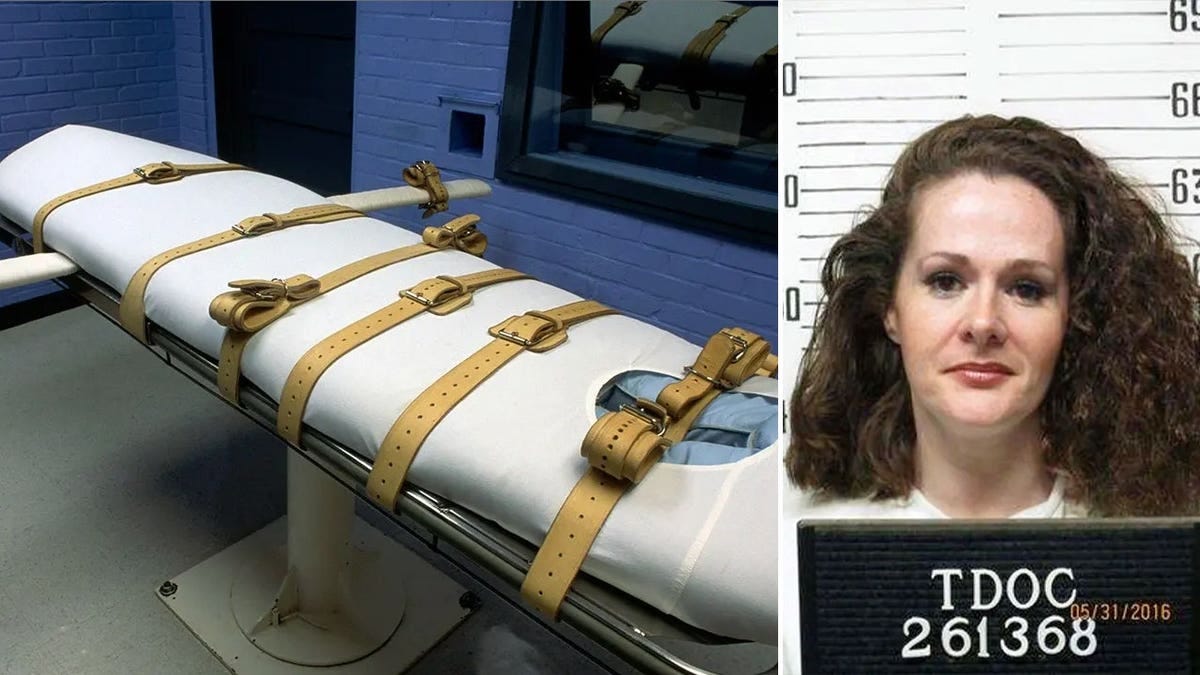
A month after she was meant to die, Pike spoke publicly for the first time, in a statement released by her lawyers. It deserves to be read in full.
“One month ago on September 30, I walked into the execution chamber at Riverbend men’s prison prepared to die. I had made my peace. I had told the people who loved me, supported me and stood by me through the years I was grateful for them. I had also told the people in the room and who were there to witness my execution that I was leaving them in loving kindness.
“Several days later I woke up alone in a hospital confused and in pain. There hasn’t been a moment since that night when I haven’t been in pain. My body hurts. My arms hurt. My hands hurt. My throat hurts. I still struggle to speak. And the pain isn’t just physical. There is pain in my mind and in my soul. I had not contemplated life beyond that night, and I’m deeply hurt by the incompetence that has put so many people in this terrible position. I continue to think about my victim’s family and the terrible pain and loss they have endured.
“I am recovering, and I know that I am getting stronger. But healing is not the same as being okay. Since that night, I have been largely isolated in the prison’s medical ward, away from other people and the human connections that mean so much to me. That isolation brings its own kind of pain. I spent 28 years in solitary confinement and much of what I am experiencing today is a repeat of that condition.
“I am searching for meaning in what happened to me. One thing that has given me strength is the extraordinary love and support I have received from people around the world. I am overwhelmed by the kindness and prayers of people I have known for years and complete strangers who have never met me. To know that so many people care about me, that they see me as a human being whose life matters, is something I cannot fully put into words. It is humbling, and it has touched me more deeply than I can explain.
“I also want to thank the first responders, doctors, nurses and everyone at the hospital who cared for me. They treated me with compassion, dignity and respect. I will never forget their kindness. I also want to thank my attorneys and everyone who has fought for me, stood beside me and refused to give up on me.
“I don’t know why I survived that night. I don’t know what comes next. Some days, finding hope is harder than others. For now, I am trying to heal, one day at a time. And I am holding on to the love and kindness of so many people who have reminded me that I am not alone.”
Her lawyer says she can start a sentence and lose the thread halfway through it. In a sworn declaration filed the day before that statement, she listed what the State of Tennessee has left her with: severe burns, nerve damage, wounds on both arms, “debilitating pain”, difficulty using her hands and arms, difficulty sleeping and “severe psychological trauma”. She has been back to the emergency department once since her discharge. She does not, she says, know “the full extent of my injuries”. She is having remote physical therapy and nerve-pain treatment “for the injuries that the State caused”.
And she is, once again, alone. Since returning from hospital she has been held in isolation in the infirmary at the Debra K. Johnson Rehabilitation Center in Nashville, with no end date, cut off from the other women, which her lawyers say breaches the 2024 settlement that ended her decades in solitary. In an emergency motion filed in federal court on 30 October, they asked for her to be moved somewhere she can eat, study and worship with others, but not back to her old pod, where, she says, she “witnessed multiple assaults by close custody inmates”, and where, in her present state, “I could not defend myself or get away if another inmate attacked me”. She says she has had to clean a “roach-infested shower” on her own with open wounds on her arms, which puts her “at a high risk of infection and further injury”. The state was given until 4 November to respond.
And her death sentence still stands. Nobody has set a new date, and the Governor, who leaves office in January, has suspended executions only for the rest of this year. But asked about her future, he said: “I suspect her sentence will be the same as it was before unless determined otherwise by the courts.” On 28 October he added that she “is still incarcerated under the laws of the state of Tennessee”, and the Department of Correction confirms that she remains on death row. Some legal scholars have pointed out that if the failed execution has left her mentally impaired, the Supreme Court’s rule that the state may not execute a prisoner who cannot understand why she is being punished could yet save her; which would mean that the only thing standing between Christa Pike and a second execution is the damage done by the first. In other words, the State of Tennessee has spent a month nursing Christa Pike back to health so that, at some point, it can try to kill her again.
There is precedent, and none of it is comforting. In 1946 Louisiana strapped a 17-year-old called Willie Francis into a portable electric chair, nicknamed “Gruesome Gertie”, which had reportedly been set up by drunken staff and which failed to kill him. The Supreme Court ruled, by five votes to four, that trying again would not be cruel and unusual, and a year later they did. In 2009 Ohio spent two hours trying and failing to find a vein in Romell Broom; the state’s courts decided it could have another go, and he died of Covid on death row eleven years later while waiting for it. Alabama failed to kill Kenneth Smith by lethal injection in 2022, and in 2024 killed him with nitrogen gas instead. America, it turns out, has a long tradition of getting it right second time.
So here is my case, and I make it knowing exactly what Christa Pike did, and knowing that Colleen Slemmer’s mother wants her dead. She tortured and murdered a 19-year-old girl who had done her no real harm, and she treated a piece of her victim’s skull as a trophy. I do not ask you to forgive that. I am not sure I can. Colleen Slemmer’s mother travelled to Nashville to watch her daughter’s killer die and was in tears the next morning, and her niece asks only that we “keep in mind my aunt and the pain that she suffered”. We should. Every word of this column is written in the shadow of that pain. May Martinez said she would feel better if Christa Pike felt the same pain that Colleen did. On 30 September, with burning arms, a body flooding with fluid and a curtain drawn across the window, she came closer to it than anyone in a civilised country should ever have allowed.
I know the counter-argument, because there is a conservative in most of us, me included, who makes it. She tortured a girl to death; she should die; finish the job. An eye for an eye. Anything less is weakness, the bleeding-heart squeamishness of people who have never had to bury a child. It is a powerful instinct, and an ancient one. But it is worth asking where it leads. The countries that still kill with real enthusiasm are not ones we generally hold up as models. Iran hangs people from cranes in public squares, often for crimes that would not even be crimes here. Saudi Arabia beheads people with a sword. Is that the company the West wants to keep? We spent several centuries crawling away from the gallows at Tyburn, the crowds, the pie-sellers and the blood lust, and calling the journey progress. I am not sure we should be in a hurry to crawl back.
And yet some are in a hurry. Only last month the Defence Secretary, Pete Hegseth, announced that the military’s firing-squad execution of the Fort Hood gunman Nidal Hasan, which is scheduled for 3 December, would be streamed for the public to watch. “We’ll make sure that people are able to watch it, that it’s public,” he said, so that people “understand that there’s serious consequences”. It took Donald Trump himself to call it off, and even then he mused that streaming it “might have been a strong deterrent”, before conceding that “many very good and well meaning people would rather not watch him die”. It was a ludicrous and outrageous idea, the sort of thing one expects from Tehran or from Gilead, the theocracy of The Handmaid’s Tale, where the bodies of the condemned are hung on the Wall for the edification of the faithful. That it was floated at all, by the government of the most powerful democracy on earth, should tell us how thin the line is between justice and spectacle, and how easily it is crossed.
But a civilised state does not get to behave like the people it punishes. The whole moral justification for the death penalty, for those who believe in it, is that the state is different from the murderer: that it kills calmly, cleanly, according to law, without cruelty, and only after the most careful deliberation. On 30 September, Tennessee abandoned every one of those claims. It ignored the warnings of her lawyers, its own senators and its own recent experience. It dug around in a woman’s arm for an hour with needles while she lay strapped down and frightened. It pumped caustic chemicals into her flesh while she told them it burned. It drew a curtain so that nobody could see what it was doing. It made her lawyer walk through six locked doors to find a telephone. Its emergency services thought the call for help was a joke. And then, having failed to kill her, it saved her life, so that it can try again.
If a private individual did any of that to another human being, we would call it torture, and we would be right. A man who held a woman down, stabbed at her arms for an hour, poisoned her twice, watched her choke behind a curtain, revived her and then announced his intention to finish the job would not be described as a servant of justice. He would be described as a sadist. He would, quite possibly, end up on death row himself. There is something genuinely disturbed about a state that cannot see this, and that cannot tell the difference between punishment and obsession. Tennessee set out to show that it was better than Christa Pike. It has spent the past month proving that, on its worst night, it was capable of something almost as twisted.
Consider, too, everything we now know that the jury in 1996 did not. That the 18-year-old in the dock had been raped as a toddler, raped at 11 and raped at 17, by men who were supposed to care for her, and disbelieved by the woman who was supposed to protect her. That her own lawyer had the evidence and never called it. That she was offered life without parole and the offer evaporated. That the boy beside her, who carved the pentagram, was given a chance of parole because he was two months short of 18. That she was mentally ill and untreated. That she had a rare blood cancer that made the method of her death a form of slow suffocation, and that the state was told so in January. None of this makes her innocent. All of it makes her death sentence look less like justice than like the sum of every failure of the American system, with a woman strapped to the end of it.
Christa Pike has now spent 31 years in prison, longer than she had been alive when she went in, 28 of them in solitary confinement. She has been sentenced to death, and she has, in every sense except the final one, been executed. She has felt the poison burn, said her last words, made her peace and gone into the dark. The state has had its retribution. To drag her back into that chamber, half-recovered, with burned arms, nerve damage and a brain that cannot finish a sentence, would not be justice. It would be a second punishment for the same crime, carried out because the first one was done so badly.
The next Governor of Tennessee should commute her sentence to life without parole. She will die in prison anyway, as she should. But she should die there of old age, behind bars, remembering what she did to Colleen Slemmer, and not on a gurney in Nashville, at the second attempt, because a state that botched the job once is too proud to admit that once is enough.
Live and let die
Live and let live