


On Thursday afternoon at Southwark Crown Court, the jury returned and, count by count, took Russell Brand apart. When the word “guilty” came for the first time, on the charge of raping a young fan at his home in Hampstead, Brand closed his eyes. That was all. No speech, no sermon, no appeal to the Almighty. For a man who has spent thirty years unable to stop talking, it was the most eloquent silence of his life.
Mr Justice Bennathan did not keep him waiting. “You’ve been convicted of a number of offences including rape,” he said. “My current view is that I therefore have to remand you into custody.” A “significant custodial term”, he said, was inevitable. He refused bail, reportedly over fears that Brand, who has been living in the United States, might not come back for sentence. “Yes, my Lord,” said Brand. He turned to his wife, Laura, who had held his hand on the way into court every morning for four weeks, and said: “I love you.” Then he went down the stairs.
Within an hour, half the internet had decided he had been convicted of everything and the other half that he had been convicted of nothing. Neither half was right. So here, precisely, is what happened.
Brand faced seven charges involving six women between 1999 and 2009. The jury of eight men and four women deliberated for about eight hours over two days. According to the Metropolitan Police, its verdicts were unanimous.
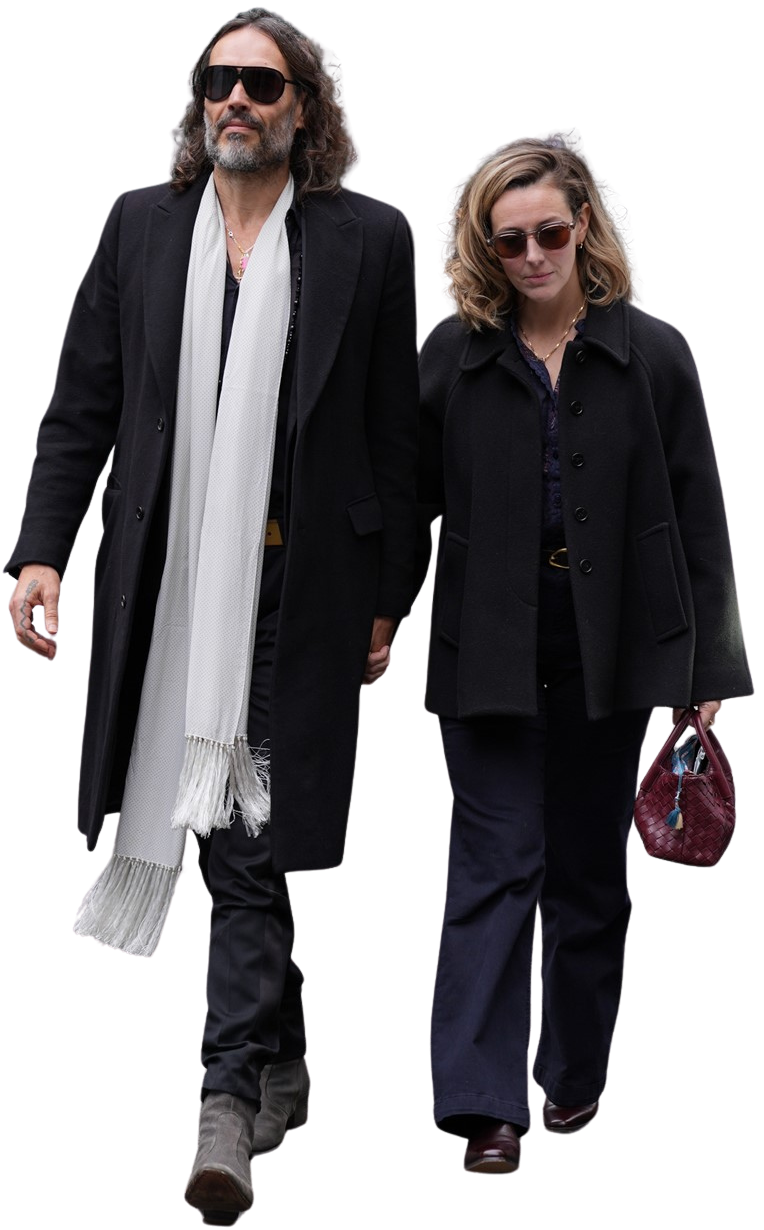
He was convicted of:
Rape, contrary to section 1 of the Sexual Offences Act 2003, of a 21-year-old fan at his home in Hampstead, north London, in 2009, about a week after he picked her out after his Scandalous show at the Hammersmith Apollo.
Sexual assault, contrary to section 3 of the same Act, of a woman at a party in a Soho bar in the summer of 2004, by grabbing her breasts within a minute of meeting her.
Sexual assault of a woman who worked at a London radio station in 2004 or 2005, by pressing her against a corridor wall, kissing her and groping her breasts and bottom while members of his entourage looked on.
Sexual assault of a young Channel 4 employee in 2009, during the recording of an advertisement, by laying his head in her lap, demanding a massage and moving his face towards her groin.
He was acquitted of:
Rape of a woman in a hotel room in Bournemouth during the Labour Party conference in 1999.
Oral rape of the Soho woman in a lavatory cubicle in 2004, the more serious of her two allegations.
Attempted indecent assault of a young MTV worker in 2001, a count the judge had already reduced from indecent assault after ruling that there was insufficient evidence for the original charge.
One rape and three sexual assaults proved, then, and two rapes and an attempted indecent assault not proved. You will notice that the second half of that sentence is missing from a great many of today’s headlines.
Now to the question that matters most, and that almost nobody in the media will ask: what was the evidence? Not the allegations, not the documentary, not the memoir, not the phone codes. The evidence that the crimes for which Russell Brand now stands convicted actually happened. Let us go through it, count by count, and be honest about what it is.
Start with the rape. Here is what the jury had.
There was the woman’s own testimony, tested over hours of cross-examination, that the encounter at his house began consensually and became anal rape; that she did not consent to it; that she had been in pain afterwards and terrified she had contracted HIV.
There was evidence that she had told friends and her parents about it at the time. That is evidence of consistency: it shows she said much the same thing then as she says now. It is not evidence of what happened in the bedroom, because her friends and parents were not in it.
There were estate agent’s photographs of Brand’s bedroom and bathroom, taken about eight months later, which she identified as the rooms. That proves she had been in the house, which nobody disputed.
There were text messages. Afterwards, Brand texted her: “Because you are dirty and I want to push you further.” She replied that he had treated her “like an animal”. He apologised. These are the closest thing to hard evidence in the case, and they are genuinely unpleasant. But they do not say what the prosecution needed them to say. Nowhere in them does she say she was raped, or he admit it. They are consistent with a man who took things too far; they are also consistent, as the defence argued, with a rough consensual encounter that a young woman bitterly regretted.
And there was Brand’s own phone, in which she was saved with a “T”, which he told the jury stood for “tart”, his code for casual hook-ups, and “AP”, for “anal play”, which, he said, she had performed “upon first meeting me”. Two asterisks, he explained, meant: “Never, ever forget this individual, this is a memorable encounter.” It is a revolting little catalogue, and it did him enormous damage. But it records that sex happened, which he admitted, not that it was non-consensual, which he denied.
That is the evidence. There was no forensic evidence, no medical record, no injury documented at the time, no witness and no complaint to the police for sixteen years. Brand never disputed that they had sex. The entire case came down to a single question, whether she consented, and the only two people who know the answer gave opposite accounts of it. On that charge, the jury believed her and disbelieved him.
The defence fought it hard. Ian Winter KC put it to her that, young and besotted, she had “gone along with” what Brand wanted, and that he had “pushed you and probably had treated you like an animal, but he didn’t rape you”. When she said Brand “didn’t act like he’d done something criminal” afterwards, Mr Winter replied: “That’s because you consented.” He pointed out that she had texted “animal”, not “rape”. She agreed that she had been a “huge” fan who “completely adored him”, that she had gone to his house expecting sex, that she knew his reputation, and that she had a partner at the time. Going there, she said, had been a “huge mistake”. “I didn’t consent to what happened to me,” she told the court. Twelve people believed her.
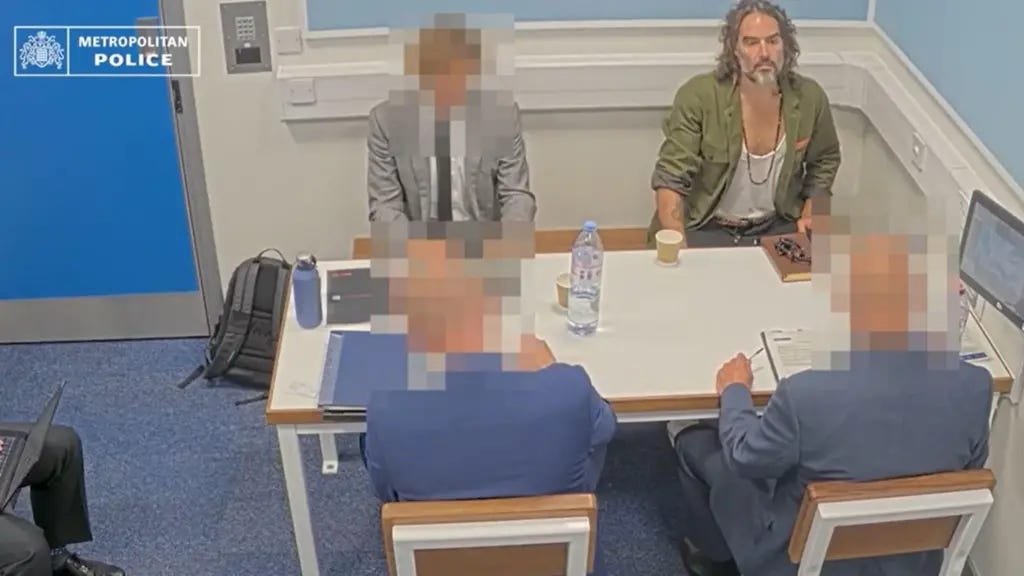
Now the three sexual assaults.
In the Soho case, the jury heard the woman’s account that Brand grabbed her breasts in the middle of a conversation and then pulled her into a cubicle. It heard her sister describe what she had been told, including Brand’s eyes going “completely blank”, as if he had “been possessed”. It heard that she had told friends at the time that Brand had tried to force himself on her but that she had got away. Brand admitted meeting her, admitted speaking to her for less than a minute and admitted going into the cubicle with her to “fool around”. He denied the groping, saying it would have been “disgusting behaviour”. Mr Winter told her bluntly: “Let’s be clear, he did not do that to you,” called her account “physically impossible”, and pointed out that if she had been groped in the middle of a crowded bar, somebody would surely have seen it. Nobody who saw it gave evidence. The jury convicted on the groping and acquitted on the oral rape, the more serious allegation, which she had first described as rape only after the 2023 documentary.
In the radio station case, the jury heard the woman’s account and the text messages she sent at the time: “He was a superstar,” and “I thought nothing would happen to him.” It heard her describe begging his entourage to intervene. None of the entourage gave evidence to support her account. The texts show that she was upset about something involving Brand at the time. They do not describe what he did.
In the Channel 4 case, the strongest of the four, the woman complained to her line manager the next day, and a colleague supported her account of Brand’s associates urging her on, telling her he would not continue recording unless she massaged him, while others laughed. Brand’s head in her lap and his face moving towards her groin were her evidence; the surrounding circumstances had some support from someone else who was there.
So let me answer the question plainly. On each of the four counts on which Russell Brand was convicted, the core of the case, the act itself and the absence of consent, rested on the word of one woman against the word of one man. There was supporting evidence: complaints made at the time, texts, a sister’s account, a colleague’s, and Brand’s own unattractive record-keeping. That evidence can show that a woman was consistent, that she was upset, that something happened between her and Brand. It cannot, by its nature, show what happened in a bedroom in Hampstead in 2009, or in a crowded bar in Soho in 2004, beyond what she says. In every case, the jury was choosing whom to believe.
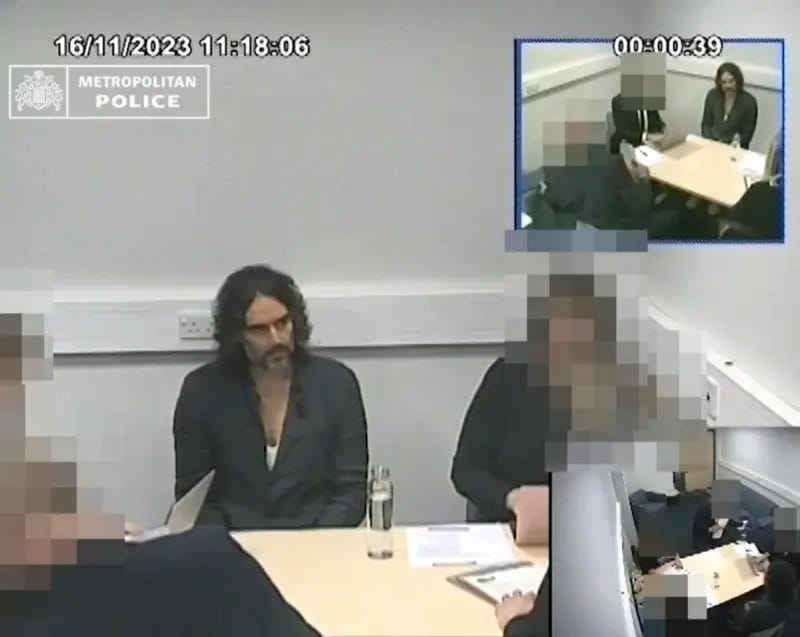
That is not an outrage peculiar to this trial. It is what happens in almost every sexual offence case, because most sexual offences, if they happen, happen with two people in a room. If juries could convict only on independent proof, almost no rapist would ever be convicted, and many genuine victims would never see justice. That is the brutal dilemma of these cases: a true allegation is fiendishly hard to prove, and a false or mistaken one is just as fiendishly hard to disprove, because nobody can prove that something did not happen in a room twenty years ago. The law’s answer is to let twelve ordinary people decide whom they believe, and to require them to be sure. Sometimes that produces justice. Sometimes it does not.
And so we arrive at an uncomfortable truth that our legal system prefers not to dwell on. In the eyes of the law, Russell Brand is now guilty of rape and sexual assault, and he must be treated as such. But a conviction is a legal fact, not a revelation from on high. It means that twelve people were sure. It does not mean that anyone has proved, in any sense a scientist or a historian would recognise, what happened in that house in 2009. Where a verdict rests on the jury preferring one voice to another, with no independent evidence of the act itself, the defendant’s guilt has been established in law but, in reality, it remains a matter of belief. It may well be correct. It may not. We simply cannot know, and neither, strictly speaking, can the jury. That is not a criticism of the women, whom I have no reason to disbelieve. It is a description of the limits of what a criminal trial can do.
History is not short of reminders. Warren Blackwell spent more than three years in prison for a sexual assault he did not commit, on the word of a woman later found to have a long history of false allegations; the Court of Appeal quashed his conviction in 2006. Juries convicted the Birmingham Six, the Guildford Four and Stefan Kiszko, every one of them sure, every one of them wrong. Juries are the best system we have. They are not infallible, and anybody who pretends otherwise has not read much legal history.
Nor are they immune to what they have read. Before this trial began, six prospective jurors were excused because they could remember the 2023 Dispatches programme. That is reassuring as far as it goes, but it tells you how pervasive the coverage was, and the jurors who remained had lived through three years in which Brand was described, day after day, as an alleged rapist, by newspapers and broadcasters that had already made up their minds. The judge warned them, properly, that the documentary was “one-sided and dramatic in manner” and must be put out of their minds. Research commissioned by the Ministry of Justice in 2010 found that in high-profile cases around seven in ten jurors recalled media coverage of the case, and around one in five said they found it difficult to put it out of their minds. Twelve people do not leave their memories at the door of the jury room, however hard they try.
The defence built its whole case on that point. Journalists, Mr Winter told the jury in his closing speech, had “poisoned the well of justice”, and done so deliberately: “They poisoned the wells in the hope and intention that other people come forward and make allegations against him.” The complainants, he said, were “not random, not independent” but “thoroughly contaminated”, and “they all came forward for reasons connected to the TV programme”. They might sincerely believe their accounts now, but that was “the precise consequence of the poisoning of the well”. Delays of up to 24 years were “monstrous”, leaving the jury in “a quagmire of doubt and inaccurate recollection”. None of the women, he noted, had come forward during the #MeToo movement, when “it could not have been more publicised”.
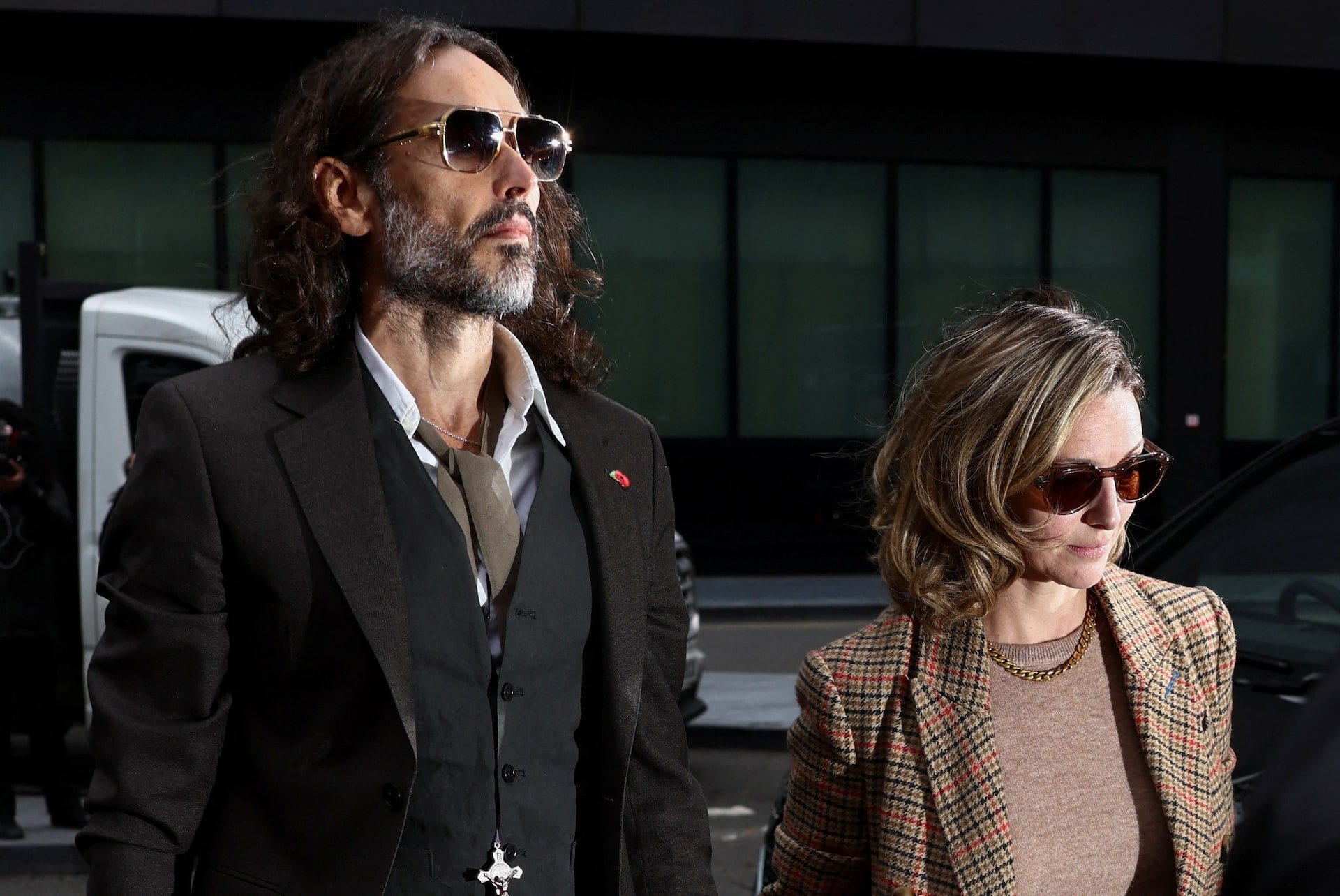
He argued that Brand’s own conduct was inconsistent with guilt. Every complainant described him behaving “normally” afterwards: “That, we suggest, is something that simply cannot have occurred if he is guilty.” “There is no evidence he is some sort of psychopath who rapes people and thinks it’s normal.” Brand had left his real email address, posed for photographs and kissed women goodbye. “Rapists do not leave their address.” What Brand had wanted from sex, he said, was “approbation and adoration”. “Living a highly promiscuous life is entirely lawful however morally distasteful you may find it. Disgusting, distasteful, immoral, who cares? It’s irrelevant to your consideration.” Brand “had an immense amount of sex and none of it was unlawful”. “Why is it,” he asked, “that only three rapes in 10 years?” And he reminded the jury of the principle on which everything turns: “When they add up, they make you sure; when they don’t, they are the doubt.”
Brand put his own case in the witness box, at length. “Consent is fundamental, essential, necessary, and indeed in many ways more important than sex itself,” he said. “I know what no means.” He admitted “beyond reckless philandering and idiocy”, and that as he became famous he “was very comfortable allowing that to facilitate sexual access”. It did not, he insisted, make him a rapist. “Not guilty,” he said, “is my plea in every single case.” On four counts, the jury did not believe him.
The prosecution, for its part, played to the gallery and the jury box alike. Riel Karmy-Jones KC told the jurors that the six women had “nothing to gain” and had come forward when they “realised they are not alone”; that Brand had “snapped, from charming to frightening to nasty”; that women were “disposable” to him; that his defence was “a lot of half-truths, but spun into lies”. Then she asked them to sit in total silence for twenty seconds, to feel the length of the MTV encounter. It was a superb piece of courtroom theatre. It is also precisely the kind of thing that turns a trial of evidence into a trial of feeling. The jury, to its credit, acquitted on that very count.
So there will be an appeal. Outside court, when the Sunday Times journalist Rosamund Urwin, one of the reporters behind the original investigation, said she was pleased justice had been done, Mr Winter replied: “Well, it wasn’t.” It is about as succinct a notice of appeal as you will ever hear. Brand has, in the normal course, 28 days to apply for permission to appeal to the Court of Appeal, which will not retry the case or decide whether he did it, but whether the convictions are “unsafe”. The likely grounds are not hard to guess: the joinder of six complainants spanning a decade, which allowed the prosecution to argue that six women could not all be wrong and made each allegation look stronger than it would have alone; the impact of the documentary and three years of hostile publicity on the women’s memories and on the jury; the age of the allegations; and the judge’s directions. Appeals against conviction rarely succeed. That is not the same as saying they never should.
In the meantime, Brand will be sentenced at Southwark on Monday, 9 November. Rape carries a maximum of life imprisonment, and a single rape of an adult typically carries a starting point of several years under the sentencing guidelines, rising with aggravating features such as abuse of position or the targeting of a vulnerable victim. Sexual assault carries a maximum of ten years. Because the offences are historic, the judge must apply today’s guidelines, but cannot exceed the maximum sentence available at the time. Brand will go on the sex offenders’ register, reportedly for life. The Met says files concerning two further women have been sent to the Crown Prosecution Service; those allegations are untested, and he has not been charged with them.
The reactions came in on cue. Detective Superintendent Andy Furphy said Brand had “used his influence, status and fame to exploit and sexually offend against women”, and that “no one is above the law, no matter how famous or powerful they may be”. Brand’s father, Ron, said he was “bemused and shocked”. Brand himself said nothing. Sunday Service is, presumably, cancelled until further notice.
I have argued that Russell Brand was innocent unless proven guilty, and that the rest of us should wait for a jury rather than convicting him on the strength of a television programme. I make no apology for that. He has now had his trial, and the law says he is guilty of four offences and not guilty of three. I accept both halves of that verdict, as anybody who believes in the rule of law must. He should be sentenced according to law.
But accepting a verdict is not the same as pretending it is infallible. Where twelve people have chosen one voice over another, with no independent proof of the act itself, and (due to the granting of anonymity to the accusers) with journalists denied the ability to investigate and scrutinise those making the allegations, they have made a judgement, not a discovery. The law calls the result guilt. Honesty calls it belief. And if Russell Brand’s appeal ever reaches a court, I hope it is heard with the same care, and reported with the same prominence, as the verdicts that sent him down.
I am not holding my breath.