


For two weeks, the most talkative man in Britain sat in a glass box at Southwark Crown Court and said nothing at all. Then, last Wednesday, Russell Brand walked into the witness box, took the oath, gave his name as Russell Edward Brand, and started to talk. He did not stop for more than four hours. It was, by common consent, the quietest he has been in thirty years.
He faces seven charges involving six women between 1999 and 2009: three of rape, three of sexual assault and one of attempted indecent assault, the last reduced from indecent assault by the judge after he found there was insufficient evidence for the original count. Brand denies them all. On Monday his barrister made his final speech to the jury. As soon as Tuesday, after the judge, Mr Justice Bennathan, has summed up, eight men and four women will retire to decide whether he is guilty.
The jury has not yet reached its verdicts, and the law of contempt, quite rightly, forbids me from telling you what I think they should be. What I can tell you is what was said in court, as fully and fairly as I can manage.
Begin with the defendant, since it was his week.
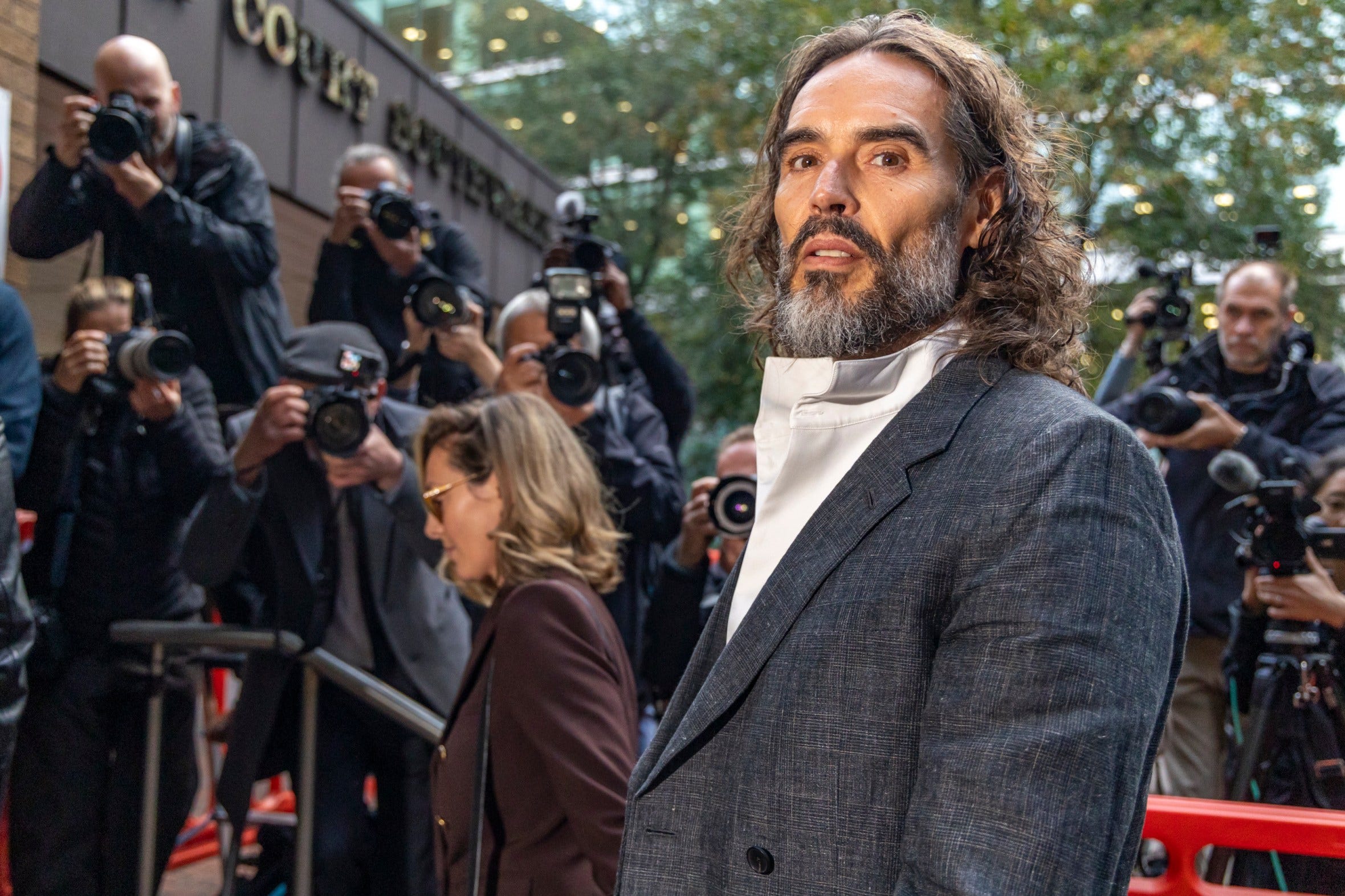
Brand told the jury, under questioning from his own counsel, Ian Winter KC, that the 2023 Channel 4 Dispatches programme and the Times reports that triggered all this had been “devastating”. “My entire life has been consumed by these events, these allegations, these accusations,” he said, at the expense of his marriage, his children and his health. He said Great Ormond Street Hospital had barred him from staying with his baby son during open-heart surgery, citing “the material published”. Asked whether he had persuaded anybody with relevant evidence to speak for him, he said: “I have not.” Asked whether any of them would “touch you with a bargepole”, he said: “No.” For a man who once sold out arenas, it was a bleak little exchange.
He did not pretend to have been a choirboy. “I’ve been persuasive, seductive, begging and flirting,” he said, “and dedicated a lot of my life to what seems now beyond reckless philandering, and idiocy.” He agreed he had been “obsessed with sex”. “As I became more successful and famous,” he said, “I was very comfortable allowing that to facilitate sexual access.” He accepted that was wrong. His marriage to Katy Perry in 2010 brought “staggering fame”. Of his ambition, reported by a former friend, to sleep with 5,000 women, he said he did not remember it, but that “it’s entirely possible it’s the kind of badinage I would have engaged in when I was 24”. And on consent, the one word that matters in this case, he was emphatic. “Consent is fundamental, essential, necessary, and indeed in many ways more important than sex itself.”
He then went through the women. Of the woman who says he raped her in a hotel in Bournemouth during the 1999 Labour Party conference, he said he remembered her as “loquacious” and “interesting”, and that when he went back to her room he thought there was “at least the possibility of sex”. Asked whether he raped her, he said no. Asked whether he thought “no” meant “yes”, he said: “I know what no means.”
Of the 2004 Soho party, where a woman says he grabbed her breasts and forced her to perform oral sex in a lavatory cubicle, he recalled a friend introducing them with the words: “There’s a bird here who really wants to meet you, mate.” He said he told her: “You are really, really beautiful, understand you’re really looking forward to meeting me.” She had “very prominent eyes”, was “wide-eyed”, flirting enthusiastically, and “happy” to “fool around”. He denied grabbing her breasts, which would have been “disgusting behaviour”. Asked whether she might not have consented to going into the cubicle, he said: “There’s absolutely no question.” He ended the encounter, he said, with the words “let’s wrap this up”. And to the suggestion that someone would have noticed, he offered a line that will haunt the media industry for years: “In media, in the early 2000s, people going in and out of bathrooms didn’t attract a huge amount of attention.”
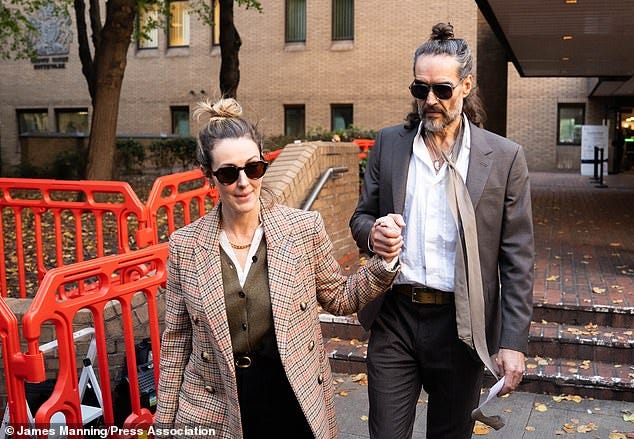
Of the young MTV worker who says he tried to drag her into the men’s toilets at work in 2001, he said he had “absolutely not” intended anything non-consensual. Of the 21-year-old fan from his 2009 Hammersmith Apollo show, he said they had a “memorable” encounter in his dressing room, that he had been “excited and enthusiastic” to see her again, and that the sex at his Hampstead home a week later was consensual. He denied that she had asked him to stop.
Then the prosecutor, Riel Karmy-Jones KC, stood up, and it was not an easy afternoon. She asked whether his only hobbies were sex and comedy. “West Ham, animals, veganism,” he replied. She asked whether all he cared about was “getting yourself off”. “I had a variety of complex concerns like any human being,” he said. She took him to his phone. A “T” next to the Hammersmith woman’s name, he explained, stood for “tart”, his code for casual hook-ups. “AP” stood for “anal play”, which, he said, she had performed “upon first meeting me”. Two asterisks meant: “Never, ever forget this individual, this is a memorable encounter.” She read from his 2007 memoir, My Booky Wook, including a caption announcing that he had decided “to act gay to attract girls”. It was, he said, “a joke”. She suggested he had “never asked” one woman “if she was up for it”: “You just did it.” “It’s not true,” he said, “that’s not what happened.” She suggested that his account had grown far more detailed since his police interviews, in which he had said he could not remember several of the women. He accepted that some details were inconsistent, and said that reading the evidence and revisiting the places had brought memories back. At one point the judge intervened: “You knew consent was the million dollar question.” Brand replied: “I can tell the truth that I wasn’t looking at sex talk in that way.” At the end, asked once more about the charges, he said: “Not guilty is my plea in every single case.”
The defence called two more witnesses, after a fashion. Two of Brand’s former partners provided written statements saying that he had been “unfaithful” and “promiscuous”, but had never done anything intimate with them without their consent. And his wife, Laura, told the jury that he was “caring and kind”, that “I feel very seen by him”, and that he had never made her do anything sexual she did not want.
That was the evidence. Now to the contradictions, because every case has them and this one has plenty, on both sides.
The defence put a series of inconsistencies to the women, and it is only fair to list them. The Bournemouth complainant told police Brand had been in his underwear, “budgie smugglers” jumping about “like an ostrich”, in Mr Winter’s account of her evidence; her own photographs from that night show him in trousers. She also kept a photograph of him blowing her a kiss, which the defence called “completely inconsistent” with an allegation of rape. The Soho complainant told friends and her sister at the time that Brand had tried to force himself on her but that she had got away; she first described it as rape after the 2023 documentary. Her explanation: “I didn’t want people to judge me. I felt ashamed.” The Hammersmith complainant, under cross-examination, agreed she had been a “huge” fan who “completely adored him”, that she went to his house expecting sex, that she had a partner at the time, and that going had been a “huge mistake”. In her texts afterwards she told Brand he had treated her “like an animal”, but not that he had raped her. “I didn’t consent to what happened to me,” she told the court. Brand’s former personal assistant, called by the Crown, described his “insane sexual appetite” but said she never saw him break the law. And none of the six women went to the police until after the documentary.
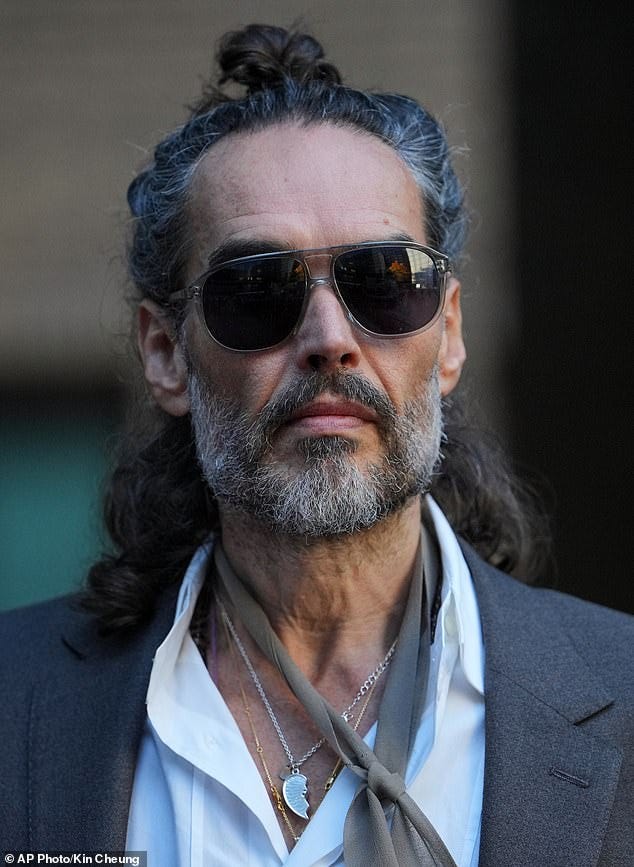
But the inconsistencies do not all run one way, and the jury has heard evidence that the defence has had to work much harder to explain. The Channel 4 complainant, who says Brand put his head in her lap and demanded a massage in 2009, reported it to her line manager the next day, and a colleague backed up her account of his associates urging her on. The radio station complainant’s texts at the time survive: “He was a superstar,” she wrote, and “I thought nothing would happen to him.” The Soho complainant’s sister described Brand’s eyes, as she was told of it, going “completely blank”, as if he had “been possessed”. The Hammersmith complainant told friends and her parents at the time, and Brand did, on her evidence, text her afterwards (“Because you are dirty and I want to push you further”) and then apologise. Brand himself admitted the phone codes, the use of fame for “sexual access”, and that his memory had improved markedly between the police station and the witness box. None of this is proof of guilt; it is what the jury must weigh against the defence’s points, and it would be dishonest to report one list without the other.
Then came the closing speeches, and they were as stark a contrast as you will hear in an English court.
Ms Karmy-Jones went first, on Friday. The six women, she said, did not know each other, had sought no limelight and had nothing to gain “apart from perhaps some closure”. Each described the same pattern: a charming man who then “snapped, from charming to frightening to nasty”. “He didn’t listen when I said no, he didn’t listen, he didn’t care,” she said, summarising their accounts, “pulling, pushing, tugging, thrusting.” “In the rape cases he just kept on going until he achieved his ultimate aim and ejaculated.” Brand’s habit of handing women his contact details afterwards was, she suggested, what “today… might be known as gaslighting”. Women, she said, “were disposable; they didn’t matter to him. He didn’t even need to know their names. They were just a means to an end,” the “amusements” in what Brand himself had once called his “playground of orgasms”. “So long as they had a vagina and a heartbeat,” she said, “he could get what he wanted.”
On what the women could or could not remember wearing: “Ultimately does it really matter? The defence, I’m sure, will tell you it does.” The experience of being raped, she suggested, “may be something that looms a little bit larger in your mind” than “the intricacies of outfit changes”. Of the Bournemouth complainant she asked: “Is that woman some sort of lunatic who would make this story up, reimagine this event after watching a documentary?” The documentary, she said, was no “magic force”; the women had simply “realised they are not alone”. Brand “couldn’t really remember anything when he was interviewed”, she said, “in stark contrast to now when he suddenly seems to remember all sorts of details”. His defence was “a lot of half-truths” that had been “spun into lies”. She read from My Booky Wook (“I will determinedly, resolutely, remove anything that’s in the way”) and suggested that consent, to Brand, was “just an obstacle to be removed, or perhaps to ignore”. Then she asked the jury to sit in silence for twenty seconds, the length of the MTV encounter. “Pulling, not just a gentle grab of the arm and a ‘come in’,” she said. “Twenty seconds of this.” “There really shouldn’t be any doubt in your mind that Russell Brand knew full well this was not consensual. We invite you to find him guilty on all counts.”
On Monday, Mr Winter replied, and he went for the documentary with both barrels. Journalists, he said, had “poisoned the well of justice”, and done so deliberately. “They poisoned the wells in the hope and intention that other people come forward and make allegations against him.” The women, he said, were “not random, not independent” but “thoroughly contaminated”, and that “they all came forward for reasons connected to the TV programme”. They might sincerely believe their accounts now, but that was “the precise consequence of the poisoning of the well”. The delays, of up to 24 years, were “monstrous”, and left the jury in “a quagmire of doubt and inaccurate recollection”. And none of the women, he noted, had come forward during the #MeToo movement, when “it could not have been more publicised”.
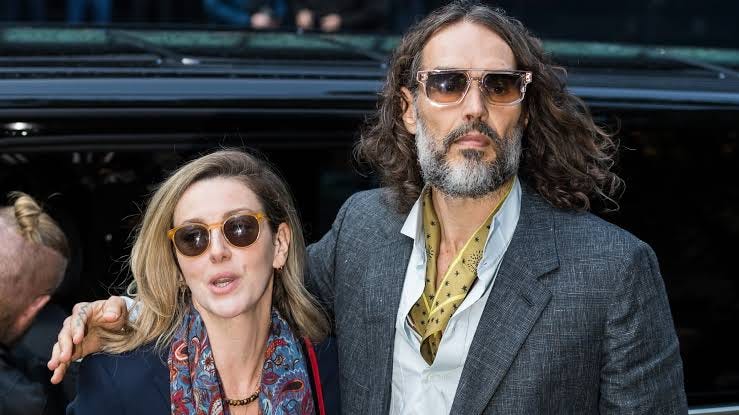
Then he turned to Brand’s behaviour. Every complainant, he said, had described Brand behaving “normally” afterwards. “That, we suggest, is something that simply cannot have occurred if he is guilty.” “He obviously genuinely believed that they were consenting.” There was “no evidence he is some sort of psychopath who rapes people and thinks it’s normal”. “You would have to be a psychopath,” he said, “to be raping someone and asking them if they were enjoying it.” Brand had left his real email address, posed for photographs, kissed women goodbye. “Rapists do not leave their address.” He respected it, Mr Winter said, “when a woman says no, so that makes him someone who is not a rapist”. What Brand had wanted from sex, he said, was “approbation and adoration”. And then the line that will be on the front pages. “Living a highly promiscuous life is entirely lawful however morally distasteful you may find it. Disgusting, distasteful, immoral, who cares? It’s irrelevant to your consideration.” Brand “had an immense amount of sex and none of it was unlawful”. “Why is it,” he asked, “that only three rapes in 10 years?”
He told the jury that Brand’s wife “fell in love with that man in full knowledge of what he was doing” and had married him and had three children with him, which she would hardly have done if he were “guilty as charged”. The prosecution’s use of My Booky Wook was a “bid of desperation”; the line about acting gay to attract girls was obviously a joke. “The joke is that it didn’t work.” And the details, he reminded the jury, are everything: “When they add up, they make you sure; when they don’t, they are the doubt.”
On Tuesday, Mr Justice Bennathan is expected to sum up the evidence and give the jury its legal directions: that the burden of proof lies entirely on the prosecution, that they must be sure of guilt before they convict, that they must consider each count and each woman separately, that delay in reporting is not in itself a sign that a complaint is false, and that they must put out of their minds everything they have seen, read or heard outside that courtroom, the documentary included. Then the jury will go out. For now the judge has said he will accept only unanimous verdicts. If, after a substantial period, the jurors cannot all agree, he may later tell them he will accept a majority of at least ten to two. If they still cannot agree on a count, the Crown can seek a retrial on it. If Brand is convicted of rape, he faces a long prison sentence. If he is acquitted, he walks out of Southwark a free man, into a world that long ago made up its mind about him.
Which brings me to the only thing I am allowed to say about all this, and the thing that matters most. In this country, a man is innocent unless, not until, he is proven guilty. That one little word is the whole of English justice. “Until” assumes the verdict and merely waits for it. “Unless” means what it says.
If the jury is sure that Russell Brand is guilty, then let them throw the book at him. The booky wooky, even. Forgive me; I could not resist. But until twelve people who have heard every word of the evidence tell us otherwise, he is entitled to exactly the same presumption as you or I would be. Ignore the headlines, ignore the hashtags, and ignore the people who decided this case three years ago on the strength of a television programme.