


Happy Friday to you all!
Moving forward, you’ll get the following from me on my Substack: Weekly Epstein scandal podcast episodes including my exclusive interviews with witnesses (you can listen to the latest episode below); breaking news coverage and analysis; investigations into cold cases; a monthly newsletter covering political scandals; a monthly report on my experiences here in wartime Ukraine; new true crime interviews and podcasts (upcoming: The Murder of Ann Widdecombe, The truth behind the West Memphis 3 murders, a graphic breakdown of the Clancy murder case, and DO NO HARM: The Untold Lucy Letby Story), and this new monthly newsletter covering every high profile criminal case from the past four weeks.
EPISODE FOURTEEN: Epstein’s Harem and the Final Arrest

Welcome to episode fourteen of ‘The Life and death of Jeff’. If you missed last week’s episode, in which I covered the journalist who helped Virginia Giuffre lie about Prince Andrew and finally revealed the name of the young woman whom Epstein role-played Lolita characters with, you can find it on my Substack along with all previous episodes.
If you missed my latest article in The Spectator, where I dish out some facts about the controversial Cornell University rape allegations, you can read it by clicking here.

Now, without further delay, it’s time for you to grab a coffee and dive into the most shocking true crime stories and updates from the past four weeks.
RUSSELL BRAND ON TRIAL
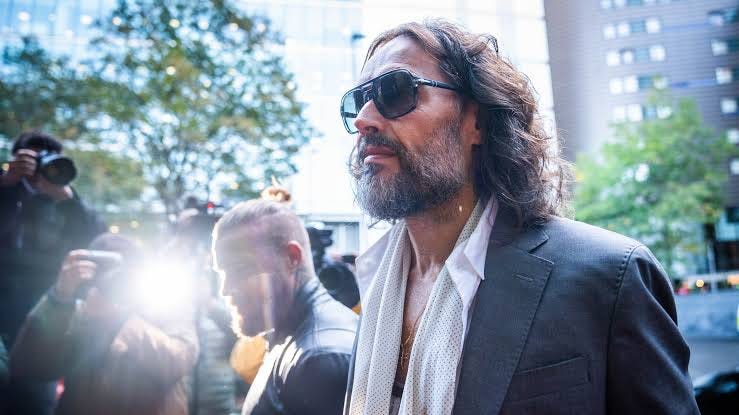
Russell Brand’s trial at Southwark Crown Court has heard allegations from six women who accuse the British comedian and actor of rape and sexual assault over a decade-long period between 1999 and 2009. Brand, 51, denies all seven charges and maintains that his sexual encounters were consensual.
The charges comprise three counts of rape, three of sexual assault and one of indecent assault. Prosecutor Riel Karmy-Jones KC described Brand as a “ruthless, calculated and manipulative” sexual predator, arguing that the women came forward independently and did not know one another. Brand’s defence disputes the allegations.
The allegations span several episodes during Brand’s rise to fame. The first complainant alleges that he raped her in a hotel room following an event connected to the 1999 Labour Party conference in Bournemouth. A second woman, who worked at MTV, alleges that in 2001 Brand grabbed her arm and attempted to drag her into a men’s toilet, from which she managed to escape.
A third woman alleges that Brand grabbed her breasts in a Soho bar in 2004 before pulling her into a toilet and orally raping her. Prosecutors say she protested, telling him she did not want to participate. Another complainant, who worked at a radio station, alleges that Brand grabbed her face, pushed her against a wall, kissed her aggressively and touched her breasts and buttocks without consent in 2004 or 2005.
The jury has also heard from a woman who alleges that Brand raped her at his London home in 2009. She says an encounter that began consensually changed when he forced her into anal sex despite her repeatedly asking him to stop. She later told him he had treated her “like an animal”. According to evidence presented in court, Brand replied: “I’m sorry.” Her friends, parents and former colleagues have described hearing about the alleged assault afterwards and recalled her distress. Brand’s barrister has challenged her account.
The final complainant alleges sexual misconduct while Brand was filming a project in 2009, claiming he placed his head against her groin after pressuring her to provide a massage.
Brand has previously told police that he never engaged in non-consensual sexual activity. His position is that the encounters were consensual and have since been “reimagined” by his accusers. His defence has questioned aspects of the women’s recollections and interpretations.
The proceedings follow allegations publicised in a 2023 television investigation. All allegations remain unproven, and Brand is presumed innocent unless convicted. The trial continues.
KENYA DOOMSDAY CULT LEADER FOUND GUILTY OF MURDERING 191 PEOPLE
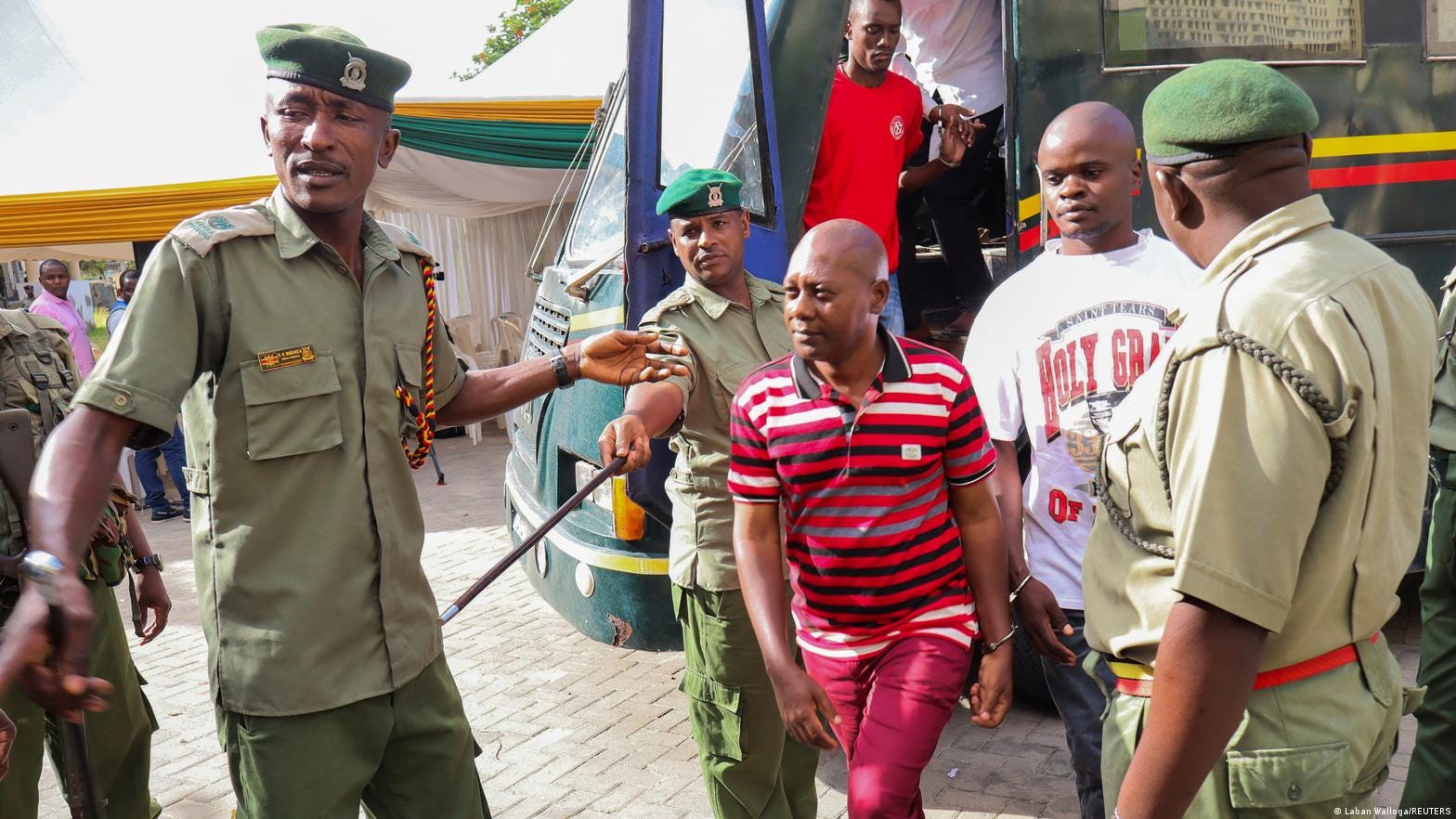
Kenyan doomsday cult leader Paul Mackenzie, his wife Rhoda Maweu and 29 other defendants have been found guilty of murdering 191 people, including 190 children, in one of the country’s most horrific religious atrocities.
Justice Diana Mochache delivered the verdict at Mombasa Law Courts on Monday, concluding a lengthy trial examining the deaths linked to Mackenzie’s Good News International Church. All 31 defendants had denied the charges but were convicted on all 191 counts of murder. Sentencing is expected in November.
In a judgment spanning approximately 1,000 pages, Justice Mochache described how Mackenzie’s followers became psychologically dependent on him, surrendering their independence before relocating to Shakahola Forest in 2023.
“By the time they were relocating to Shakahola, many of them had lost their sense of self,” she said, explaining that followers had become so reliant on the self-proclaimed religious leader that they would consult him before making personal decisions.
The court heard that Mackenzie prohibited followers from vaccinating their children and instructed them to abandon formal employment. According to the judge, his followers obeyed without question, having become conditioned to accept his authority.
Prosecutors argued that Mackenzie orchestrated an extreme fasting regime, instructing followers to starve themselves and their children to death so they could reach heaven and meet Jesus before the predicted end of the world.
Investigators described a hierarchy in which children were expected to die first, followed by teenagers, women and men. Many of the children, some aged between six and 10, died from starvation. Prosecutors also cited evidence of asphyxia, neck compression and traumatic head injuries. The youngest victims were only a few months old.
Justice Mochache rejected the defence’s suggestion that the relocation to Shakahola was simply the result of Mackenzie’s powers of persuasion, finding that he personally participated in and supervised the move. She also ruled that children lacked the legal capacity to consent to fasting until death.
The convictions relate to 191 deaths, but the wider Shakahola tragedy claimed 429 lives, according to figures released by the Kenya National Commission on Human Rights in 2024. Hundreds of bodies were discovered in shallow graves across the forest, while investigators also recovered 102 separate body parts. The condition of the remains meant that only 26 bodies could be identified.
Mackenzie, a former taxi driver, was arrested in April 2023 after a rights group alerted authorities and some followers were rescued. The subsequent investigation exposed mass graves and overwhelmed local mortuary facilities.
The case has devastated families across Kenya. Francis Wanje, 62, who lost eight relatives, including two grandchildren, described the psychological toll on his family.
“It has been really a heavy thing for us as a family,” he said.
Mackenzie faces additional proceedings involving terrorism-related offences, manslaughter and torture. In January, he was also charged with murdering another 52 people found dead in a nearby village, allegations he denies.
The scandal has intensified demands for tighter regulation of religious organisations, particularly after it emerged that Mackenzie had previously been arrested twice but released.
President William Ruto acknowledged in 2023 that government agencies should have prevented the deaths, accepting responsibility as head of state. The latest convictions represent a significant step towards accountability, although the wider questions surrounding the authorities’ failure to stop the tragedy remain.
THE WOMAN TENNESSEE COULDN’T KILL
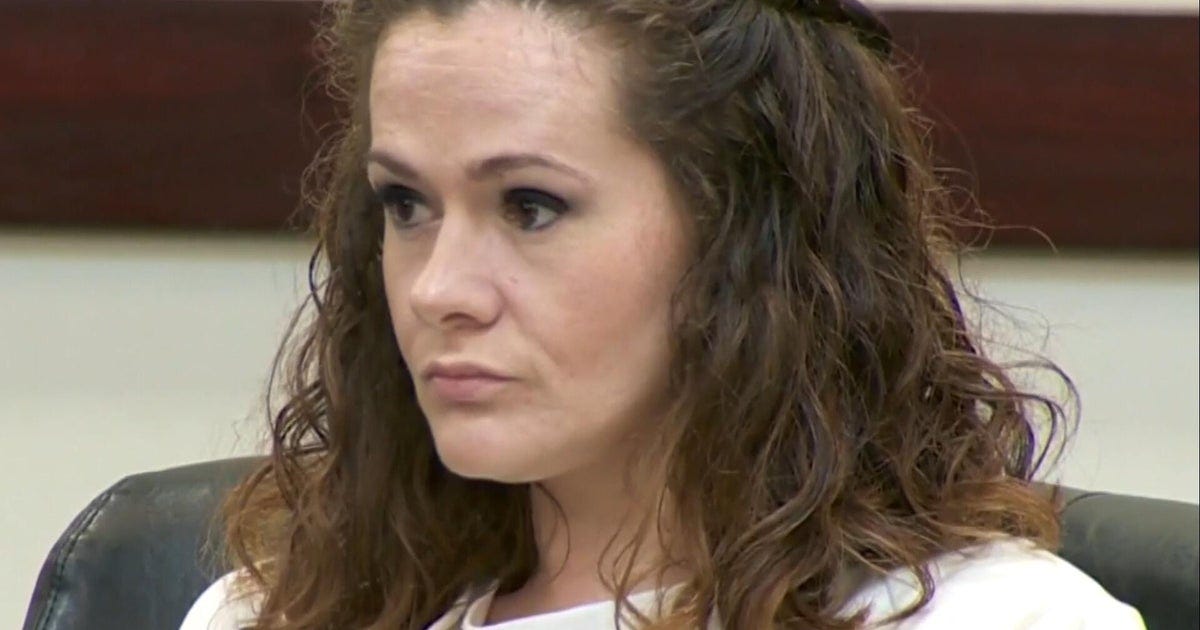
Tennessee has spent the best part of thirty years trying to execute Christa Pike. On September 30th it finally got round to it, and made the most almighty hash of the job. Pike, now 50, was given two doses of pentobarbital. She did not die. Witnesses heard her breathing, groaning and, at one point, snoring, and she was eventually carted out of the prison in an ambulance and taken to hospital for emergency treatment. Which is not, one imagines, how the Department of Correction had drawn it up on the whiteboard.
She would have been the first woman executed in Tennessee for at least 200 years. Her crime was the 1995 murder of Colleen Slemmer, 19, a fellow trainee at a Job Corps centre in Knoxville. Pike was 18. She and her then-boyfriend, Tadaryl Shipp, were both convicted. Shipp, who was 17, got life with the possibility of parole. Pike got death. Only Pike.
Nobody pretends this was anything other than a savage killing. Slemmer was set upon after Pike and Shipp decided she had betrayed them in a row over their relationship. Pike has never denied her part in it. Her appeals have instead been about her age, her upbringing and the state of her mind at the time. In her clemency papers she called herself a mentally ill 18-year-old and accepted that she had taken somebody’s daughter, sister and friend.
Her lawyers made her childhood the heart of the last-ditch fight. She was, they said, sexually abused from a very young age, and no court had ever properly weighed what that did to her. An hour before the needle was due, the Sixth US Circuit Court of Appeals agreed to pause things and take a look. The US Supreme Court then waved the execution through anyway.
So in she went. According to her lawyers she received two doses of the drug. Witnesses described loud exhalations, gasping and snoring. She complained of pain and kicked her legs so hard that the sheets came off the gurney. The curtain was drawn, opened, drawn again, like some ghastly provincial pantomime, while officials tried to work out what on earth to do next. She ended up in hospital in a critical condition.
The Department of Correction insists everyone followed the protocol. And they probably did. The protocol says that if the prisoner is still alive after the first set of syringes, you use the second set. What it does not say, with any clarity at all, is what happens if the prisoner is still alive after the second set. That, it turns out, is precisely the page somebody forgot to write.
Pike is now awake and talking, according to her lawyers, though nobody can say how she will fare. She is handcuffed and shackled to her hospital bed, presumably in case a woman the state has just tried and failed to kill decides to make a dash for it. The damage to her arms is said to be severe. “At a minimum, we expect a long recovery,” her legal team said. Dr Joel Zivot, an anaesthesiologist advising them, said she was off the ventilator and could communicate in a basic way, but did not seem to remember the execution. She knew her own name. She thought it was still September.
Nobody knows how much of the drug actually reached her bloodstream. Zivot thinks some of it may have leaked into the surrounding tissue rather than getting into her circulation in a dose that would kill her. Deborah Denno, a Fordham law professor who has spent years studying executions, said she was “absolutely astonished” Pike was conscious and talking. She told the BBC that Pike appears to be the first prisoner known to have survived an execution in which the lethal drug was actually put into her body.
The fallout has been considerable. Governor Bill Lee has halted all executions in Tennessee until the end of the year, and the Correction Commissioner, Frank Strada, is off. Pike’s lawyers want every scrap of evidence from that night preserved, medical records included, so they can find out exactly what went wrong. They are also, once again, asking the governor to commute her sentence to life without parole. Six days after the state tried and failed to kill her, she is still in a hospital bed and the lawyers are still at it.
GYPSY ROSE AND THE UNEXPLAINED DEATH
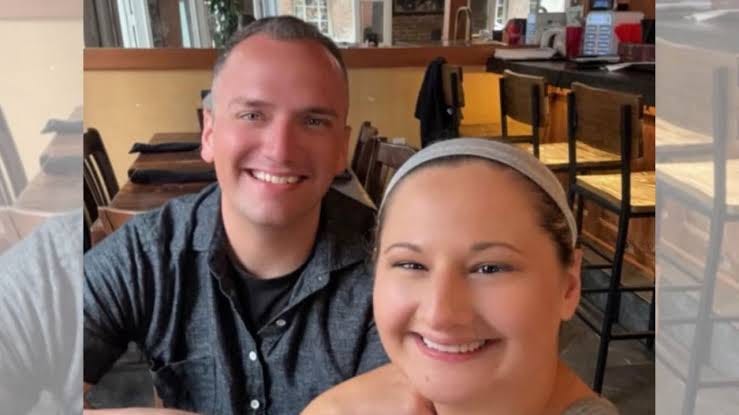
Ken Urker died on October 1. It was his 34th birthday. He was found on his bed in a house in Raceland, Louisiana, the latest and last chapter in a relationship with Gypsy Rose Blanchard that had gone from prison pen pals to engagement, to separation, to her marrying somebody else, to reconciliation and a baby. The Lafourche Parish Sheriff’s Office is investigating. It says it has found no evidence of foul play so far, but has not ruled it out either.
Deputies were called to the house at about 6.15pm. According to a police report obtained by People, they found drug paraphernalia, syringes among it, a spoon with a brown powdery substance on it, and a handgun in a holster. There was a blood-stained paper towel on his arm. There was no gunshot wound. The cause of death has not been released and the toxicology results are not back.
The welfare check happened because people were worried. He hadn’t turned up for work and wasn’t answering his phone. According to the police account, relatives had been anxious about his state of mind: depression, suicidal thoughts and heavy drinking. Gypsy has said she thinks he may have overdosed, while also saying she never once saw him take drugs and did not believe he had a problem with them. That is her view. It is not a medical finding.
His death has dragged the whole extraordinary Blanchard saga back into the light. For anyone who has been living in a cave, Gypsy’s mother, Clauddine “Dee Dee” Blanchard, spent years passing her daughter off as desperately ill. Leukaemia, muscular dystrophy, you name it. She kept her in a wheelchair she didn’t need and put her through medical treatment she didn’t need either. When investigators finally pulled at the thread, what unravelled was a great deal nastier and more complicated than anyone had supposed.
In the end Gypsy turned to Nicholas Godejohn, a boyfriend she had found on a Christian dating website, of all places, and talked him into killing her mother. In June 2015 he went to the house in Missouri and stabbed Dee Dee to death while Gypsy hid in the bathroom. The two of them fled to Wisconsin, where they were arrested. Gypsy pleaded guilty to second-degree murder in 2016 and got ten years. Godejohn was convicted of first-degree murder and got life. Gypsy was paroled in December 2023, after more than eight years inside.
Urker came along while she was in prison. He had seen the documentary Mommy Dead and Dearest, wrote to her, and the thing grew through letters and phone calls. They got engaged in 2018 and split in 2019. Gypsy then married Ryan Scott Anderson, a special needs teacher from Louisiana whom she had also met through prison correspondence during the pandemic. That wedding took place inside the prison in July 2022.
For the record, nothing in the public timeline shows she cheated on Urker. The engagement was over before Anderson came on the scene. But Urker plainly never went away. After her release, and with the marriage to Anderson falling apart, she and Ken got back together in 2024. She told Us Weekly she had rung Ken two weeks before marrying Ryan, and admitted her feelings for him had caused trouble. She and Anderson separated in March 2024 and were divorced later that year.
Before long Gypsy and Ken were out in public holding hands and getting matching tattoos. They got engaged again, and their daughter, Aurora Raina Urker, was born in December 2024. Nobody claimed it was plain sailing. On the Lifetime series Gypsy Rose: Life After Lock Up they talked about trust and communication and the weight of their history, and they went to couples therapy, which Gypsy described as a way of working through the emotional barriers between them.
There has also been the usual sludge on social media, including a short clip of Gypsy apparently cutting something with a knife or a pair of scissors, which the internet’s armchair detectives have seized upon as proof that she is volatile. No police statement and no court document links that clip to any attack on Urker. Nobody reliable knows what she was cutting or why the clip was filmed. It is evidence of precisely nothing.
Things have turned nasty since he died. Ken’s sister, Autumn Urker, says the couple had split more than a month before his death, and disputes Gypsy’s claim that they were engaged and talking about another baby. “Gypsy had no right to lie and say that it was because of some text that she sent to him,” Autumn said, a reference to Gypsy’s explanation that she couldn’t get hold of Ken on his birthday. Autumn has also said a preliminary autopsy finding suggests he may have had an undiagnosed enlarged heart. That is not the final word. The official cause and manner of death are still pending.
Where that leaves us is this. Ken Urker is dead. The coroner hasn’t finished. Suspected drugs were found in the room, a gun was found with them, there was no gunshot wound, and the police have not ruled out foul play. Until the toxicology and the rest of the inquiry come back, nobody knows why he died, however many people on Reddit say otherwise.
And Reddit is where Gypsy has now turned her fire. She has published screenshots from what she calls an evidence log, most of it, she says, from a single forum, mocking his looks, his sexuality and his relationship with her. “These screenshots show only a small portion of an evidence log documenting the cyberbullying, ridicule, allegations, and targeted harassment Ken faced across social media over the years. There is substantially more that has yet to be documented,” she wrote.
Why make it public? “Because there are people who participated in the harassment who would rather sweep what happened online under the rug than acknowledge the very real harm their words and actions can cause. I’m not going to let that happen,” she told People. Her point is that it was the drip, drip, drip of the stuff that did the damage, not any one post, and that the platforms ought to answer for ignoring repeated complaints.
She has started a petition for what she calls “Kenan’s Law”, which would change how social media companies deal with repeated reports of harassment. She says she has a New Orleans lawyer helping her draft it, though she has not yet been in front of any legislative committee. “There needs to be accountability, not only from the platforms that allow relentless harassment to continue, but also from individuals who build entire accounts and platforms around repeatedly targeting, humiliating, and harassing a person and their family,” she said.
Then there is the funeral, or rather the funerals. Gypsy says she will “most likely” go to the service Ken’s family are organising, and is planning her own memorial in Louisiana in November, with fireworks, because Ken used to buy “the biggest and the baddest fireworks every year.” She has already been to a private family viewing with Aurora, where, she says, the little girl called her father “Daddy”.
So there are two rows running at once: what killed him, and what was done to him online before he died. Neither the heart theory nor the cyberbullying dossier answers the first question. Only the pathologists and the detectives can do that, and they haven’t yet.
JOSHUA KERRY: ANN WIDDECOMBE MURDERER NOW CHARGED WITH TERRORISM OFFENCE NAMING NIGEL FARAGE
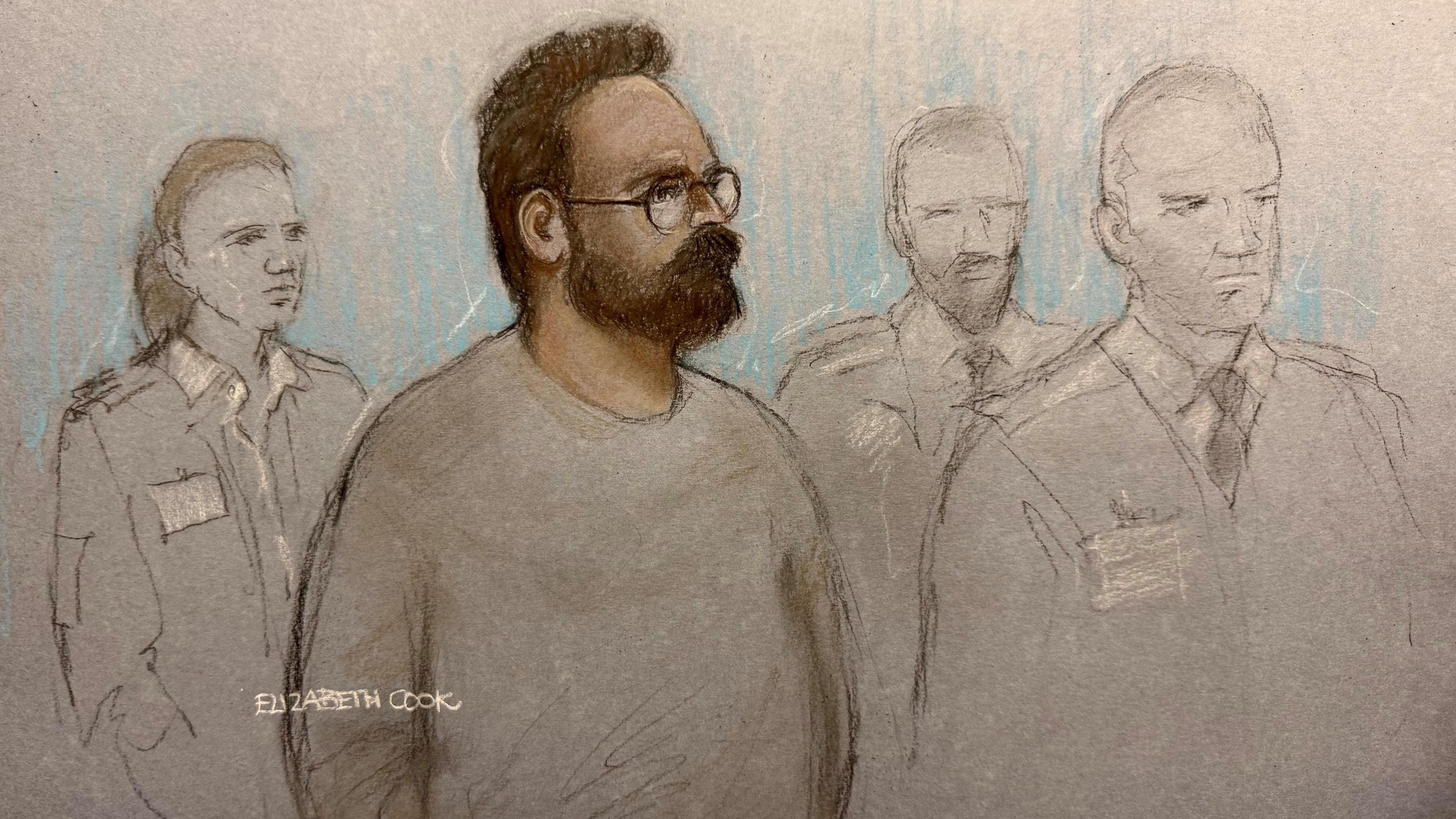
Joshua Kerry, the man accused of murdering the former Conservative minister Ann Widdecombe, has now also been charged with preparing acts of terrorism, including alleged activity aimed at the Reform UK leader, Nigel Farage. What began as a murder inquiry was some time ago handed over to counter-terrorism police, and this is the result.
Kerry, 28, from Rotherham, is accused of killing Widdecombe at her home in Haytor, Devon, in July. At an earlier hearing, prosecutors said she was eating her lunch when Kerry allegedly let himself into her bungalow and hit her 21 times on the head with a hammer. A doorbell camera recorded a red Vauxhall Corsa pulling up, and footage from cameras inside the house was used to piece together what happened.
She was found the next day, after failing to turn up for an interview with Channel 5. The production team couldn’t reach her, her personal assistant asked the family gardener to go round, and he found her face down on the kitchen floor with grave head injuries. Kerry was arrested in South Yorkshire two days later. Police say they are not looking for anybody else.
The political side of things emerged slowly. When Kerry was first charged with murder, the Crown Prosecution Service said inquiries into his motive were continuing, including whether there was a political or terrorist angle, and counter-terrorism officers were already involved. That line of inquiry has now produced a separate terrorism charge, covering activity said to have taken place between 2024 and July 2026.
Farage, who leads Reform and worked closely with Widdecombe, is named in the new charge. That does not mean every earlier report of threats against him has been pinned on Kerry. Police are still going through the wider material and looking at how, if at all, the alleged preparations connect to the murder. An earlier investigation into an attack involving Farage’s London home has had a fresh airing in light of all this, but nobody has publicly established any link between that incident and Kerry.
Inevitably, there are questions about how well we protect people in public life. Widdecombe was an MP from 1987 and later a minister, and in her later years threw in her lot with the Brexit Party and then Reform, while remaining one of the most recognisable and outspoken commentators in the land. Farage has been threatened before, at his home and at campaign events.
Counter-terrorism police have described the investigation as complex and intensive. In its early stages more than 800 lines of inquiry were being pursued, covering forensics, CCTV, travel and searches tracing Kerry’s movements between South Yorkshire and Devon.
Kerry remains in custody. The terrorism charge puts the case on a second legal track, in which prosecutors will have to prove what he allegedly prepared, why, and whether it meets the legal definition of terrorism. He is entitled to a fair trial, and none of the allegations has been proved in court.
LINDSAY CLANCY: JUDGE REFUSES TO END THE CASE AFTER HUNG JURY
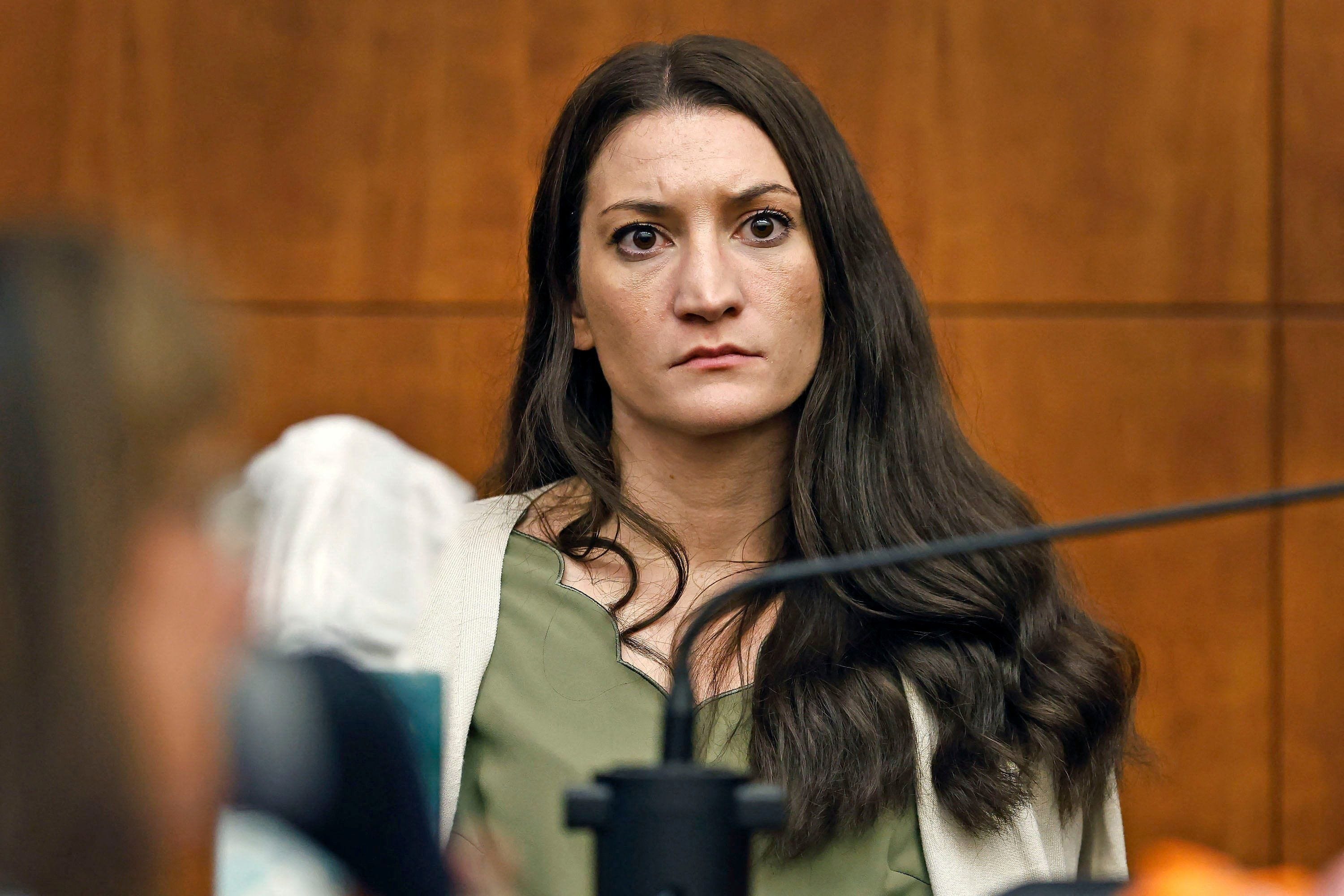
Lindsay Clancy is heading back to court. A Massachusetts judge has refused to declare her not guilty after her first trial collapsed, which keeps alive the prospect of a second trial over the deaths of her three children. On October 1, Judge William Sullivan ruled that prosecutors had produced enough evidence on which a reasonable jury could convict.
Clancy is accused of killing Cora, five, Dawson, three, and eight-month-old Callan at the family home in Duxbury in January 2023. She then threw herself from a second-floor window and was left paralysed. Her defence accepts that she killed the children. The argument is that postpartum psychosis left her unable to understand that what she was doing was wrong.
The first trial ran for almost six weeks, with more than 80 witnesses and hundreds of exhibits. The jury deliberated for days and then reported that it could not agree. The judge sent them back with further instructions. They still could not agree, and on September 4 he declared a mistrial.
Her lawyers then renewed their application for a not guilty verdict on the murder charges, arguing that the prosecution had not proved she was criminally responsible and had leaned far too heavily on disputed expert evidence. Sullivan disagreed. Taken as a whole, he said, the evidence was enough for a jury to convict.
That evidence included forensic work on the exercise bands used to strangle the children, among it DNA linked to Clancy. The prosecution also called experts on her state of mind, and pointed to what she did before and after the killings as evidence that she understood what she was doing. The defence called its own experts, who said severe postpartum illness had swamped her judgment.
What makes the hung jury so striking is that nobody was arguing about whether the children died or who killed them. The only question was responsibility. Reports after the mistrial suggested that nearly all the jurors were for a verdict of insanity or lack of criminal responsibility, and that a single juror would not budge. That one juror is now at the centre of the legal fight over what happens next.
The defence is also lining up a second argument: that another trial would breach the constitutional bar on being tried twice for the same thing. They are questioning whether the mistrial was really necessary and whether the judge ought to have tried something else before sending the jury home. They want access to sealed juror material so they can look at the deliberations and the row involving the holdout.
Prosecutors have not yet said for certain that they will go again. There is a further hearing on November 2, when the remaining motions and the arguments over the mistrial are due to be heard. Even if there is a retrial, it will not be soon. The defence says it could not be ready before the middle of 2027.
Clancy remains in psychiatric care and remains charged with murder. The argument is no longer really about the evidence. It is about whether the state gets a second go at presenting it, and whether twelve more people will be asked the question the first twelve could not answer.
JOANNE SHEEN: FOUND, AT LAST, AFTER SEVEN YEARS
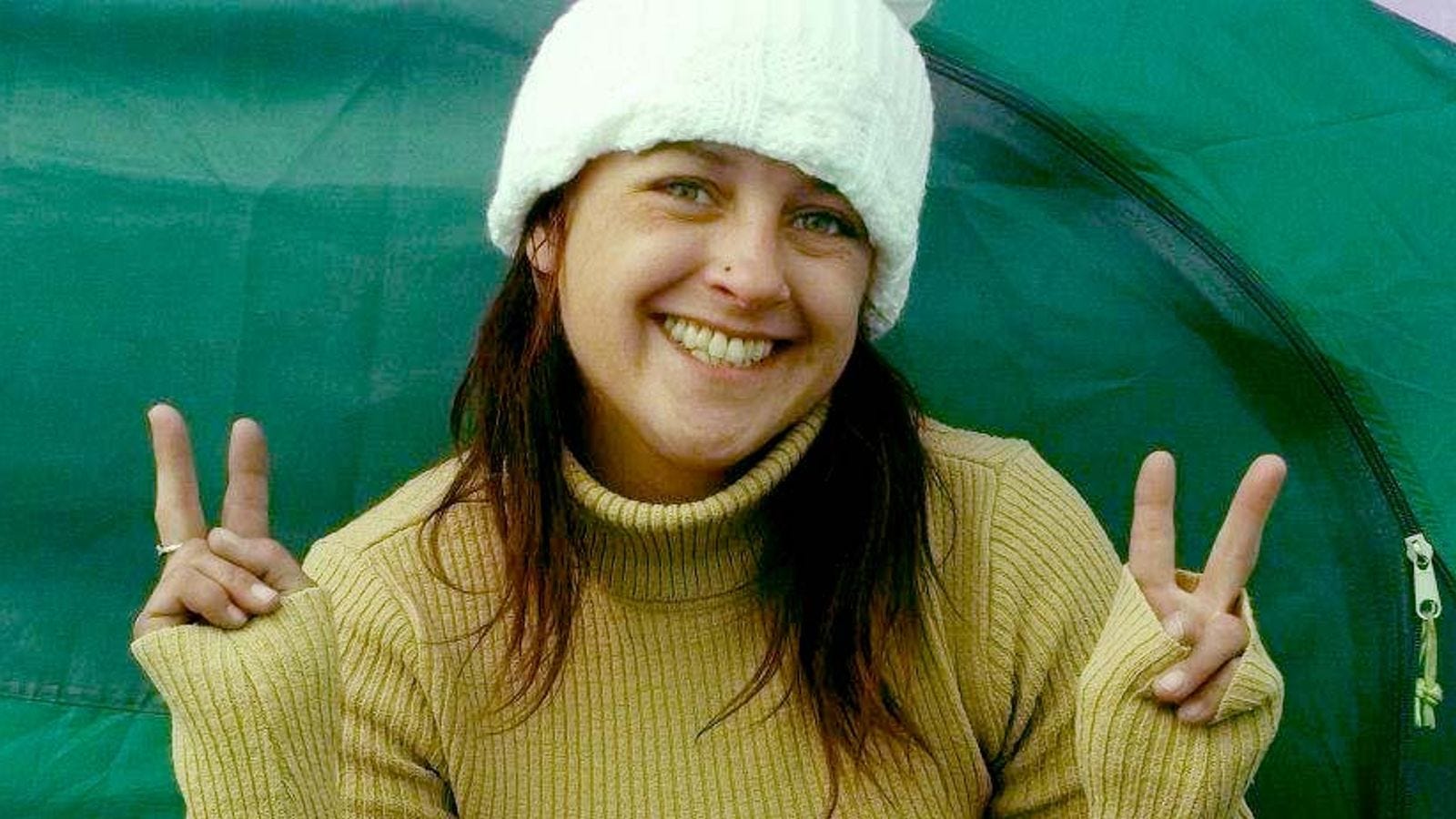
For nearly seven years Joanne Sheen was simply missing. Then, in August, a wildfire swept through a patch of woodland in west London, and human remains were found. On September 17 police confirmed, through DNA, that they were hers. She was a mother of three from Southampton, and she vanished in December 2019.
The discovery was made on August 12 near Padstow Walk in Feltham, where the Metropolitan Police recovered bones from fire-damaged scrubland. They went off for forensic examination, and a murder inquiry was opened while detectives tried to establish who she was.
Putting a name to her answered one question and raised several more. Hampshire and Isle of Wight Constabulary, which had been looking for Sheen for years, took over the murder investigation. Shortly after the identification was announced, a 56-year-old man from Southampton was arrested on suspicion of conspiracy to murder.
Sheen was 44 when she disappeared. The last confirmed sighting was on December 5, 2019, when she travelled back from Fareham towards Southampton with a friend. Her family reported her missing after months with no word. Despite a long-running operation that eventually generated more than 4,000 lines of inquiry, the police never found her.
It was hardly a half-hearted search. Officers took more than 300 statements, searched more than ten addresses, and went through waterways and a good many boats. They combed woodland and water around Southampton. In 2020 five people were arrested on suspicion of conspiracy to murder, but no further action was taken against any of them over her disappearance.
Those arrests now look very different, because the case has been turned on its head. The original investigation had no body and had to work almost entirely from movements, relationships, sightings and whatever the phones and forensics could offer. Now detectives have the remains themselves and the place where they were found.
Police are appealing for information about Sheen’s movements around Southampton in late 2019 and about anything seen in Feltham and Hounslow. They also want to know how she came to be in London at all, given that the last confirmed sighting put her in Hampshire.
Her family now at least have a certainty they were denied for seven years. What they do not have is any idea who killed her, where she died, how she ended up in Feltham, or why years of searching never found her. Those are the questions detectives are now trying to answer.
LUCY LETBY: THE INQUIRY THAT LAID BARE A HOSPITAL ASLEEP AT THE WHEEL
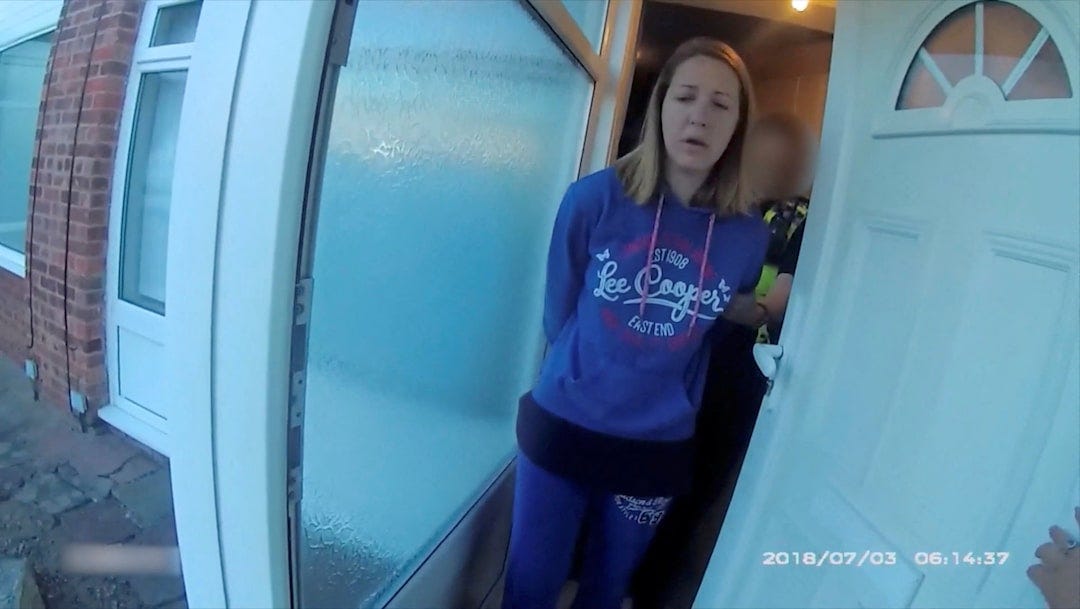
The big news in the Letby saga this month has not come from a courtroom. It came from the Thirlwall Inquiry, which has at last published its report into how a neonatal nurse was able to murder seven babies and try to murder seven more at the Countess of Chester Hospital.
The report, published on September 15, is about as brutal a judgment on NHS management as you are ever likely to read. Lady Justice Kathryn Thirlwall found dysfunctional governance, a chasm between the people running the hospital and the doctors working in it, and a failure to grasp even the basics of safeguarding. There had been, she concluded, a “complete failure to protect babies”, and some of the deaths and attacks might have been prevented had anyone acted on the warnings sooner.
The doctors had raised the alarm after a run of unexplained collapses and deaths on the neonatal unit. Nobody did very much about it. Senior nurses would not accept that the consultants might have a point, and senior managers dragged their feet over calling the police. Instead of a safeguarding investigation into whether a member of staff was deliberately harming babies, the hospital commissioned a series of internal reviews which, the inquiry found, studiously avoided that possibility.
Better still, some of the doctors who raised concerns found themselves under scrutiny through Letby’s own grievance procedure. Three consultants were told to apologise to her. There were even plans to put her back on the neonatal unit, before somebody saw sense. The inquiry was scathing about all of it, and about the failure to treat a matter of babies’ safety as a safeguarding issue.
And the parents were kept in the dark. For years, families were not told that there were concerns their babies might have been deliberately harmed. Their children’s medical records were sent off to outside experts and organisations without their knowledge or consent. Many only grasped what had really happened after Letby was arrested in 2018.
There are 17 recommendations. They include monitors on every neonatal cot and incubator so that parents can watch their babies remotely, and CCTV trained on the fridges or cabinets where insulin is kept until proper secure access is in place. The report also wants an NHS-wide protocol for dealing with suspected deliberate harm by a member of staff.
What the inquiry did not do was re-examine Letby’s convictions. That was never its job. It was there to look at how the hospital behaved before and after the alarm was raised, not to decide whether the jury got it right. That matters, because the Criminal Cases Review Commission is separately looking at material submitted on her behalf to decide whether there is a real possibility the convictions might be overturned.
That effort took a knock in September, when two experts who had been helping her defence walked away, saying some of the arguments they were being asked to back had fundamental scientific problems. Her lawyers insist the case can still be challenged, and the CCRC says it will read the inquiry report to see whether it has any bearing on its review.
People do tend to muddle these two things, so it bears saying plainly. The Thirlwall Inquiry found that the hospital failed badly and that chances to protect babies were missed. It did not find that Letby was wrongly convicted. That is a separate question for the CCRC, and no decision to overturn anything has been announced.
MEGHAN MARKLE ALERTED TO ALLEGATIONS AGAINST HER FATHER
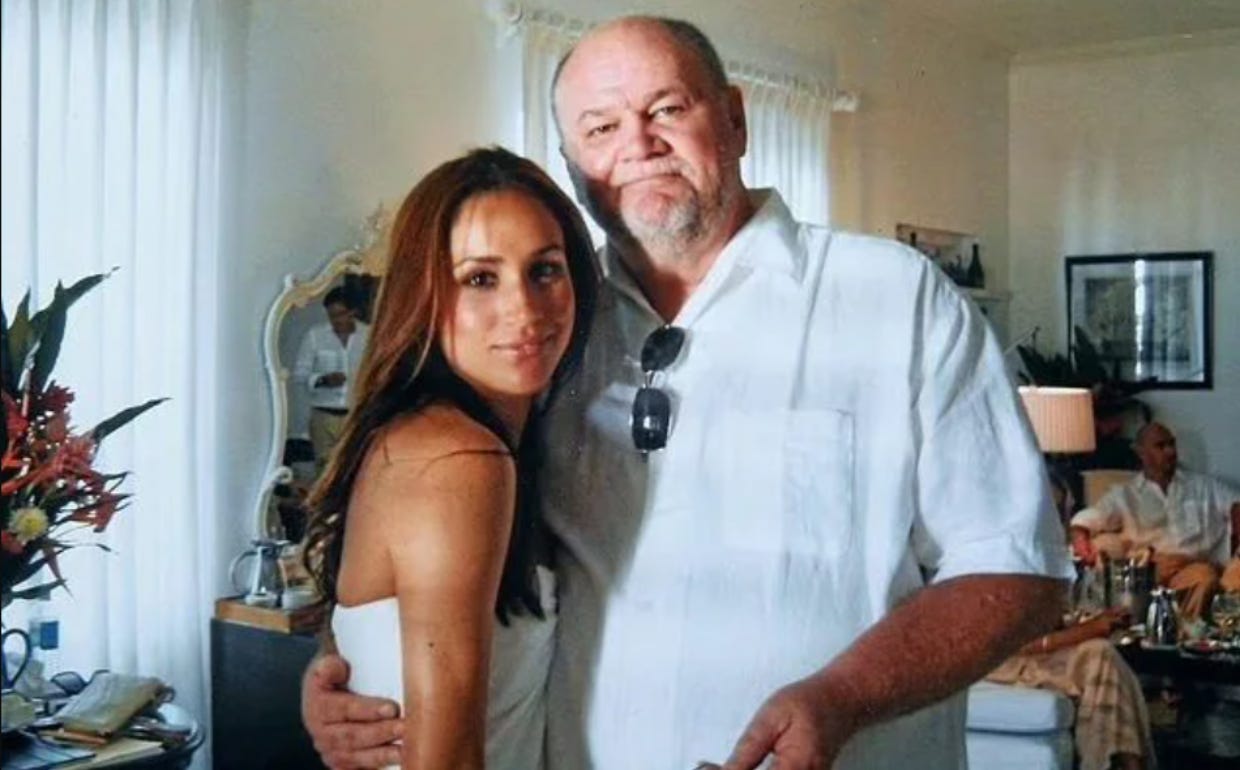
The Duchess of Sussex has revealed that she was made aware of serious allegations concerning her estranged father, Thomas Markle, in 2018, following the circulation of a letter sent to the Metropolitan Police.
Meghan said the letter, which outlined the allegations, was subsequently shared with her and that she had been assured the matter was being investigated. Her statement comes amid reports that images allegedly depicting child sexual abuse were discovered at a property previously occupied by her father in the Philippines. Thomas Markle, 82, who is based in the United States, has denied possessing such material.
Responding to the reports, Meghan said she was deeply distressed by the developments and expressed sympathy for any children who may have been harmed. She described the allegations as deeply disturbing and said her hope was that the investigation would lead to justice, with the protection of children remaining the priority.
The duchess also addressed her decision to remain estranged from her father, explaining that the information she received in 2018 had influenced her approach to protecting her own family.
Meghan said she hoped the circumstances would help explain why she had maintained her distance from Thomas Markle and why she had not permitted him to have contact with her children. She said her decision had been made to protect them, adding that she had trusted the authorities to safeguard other families as well.
The claims were brought to wider attention by Meghan’s half-brother, Thomas Markle Jr, who told The Sun that he had allegedly discovered child sexual abuse images at their father’s former home in the Philippines and reported the matter to police. The allegations have not, on the information currently available, established that Thomas Markle Snr committed an offence.
Philippine authorities have confirmed that an investigation is under way. Nicholas Ty, an undersecretary at the country’s Department of Justice, told the BBC that the case was being examined by a specialist task force dealing with human trafficking and child sexual exploitation in Cebu.
Interior Minister Jonvic Remulla separately told the BBC that police had secured Thomas Markle Snr’s computer for a detailed digital forensic examination. Investigators were analysing the data to establish the nature and extent of any alleged criminal activity, with the minister indicating that the results were expected to take approximately a week.
The BBC said it had contacted Thomas Markle Snr and the Metropolitan Police for comment.
The allegations have also renewed scrutiny of the fractured relationship between Meghan and her father, which has been the subject of public attention since her marriage to Prince Harry. According to the duchess’s statement, she learned of the allegations after her wedding in 2018.
Sources close to the Sussexes reportedly said Meghan had refrained from discussing the matter publicly because of concerns that doing so could compromise a potential investigation. They also suggested that speaking out at the time might have exposed her to legal action.
The revelations may provide further context for the longstanding distance between Thomas Markle and his daughter, as well as the apparent absence of a relationship between him and Prince Harry or the couple’s children. However, the extent to which the allegations contributed to the family breakdown remains unclear.
Questions have also arisen over whether the matter had any bearing on the Sussexes’ return to the United Kingdom in late summer. There is currently no established evidence connecting that trip to the allegations, and any suggestion of a link remains speculative.
For now, the investigation in the Philippines remains central to the case. Thomas Markle Snr denies possessing the alleged images, and the claims must be distinguished from any findings that investigators may ultimately establish. Until the forensic examination and police inquiries are complete, the full circumstances remain uncertain.
NATALIA VILLALBA: THE BOGOTÁ SUITCASE MURDER, AND THE DETAIL THE AUTOPSY GOT RIGHT

In June, Natalia Villalba Angarita was found dead inside a suitcase in a short-let flat in Bogotá. The first reports said her body had been dismembered. The post-mortem says otherwise. Investigators now say she died from repeated blunt-force injuries to her head and body, and that she was not dismembered at all.
Villalba, 36, was a model and graphic designer from Cúcuta who was staying temporarily in a flat in El Chico, in the north of the city. Prosecutors say she was alone there when Foster Martinson walked in on June 18. Martinson, a British national, became the prime suspect after investigators traced his movements and identified him as the last person known to have entered the flat.
The forensic findings, as reported later in the Colombian press, make grim reading. Two skull fractures, a broken jaw, blunt-force injuries across the head, fractures to the chest and a great many bruises. The cause of death was given as severe blunt-force trauma to the skull. Reports of the evidence put before the court say she was struck dozens of times.
The suitcase matters because it hid the body and delayed its discovery. Investigators say Martinson put her body in it, moved it into the bathroom and turned on the shower. Prosecutors allege that he then tried to deal with the blood, changed out of the clothes he had arrived in and dumped them down a rubbish chute before leaving the building.
They also say he took her phone with him, apparently to stop investigators quickly linking her to the man who had walked into the flat, and that he made other attempts to interfere with the evidence.
Martinson left Colombia and was later tracked down in Ecuador. Interpol issued a Red Notice, and he was arrested at Quito’s international airport as he was about to fly on to Britain. He was sent back to Bogotá, where a judge ordered that he be held in prison pending trial. He denies the charges and has not been convicted of anything.
Colombian detectives have also been looking at his history in Britain. Reports there point to a previous conviction for harassment and to other allegations being examined as background. Prosecutors are also looking at whether he and Villalba had any personal or romantic connection.
The correction to the forensic account is no small thing. The early reports painted a picture of a body cut up and packed away. The post-mortem found nothing of the kind. She was beaten to death, and the suitcase was used to hide her.
The case against Martinson will rest on the prosecution’s account of those last hours in the flat, the forensic evidence tying him to it, the manner of his departure from Colombia, and whatever can be shown about his relationship with Villalba. It will be for a Colombian court to decide whether that adds up to proof.
TASIA FORTUNE: THREE MEN CHARGED AFTER A HANGING TURNED OUT TO BE STAGED
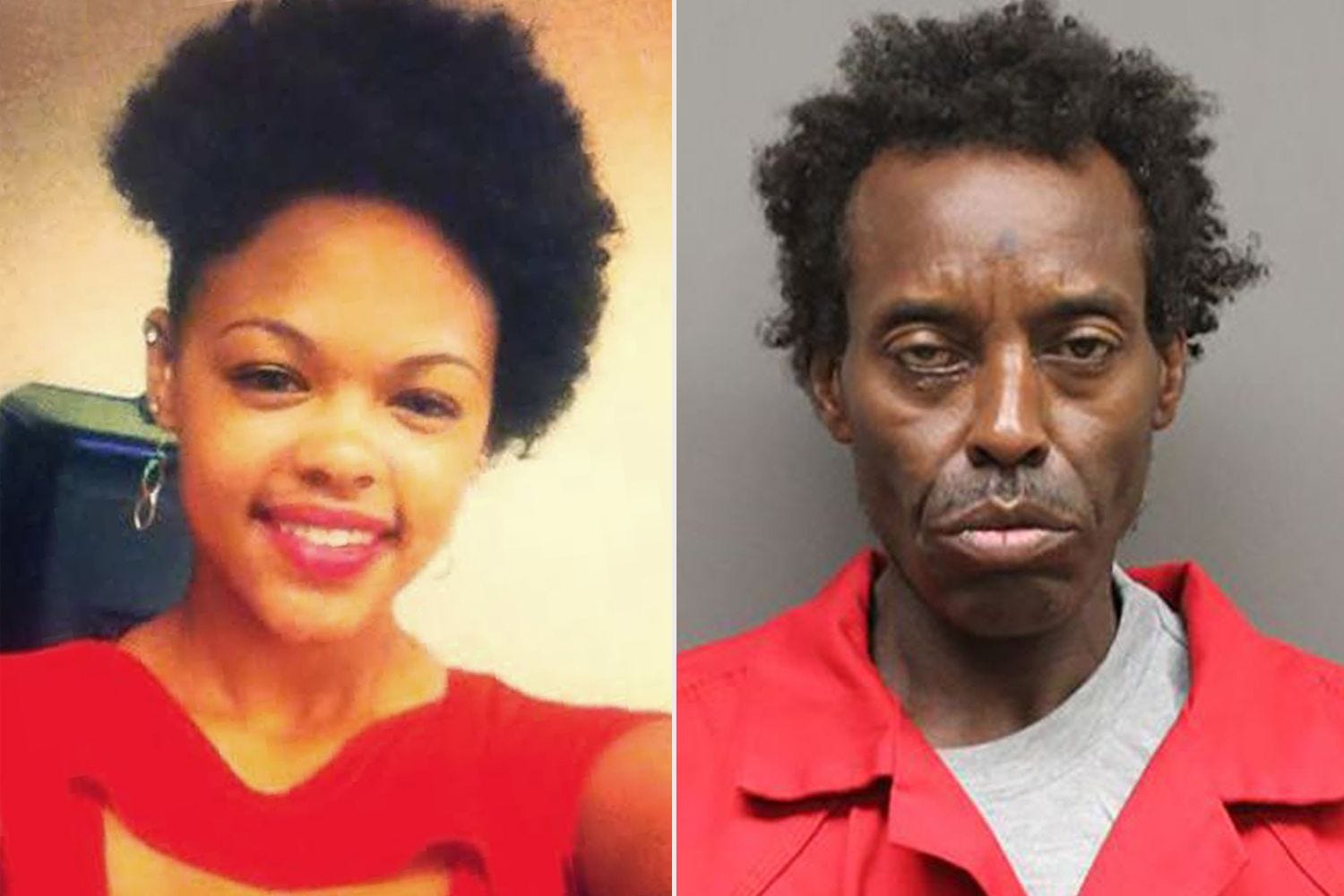
The death of Tasia Fortune began as a horror and has become a murder case. A woman was found hanging from a tree; three men are now charged. A judge in Jackson, Mississippi, has found probable cause against one of them, which sends the case on towards a grand jury, and the police are still looking for anyone else who may have been involved.
Fortune, 29, a mother of four, was found hanging behind an abandoned house in west Jackson on August 3. Given what it looked like, and given Mississippi’s history, people immediately feared a lynching. Fortune and the men later arrested are all Black. The police now say the hanging was staged after she was already dead.
Jarques Ratliff, 51, was arrested in September after the medical examiner ruled the death a homicide. He has pleaded not guilty. A second man, Earnest Lloyd Jr, 25, was arrested later that month and also charged with murder. A third, Eric Clark, 45, handed himself in and was charged after investigators named him as somebody they believed was involved. A judge set his bond at $5 million.
Most of what is known publicly comes from Detective Samuel Dukes. At a preliminary hearing he told the court that Fortune is thought to have been killed somewhere else, and that the hanging was set up afterwards. He tied the case to a dispute over drugs and said detectives were looking at a fight involving Lloyd. Police believe she had been dead for two or three days by the time she was found.
So the tree was not necessarily where she died, and that is the nub of the prosecution case. Detectives are trying to establish where she was killed, who was there, who moved her body and who rigged up the scene afterwards. They have also mentioned a black cable cord in connection with the hanging.
All of which changes the nature of the thing entirely. In the first few days the talk was of a racially motivated killing, a modern lynching. Detectives now say the evidence points to a murder over drugs, followed by a staged hanging. They have not said the staging was meant to mimic a historic lynching, a point the Associated Press felt obliged to clarify after its earlier reports gave that impression.
Fortune’s mother, Christy Spivey, has stayed very much involved. She says her daughter had been struggling with homelessness and addiction but was trying to put her life back together and start a cleaning business. The family reject any suggestion that she took her own life.
Police have spoken to a great many people and have hinted that there may be more arrests. The probable cause finding is not a conviction. It does mean a judge has agreed there is enough evidence to move the case to the next stage.
What happens next depends on what detectives can prove beyond the scene itself: how she died, what each man is alleged to have done, and how the night ended with her body in that tree. Three men are charged and at least one more is being sought. This is now about reconstructing an alleged group killing and the attempt to disguise it.
JAY-Z’S ACCUSER RECANTS: “I NEVER MET HIM”
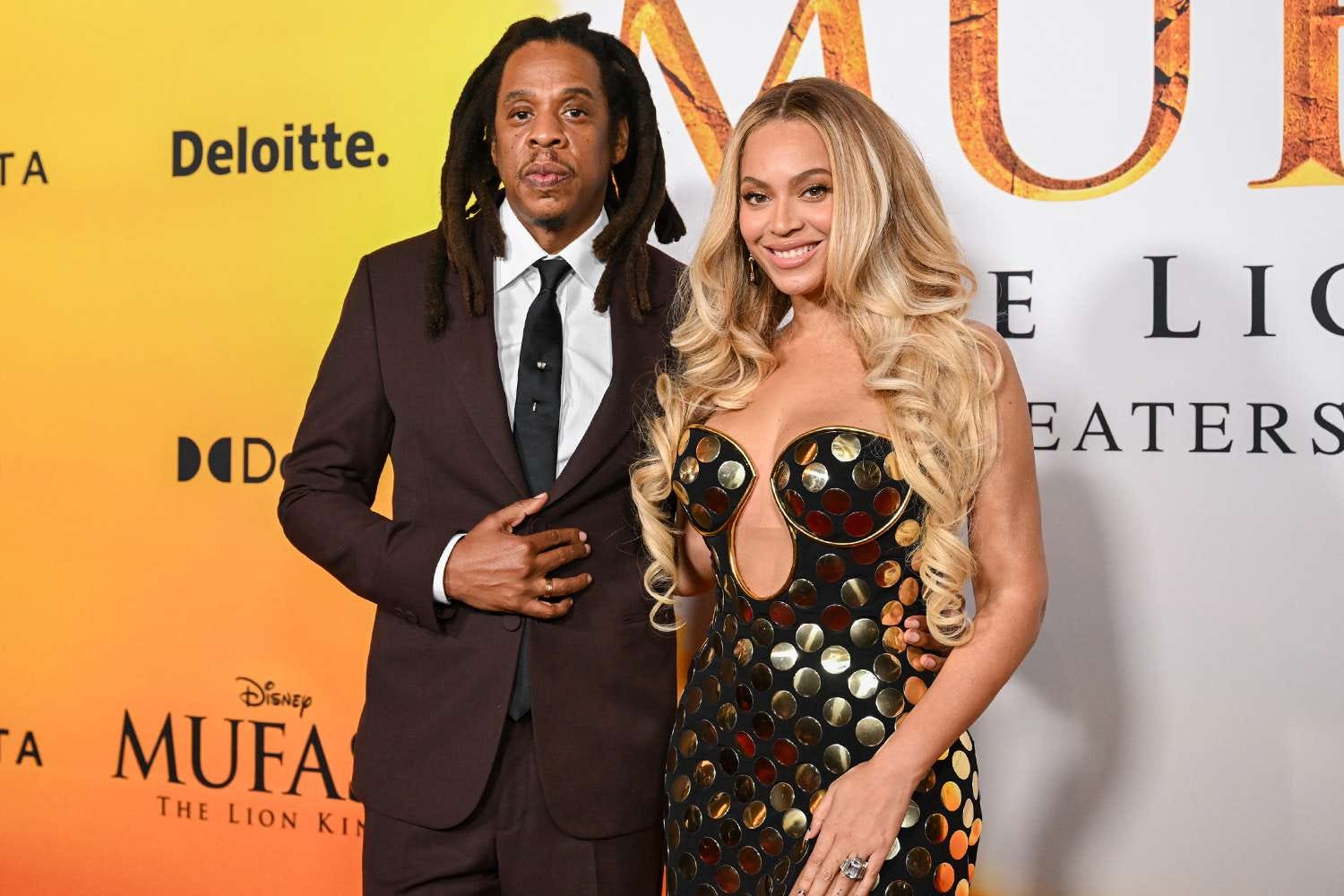
The woman who accused Jay-Z of raping her when she was 13 has formally withdrawn the allegation and told a federal court there was no truth in it. In a declaration filed in New York, the woman, previously known only as Jane Doe, said she had never met or spoken to Jay-Z and that he had never behaved inappropriately towards her.
Her lawsuit, filed in 2024, accused Jay-Z, real name Shawn Carter, and Sean “Diddy” Combs of raping her after the MTV Video Music Awards in 2000. She claimed she had been drugged and assaulted as a teenager. Both men denied it, and the civil case was later dropped.
Jay-Z then sued her and her lawyers for defamation and malicious prosecution, and it is in that case that she has now recanted. She had never met Carter, she said, and there was “no truth to any of my claims”. She added, for the avoidance of doubt, that nobody was paying her to say so.
According to her declaration, it all started when she answered a Facebook advert looking for possible victims of Combs. The law firm that got in touch, she says, ran with the allegation without properly checking it and without giving her a fair chance to read what was being filed in her name.
The original claim made headlines precisely because it put Jay-Z alongside Combs, whose own criminal case went on to a separate federal trial. The two cases are legally quite distinct, and her recantation concerns the 2024 civil suit against both men.
Her declaration also deals with how the original complaint came to be drafted and filed. She says she had told her lawyers about her mental health problems, and suggests she did not really understand how her allegations were being presented in court. The declaration was filed as part of the litigation Carter brought.
Jay-Z’s lawyers say they will drop her from the defamation case. That leaves the fight focused on the law firm: what it did when it filed the claim, and whether the allegations were pushed knowingly or recklessly.
It is an unusually blunt recantation. She did not say her memory had failed her. She said she had never met the man and that what she had said about him was false. That is now on the federal court record, and it changes the shape of a case that was once front-page news the world over.
HARVEY WEINSTEIN: THE ACCUSER WHO KEPT IN TOUCH, AND THE CHARGE THAT WAS DROPPED
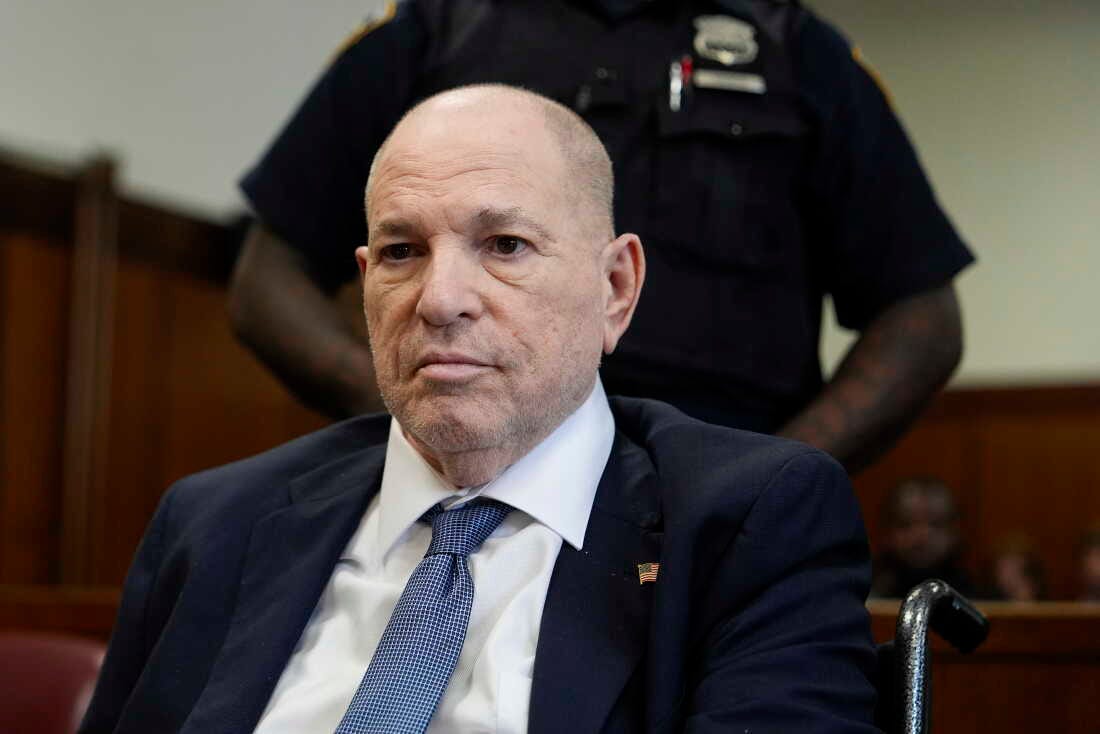
Harvey Weinstein’s legal odyssey took another turn when New York prosecutors dropped the rape charge brought by Jessica Mann rather than put her through a fourth trial. Mann has testified again and again that Weinstein raped her in a Manhattan hotel room in 2013. The evidence also showed that she stayed in touch with him for years afterwards, had consensual sex with him after the alleged rape, and asked him for help with her career.
She met him in 2013, when she was a 27-year-old hairdresser and would-be actress and he was one of the most powerful men in Hollywood. She has described the relationship as complicated, involving consensual encounters as well as the assault she says happened in New York.
At the 2026 retrial, the defence spent a long time on the messages and emails Mann sent Weinstein after the alleged rape. She told the jury that she carried on seeing him and that some of their sexual encounters were consensual. She also accepted that she had sent affectionate messages over the following years, including ones saying she missed him and felt he understood her.
One message in particular got a good airing. Mann wrote to a friend that she liked “the Harvey we know” and felt he protected her. She also told the jury that Weinstein had helped her get work at a hair salon when she was short of money. The defence used all of this to argue that the relationship was consensual and willingly continued.
They also produced a note Mann had written to herself two days after the alleged rape. It talked about her feelings for a man and the confusion surrounding the relationship. It did not mention rape. Asked why, Mann said she didn’t have to write an assault down in that note.
She also described a second alleged rape, in Beverly Hills, after she tried to put some distance between them. He was never charged with that. She said that once she started seeing someone she loved, she tried to end the sexual side of things with Weinstein, only to find him pressing her all over again.
Weinstein’s original 2020 conviction in New York was overturned on appeal. The retrial deadlocked on the Mann charge, and a third attempt failed too. In June, prosecutors told the court Mann could not face another trial, and the count was dismissed rather than make her give evidence once more.
None of which springs Weinstein from prison. He still stands convicted on a separate New York sexual assault charge involving Miriam Haley, for which he was sentenced to 15 years in September. He is also serving a sentence in California for rape, although that conviction has been through its own appeal and resentencing.
Weinstein has always denied any non-consensual sex and maintains that his relationships with his accusers were consensual. His lawyers have repeatedly pointed to messages, continued contact and sexual relationships after alleged assaults as support for that.
ANDREW TATE: WHAT IS ALLEGED, WHAT IS PROVEN, AND WHAT ISN’T
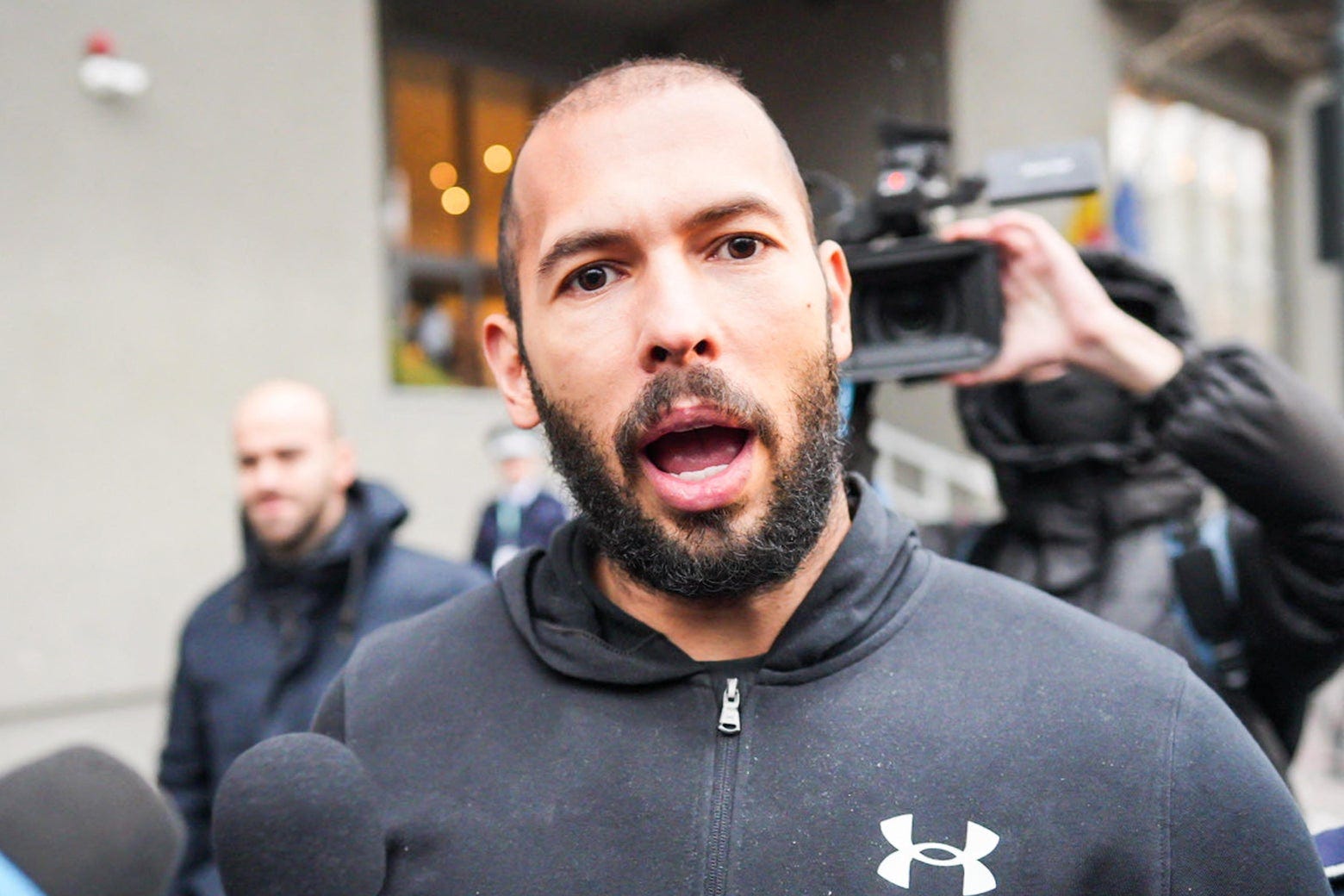
Andrew Tate, the cringeworthy self-styled king of masculinity, is spending his autumn in a federal detention centre in Miami, which is not quite the Bugatti-and-cigars lifestyle advertised to his followers. He and his brother Tristan were arrested in Miami on July 18th at Britain’s request, and on September 9th Magistrate Judge Lauren Louis refused to let them out while they fight extradition. She was not satisfied they were not a flight risk, prosecutors having pointed out that the brothers appear to have plenty of money and have boasted about holding several passports.
Britain wants them back to face 59 charges. The first 21 were authorised in May 2025. In July this year the Crown Prosecution Service added 38 more, 32 against Andrew and six against Tristan. They include rape and sex trafficking, and documents unsealed in July contain allegations from four women that the brothers choked them, sometimes until they passed out, and raped them, between 2010 and 2017.
Then came the latest filing. On October 6, British prosecutors put further documents before the federal court in Florida as part of the extradition case, first reported by The Telegraph. These are the most serious allegations yet. Prosecutors say that when Tate was arrested in Britain in July 2015, on suspicion of rape and sexual assault, police seized a phone and laptop from his home in Hitchin containing 168 indecent images and videos of a girl who was 17 at the time. Sixty-six were in Category A, the most serious classification in British law.
According to the prosecution, the girl came to Britain from abroad in 2014 and was soon working in Tate’s webcam business, which made its money from women performing sexual content for paying customers online. Her passport, showing she was still 17, was found at his house. Prosecutors say messages show Tate knew she was underage: in January 2015 she told him her parents had found out she was working for him and believed he was prostituting her, and he is said to have worried that her father might go to the authorities. They allege that in June 2015 he shared videos of her with three other men in a WhatsApp group and boasted that she worked for him. Reports of the filing also describe messages in which he is alleged to have given her explicit and degrading sexual instructions. Separately, the documents allege he possessed extreme pornography, including material involving animals.
Tate’s American lawyer, Joseph McBride, has dismissed the lot as “prosecution slop” and says the case is “as weak as it gets”. He says the device in question was found at a “flop house”, that there is no proof Tate ever watched what was on it, that one of the clips was a war video shared in a group chat of MMA fighters, and that the British authorities no longer even have the device, only a report about what was on it.
Romania, meanwhile, has had another go. On September 4, Romanian prosecutors indicted Andrew Tate for trafficking minors, sex with a minor and money laundering, with Tristan charged as an accomplice. They say one victim was 15 when Tate seduced her in Britain in 2012, before moving her to Bucharest and using violence and intimidation to force her to produce indecent material for social media. They allege the brothers pocketed about $1.25 million, roughly 80 per cent of her earnings, and tried to launder it through four luxury cars. Their Romanian lawyer, Eugen Vidineac, says his clients “continue to reject the allegations against them”. Romanian law allows a trial in absentia, so they need not be in the country for it to proceed.
So what, if anything, has been proved? Here is the honest answer, and it will please nobody. No allegation of rape, trafficking or sexual abuse against Andrew Tate has been proved in any criminal court. Nor has any of them been proved false. Tate’s fans like to point to the 2015 British investigation, which was dropped without charge, and to Romania, where in late 2024 the Bucharest Court of Appeal sent the original trafficking case back to prosecutors after ruling some of the evidence inadmissible. Neither was a finding that the women were lying. Both were procedural, and both cases have since come roaring back. The claim, much shared online in 2025, that the Romanian case had been thrown out altogether was simply untrue.
What has been established by a court is rather more mundane. In December 2024 a British court ruled that Bedfordshire Police could seize more than £2 million from the brothers over unpaid tax, a ruling that went against them. And the footage that got him thrown off Big Brother in 2016, showing him hitting a woman with a belt, was real enough; he said at the time it was consensual. Beyond that, a separate civil claim brought against him in the High Court by four women is still to be heard.
The brothers deny everything, insist every relationship they have had with a woman was consensual, and say they are being persecuted for their views. On the latest allegations, as on all the others, the evidence has yet to be tested in court.
AVERY AND DASSEY LEFT OFF THE WISCONSIN CLEMENCY AGENDA
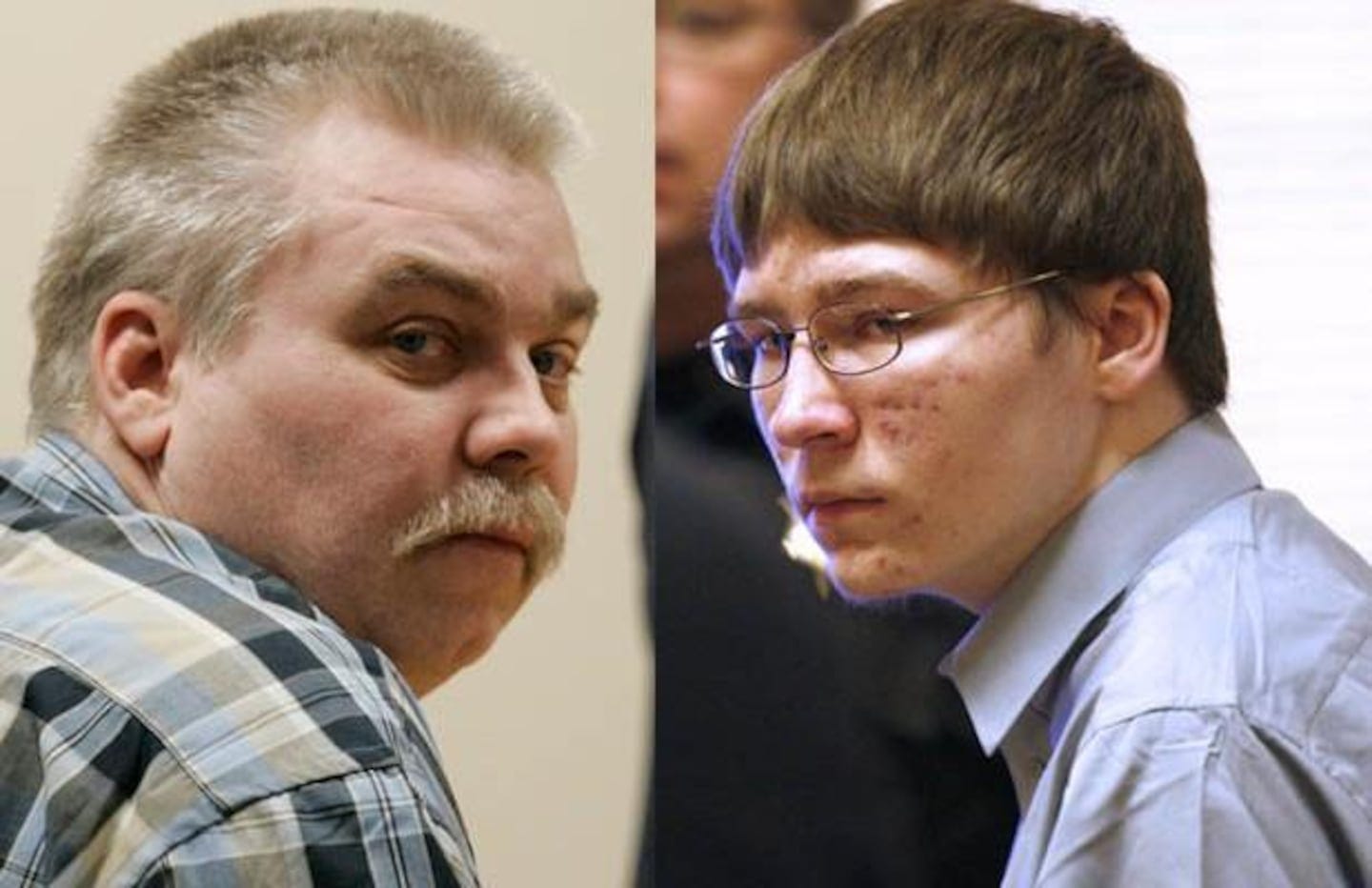
Steven Avery and Brendan Dassey have both applied to have their sentences commuted in Wisconsin. Neither of them is on the agenda for the next meeting of the state’s Commutation Advisory Board, which is a fairly strong hint that the board will not be looking at their applications any time soon.
The two men were convicted of the 2005 murder of the photographer Teresa Halbach at Avery’s property in Manitowoc County. The case became world famous in 2015 when Netflix released Making a Murderer, which picked holes in the investigation and the prosecution while also laying out the case against them.
Avery put in his application in September. Judge Guy Dutcher reviewed it and concluded that cutting his sentence would be “entirely inappropriate”. Dassey applied separately for commutation of a life sentence imposed for a crime committed as a juvenile, and that was reviewed by a different Manitowoc County judge. Unlike Avery’s, Dassey’s application went forward without a similar judicial thumbs-down.
Both were then sent to the state board. Its October 23 agenda mentions neither man. The board is not obliged to deal with every petition it receives, so this is not a formal rejection. It just means neither application is due to be discussed at the next public meeting.
Avery still says he was framed and that someone else killed Halbach. His latest appeal was rejected by the Wisconsin Supreme Court in 2025, after the state Court of Appeals found his motion inadequately argued and lacking the evidence needed to justify a hearing.
Dassey’s case went a different way. In 2016 a federal judge overturned his conviction, finding constitutional problems with how investigators got his confession. A majority of the federal appeals court later restored the conviction, and in 2018 the US Supreme Court declined to hear the case.
The evidence in the Halbach murder included her blood in her car, Avery’s blood in the car, burned remains found at the salvage yard, a bullet fragment carrying Halbach’s DNA and the key to her car found in Avery’s bedroom. Dassey also gave investigators a detailed confession, which he later withdrew.
The documentary, for all its millions of viewers, did not overturn either conviction. Avery was sentenced in 2007 to life without parole. Dassey got a mandatory life sentence with the possibility of parole in 2048.
These clemency bids are just the latest round in a case that has already survived multiple appeals, federal litigation and years of public campaigning. For now, with neither man on the agenda, neither application looks likely to be heard at that meeting.
FROM AMERICAN IDOL TO MURDER: PASTOR FOUND GUILTY OF KILLING HIS WIFE
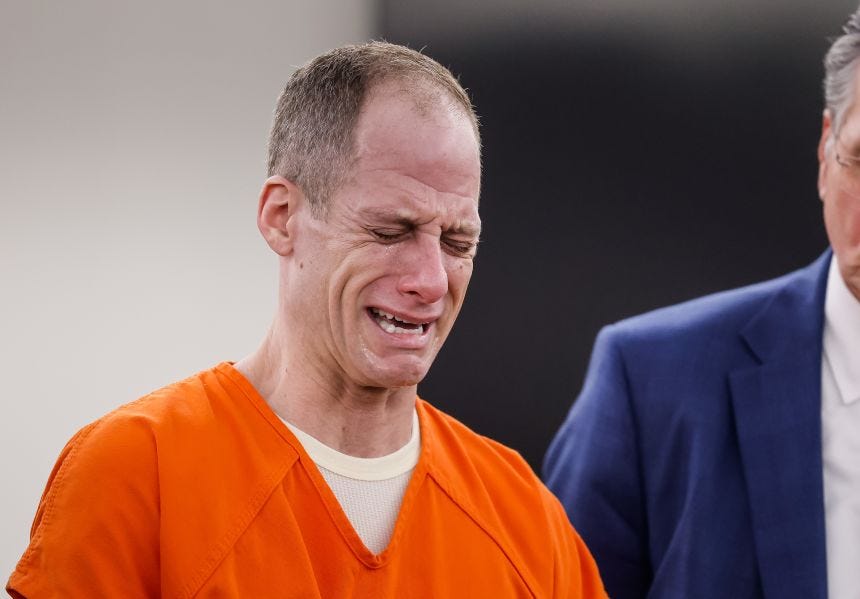
Caleb Flynn once stood in front of the American Idol judges and told them about his dreams of making it in music. On September 29 a jury in Ohio found him guilty of murdering his wife, Ashley, after prosecutors said he shot her and then tried to pass it off as a random break-in.
Flynn, 40, was convicted on nine counts, including aggravated murder, further murder counts, felonious assault and tampering with evidence. On October 5 he was sentenced to life without parole, the maximum available. He still maintains he is innocent.
It started on a February night when Flynn rang 911 and said an intruder had broken into the house and shot Ashley. She was 37, a teacher, a volleyball coach and the mother of two. At first, investigators had to treat it as a possible home invasion.
There was, prosecutors eventually argued, no intruder. Flynn shot his wife and dressed up the scene to make the police believe somebody else had done it. Digital records, they said, contradicted his account of where he had been and when he had moved around the house.
An affair formed a large part of the prosecution case. Flynn had been in contact with another woman, Alleigha Botner. Prosecutors showed messages in which he talked to her about Ashley, including one in which he wrote: “I choose you. I’m free. Actions will come tomorrow.” The prosecution presented that as evidence of both motive and planning.
Botner also gave evidence about conversations in which Flynn expressed anger towards his wife and talked about her. The state’s case was that these were not just the messages of a man having an affair, but part of a sequence showing he had decided Ashley had to die.
The gun was never found. But prosecutors put forward physical evidence from the house, including DNA and fingerprints, which they said tied Flynn to the shooting, and argued that the missing weapon did not outweigh everything else, including the holes in his account of that night.
Flynn had something of a public life. On American Idol in 2013 he told the judges that Ashley supported his musical ambitions. He went on to become a music pastor, which made the whole thing all the more shocking to people who knew him through church and through his music.
His lawyers argued that there was no eyewitness to the shooting and that the physical evidence was circumstantial. The jury disagreed and convicted him on every count before it.
At the sentencing hearing a family member read out a statement from one of his daughters, and the judge quoted from it as he passed sentence: “What did Ashley ever do to make you hate her so much?” Nobody in the courtroom, it seems, had an answer, least of all the man in the dock.
EPSTEIN’S EXECUTORS: FEDERAL PROSECUTORS TURN TO DARREN INDYKE AND RICHARD KAHN
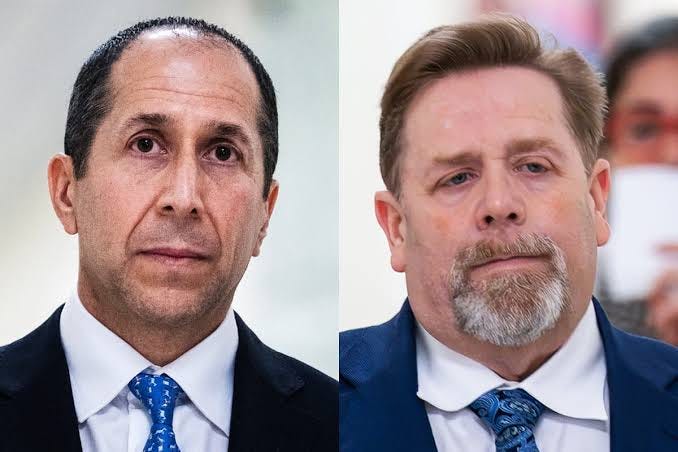
Federal prosecutors in New York have opened an investigation into Darren Indyke and Richard Kahn, the lawyer and the accountant who worked for Jeffrey Epstein for decades and now run his estate. It is the latest twist in the long, slow excavation of Epstein’s world, prompted by the release of more records and renewed interest on Capitol Hill in how his money machine actually worked.
Indyke was Epstein’s lawyer for years. Kahn was his accountant. Both carried on working for him after his 2008 conviction for soliciting prostitution from a minor, and both stayed close to him right up to his arrest on federal sex-trafficking charges in 2019. Between them they now control a large part of his estate.
The investigation, first reported by the Wall Street Journal and since confirmed elsewhere, is looking at the legal and financial work they did for Epstein. Investigators have asked for documents and spoken to potential witnesses. Which offences, if any, are being looked at has not been made public.
One line of inquiry is whether the legal or financial services they provided helped to hide transactions, move money or make payments connected with Epstein’s activities. To be clear, nobody is alleging that either man took part in Epstein’s sexual abuse. Both deny knowing about it or having anything to do with it.
It matters because both men have already admitted they stayed close to Epstein long after 2008. In congressional testimony released earlier this year, they said federal investigators had never questioned them about his crimes. Kahn said financial pressure around the 2008 crash played a part in his decision to keep working for him. Indyke described his own work as transactional and professional.
Since Epstein’s death they have remained at the centre of things. They ran a compensation scheme for victims that has paid out more than $120 million, according to reporting on the estate. They also stand to benefit from the estate themselves, with payments reported at around $50 million for Indyke and $25 million for Kahn.
Survivors have pursued them separately in the civil courts. One lawsuit against the estate claimed that people around Epstein provided money and logistical help that made his abuse possible. The estate has settled with survivors, which is yet another reason investigators and lawyers are now examining where the money went and who was in charge of it.
The timing is politically awkward. The Epstein files continue to generate congressional hearings and loud demands for more disclosure, and each new batch of documents raises fresh questions about the people who worked for him, the banks and advisers who did business with him, and how much the people inside his financial operation knew.
Neither Indyke nor Kahn has been charged with any crime in connection with this investigation, an investigation is not a finding of wrongdoing, and prosecutors have not said what evidence they are looking at. What it does mean is that two men who were once central to Epstein’s private affairs are now themselves under federal investigation for what they did there.
ANDREW MOUNTBATTEN-WINDSOR: JUDGE RULES POLICE RAIDS WERE UNLAWFUL
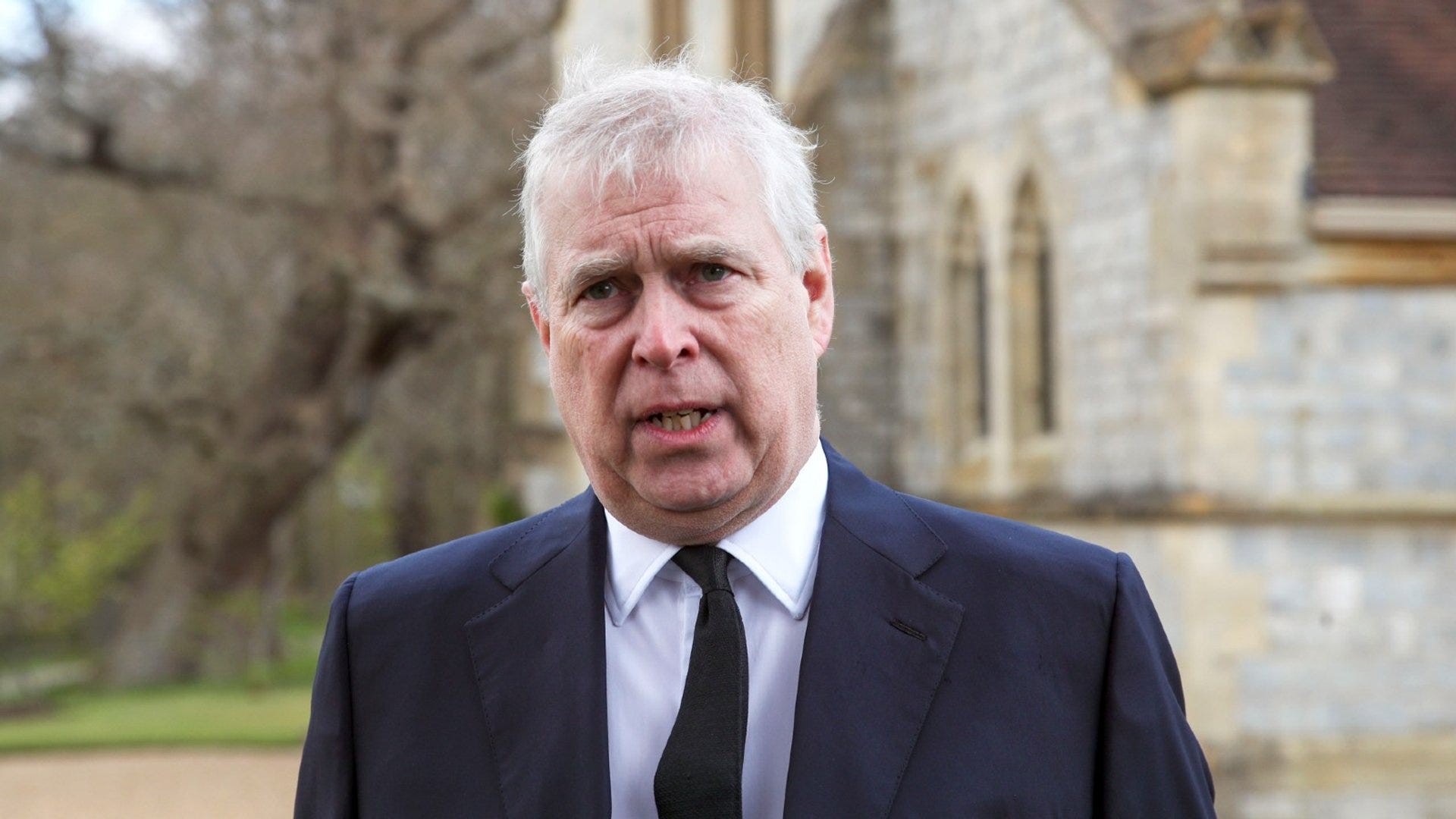
Andrew Mountbatten-Windsor, the man formerly known as Prince Andrew, has won a round against Thames Valley Police. On October 8, Mr Justice Hilliard ruled in the High Court that the warrants used to search two of his homes in February were unlawful, and quashed them. Andrew was not in court. He did not need to be.
The warrants were issued by a judge at the Old Bailey on February 18, the day before his arrest, and allowed officers to search Wood Farm on the Sandringham estate, where he now lives, and Royal Lodge in Windsor Great Park, his former home. In the end the police did not even put up a fight. Once Andrew launched his judicial review, the force conceded, and both sides agreed the warrants should go. The problem, the judge said, was that the judge who issued them could not properly have been satisfied that the material being sought was not legally privileged, or “special procedure material”, a category covering confidential material held in public office. Thames Valley Police put it rather more sheepishly, saying “the initial court’s decision to issue warrants under the specific piece of legislation used was incorrect.” It was, in other words, the wrong law. Somebody, somewhere, picked up the wrong form.
Before anybody at Royal Lodge cracks open the champagne, however, the judge was careful to say that this does not make the whole investigation unlawful. “The fact that the search warrants were quashed does not bring an investigation to an end,” he said. Thames Valley Police say their inquiry into alleged misconduct in public office remains ongoing.
The real fight now is over what the police took away. In June the force applied to keep the material it seized, despite the warrants being defective. Andrew opposes that. A private hearing on the question is due in 2027, and until then nobody can say whether the evidence gathered in those searches can lawfully be kept or used. Andrew’s lawyers had already alleged that officers removed “private and confidential material unconnected to the criminal investigation”, according to The Telegraph, though that claim has not been tested by any court.
To recap how we got here: Andrew was arrested on his 66th birthday, February 19, on suspicion of misconduct in public office, over allegations that he shared sensitive information with Jeffrey Epstein while serving as Britain’s trade envoy. He was held for about twelve hours, questioned under caution and released under investigation. The searches ended on February 24. In May the force said it was working with the US Department of Justice, the Crown Prosecution Service and witnesses as it examined alleged misconduct exposed by documents published under the Epstein Files Transparency Act. He has not been charged.
THE EPSTEIN WHISTLEBLOWER, HIS DEATH, AND THE QUESTIONS FOR THE FCA
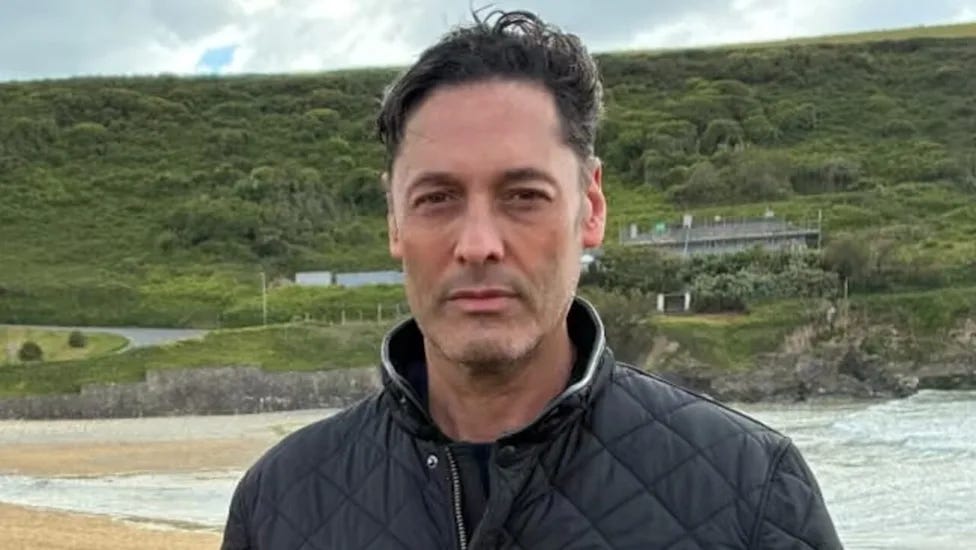
Simon Andriesz, a former Wall Street banker who helped bring to light evidence of Howard Lutnick’s dealings with Jeffrey Epstein, has died in Thailand at the age of 57. His family say he took his own life. His death has turned the spotlight not only on what he said about Lutnick and Epstein, but on how Britain’s financial regulator treated him over a number of years.
Andriesz spent more than three decades in the markets and was a managing director at BGC Group, where Lutnick was chief executive. He later told the BBC that he had come across a 2018 email chain in which Lutnick and Epstein discussed the prospects of a start-up both were involved in. That mattered, because Lutnick had previously described his relationship with Epstein rather differently.
In February, Lutnick admitted he had visited Epstein’s island in 2012, on a family holiday. He told the Senate Appropriations Committee: “I did have lunch with him as I was on a boat going across on a family vacation. My wife was with me, as were my four children and nannies . . . We had lunch on the island. That is true. For an hour.” Lutnick has condemned Epstein’s crimes and denies any wrongdoing.
Andriesz had also taken his concerns about alleged misconduct at BGC to the regulators. According to the Financial Times and the Guardian, the FCA has now opened an internal review of how it dealt with him. The regulator has admitted that one of its officials wrongly told him he had lost his whistleblower protection because his identity had become known. The FCA has since apologised and says its whistleblowing team will get extra guidance and training. Which is something, one supposes.
That admission is now at the heart of the row over whether the regulator did enough. A cross-party group of MPs, along with whistleblowing campaigners, wants a proper independent inquiry rather than an internal one. The FCA has instead appointed one of its own non-executive directors, Lea Paterson, to look at what happened. Its chairman, Ashley Alder, defended the choice: “She fully understands that her role is independent. She will report to the board, and the board will publish the findings, so we will guarantee transparency over what she did.” Whether the campaigners will be reassured by an independent review conducted by a member of the board it is reviewing remains to be seen.
Andriesz had spoken openly about what blowing the whistle had cost him. At a Transparency Task Force event after the BBC investigation was broadcast, he talked about the damage to his career, his health and his family. He had also complained that the FCA had not dealt properly with what he told it. The American authorities had acted on parts of the wider BGC case, and he received a substantial whistleblower award in the US, but he continued to argue that the British response had fallen far short.
His family say he died on September 23 and that there is no suggestion of foul play. Andriesz committed suicide by hanging and there is no public evidence that his death had anything to do with what he revealed about Lutnick, Epstein or BGC.
His death joins a short and grim list of people in the Epstein story whose deaths have been ruled or reported as suicides. Epstein himself died in federal custody in 2019, a finding later reaffirmed by official reviews. Jean-Luc Brunel, the French modelling agent closely linked to Epstein, died in a Paris prison in 2022 while awaiting trial on charges involving minors. Virginia Giuffre, one of Epstein’s most prominent accusers, died in Western Australia in 2025, according to her family and police reports at the time. Andriesz is the latest confirmed case. Daniel Siad, another French model scout whose name crops up repeatedly in the Epstein files, does not belong on that list: the French authorities have not established suicide as the cause of his death.
TUPAC SHAKUR MURDER: FORMER GANG BOSS DUANE ‘KEFFE D’ DAVIS SENTENCED TO 40 YEARS IN PRISON
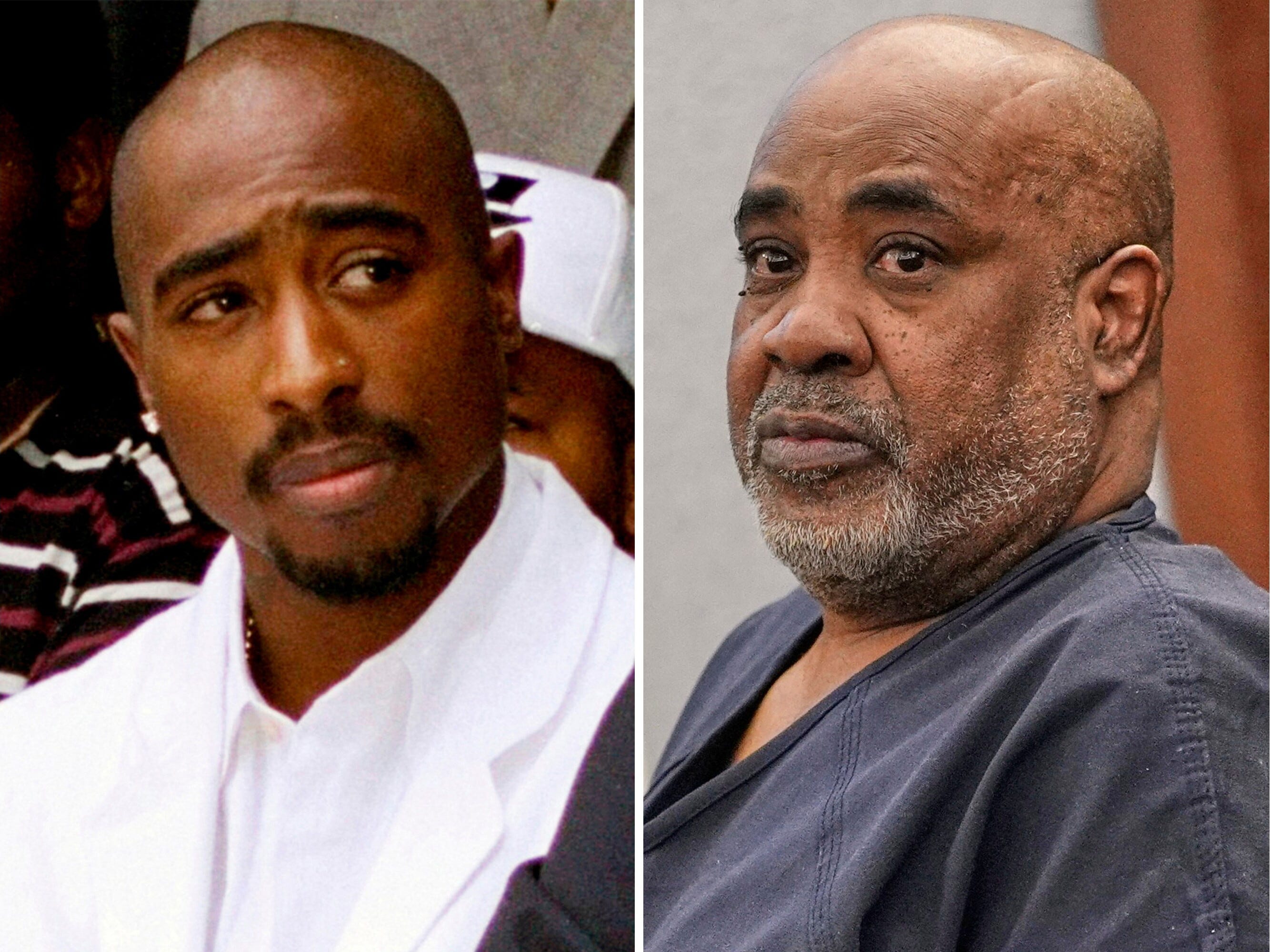
Former gang leader Duane “Keffe D” Davis has been sentenced to at least 40 years in prison for orchestrating the murder of rap superstar Tupac Shakur, bringing a major breakthrough in one of America’s most notorious cold cases.
Davis, 63, was convicted in September of murder with a deadly weapon over the drive-by shooting that killed Shakur in Las Vegas on 7 September 1996. He did not fire the fatal shots himself, but prosecutors argued that he organised the attack and supplied the gun used in the killing. Davis has vowed to appeal.
During Tuesday’s sentencing hearing, prosecutor Marc DiGiacomo accused Davis of spending years publicly boasting about his involvement in a crime that had profound consequences for Shakur’s family and the music industry.
Shakur’s sister, Sekyiwa, told the court that her brother’s death had devastated their family.
“The loss of Tupac, for a long time, crippled my family,” she said, describing his ambitions to improve the world and help his local community.
She urged the judge to impose the maximum sentence, telling Davis he would have time in prison to contemplate the consequences of his actions. Shakur’s brother, Maurice, also called for the longest possible punishment.
Judge Carli Kierny delivered a pointed rebuke before sentencing Davis, telling him: “You don’t get to take a man from his family.”
She added: “The world never forgot about him and his death.”
When asked whether he wished to address the court, Davis replied: “I’m good. I’m gonna appeal this case for sure.”
The prosecution’s case relied heavily on Davis’s own statements. He repeatedly claimed to have been inside the white Cadillac from which the shots were fired. During a confidential police interview in 2008, conducted in connection with the murder of fellow rapper Christopher Wallace, known as The Notorious B.I.G., Davis described his involvement in Shakur’s killing.
He later expanded on those claims in his 2019 memoir, Compton Street Legend, and subsequent media interviews. Those public disclosures undermined a previous agreement that had protected him from prosecution, allowing his earlier police interview to be used against him at trial.
Davis’s defence argued that his accounts were fabricated exaggerations designed to sell books and attract attention. Prosecutors maintained that he had ordered the shooting and supplied the weapon allegedly used by his nephew, Orlando Anderson, who died in an unrelated shooting in 1998.
Shakur was just 25 when he was killed, already established as one of hip-hop’s most influential artists, with more than 75 million records sold worldwide.
For nearly three decades, his murder fuelled conspiracy theories and public fascination. Davis’s conviction marks the first in the case, although his planned appeal means the legal battle may not yet be over.